
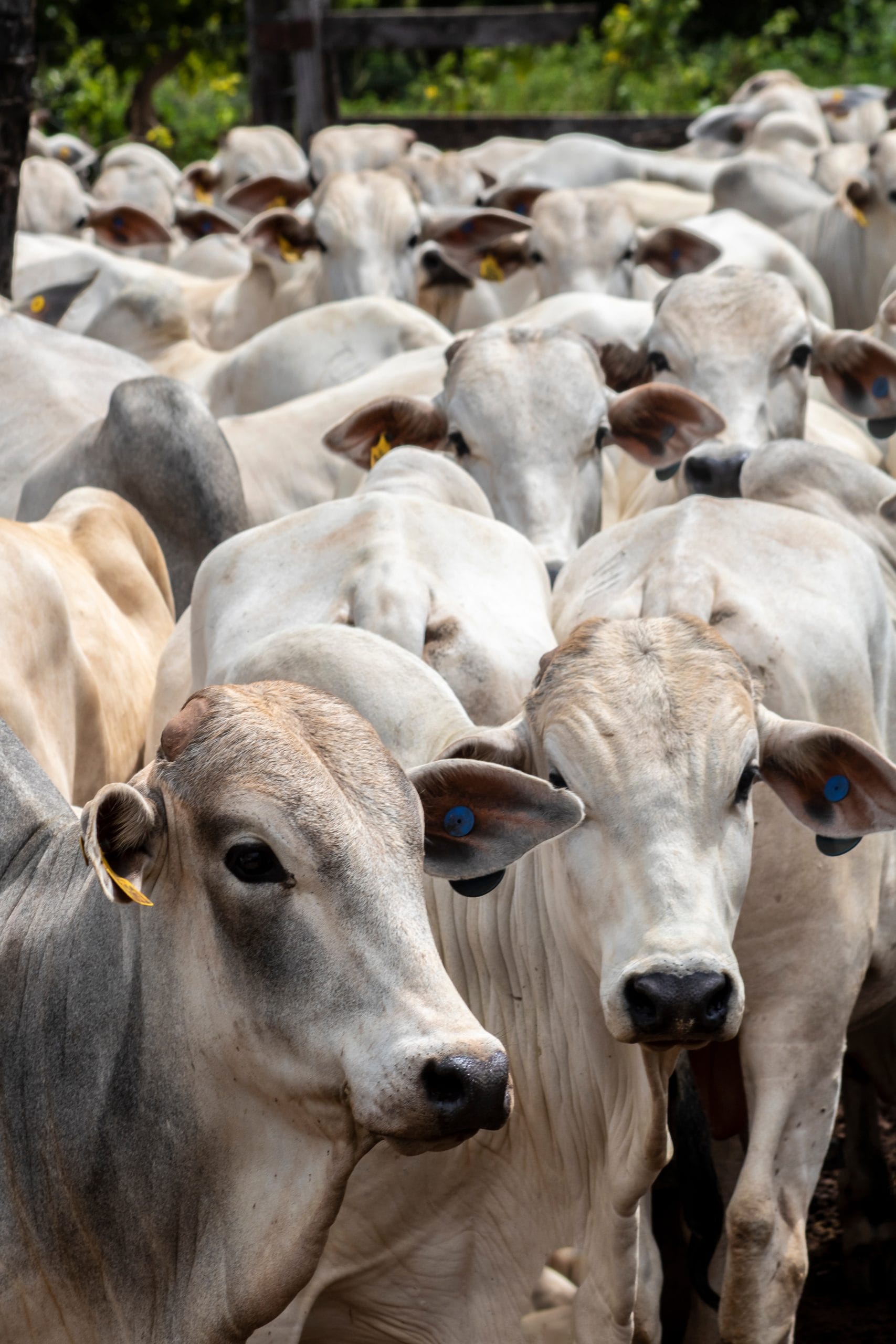
After teasing the prospect in a social media post, President Donald Trump has formalized a plan to increase lean beef trimming imports with no above-quota tariff.
In an Aug. 21 Truth Social post, Trump announced he had completed a deal to lower the price of beef for Americans by increasing ground beef imports. He did not indicate specifics, including where beef supplies would be sourced.
Five days later, the White House released a presidential proclamation titled Further Ensuring Affordable Beef for the American Consumer. In the proclamation, Trump finalized the increase of lean beef trimmings subject to the in-quota rate of duty by 300,000 metric tons (mt).
“I anticipate that the action taken in this proclamation will result in the importation of ground beef that will be sold at a discounted price compared to current sale prices, helping to ensure hard-working Americans can afford to feed themselves and their families,” Trump said. The beef will be sold at a 25% discount from the going import price.
The proclamation notes that Trump’s earlier February Proclamation 11010 (Ensuring Affordable Beef for the American Consumer) directed an official to monitor forecasted increases in domestic beef consumption and prices. Since then, that official informed Trump that “additional action may be necessary to ensure affordable ground beef for United States consumers.”
The proclamation also noted that “even though the action taken in Proclamation 11010 has increased beef imports from Argentina, the supply contraction in the United States beef industry coupled with the growing demand for beef is resulting in higher beef prices that are expected to continue absent further action.”
The additional 300,000 mt of beef will be administered on a first come, first served basis in three 30-day tranches, beginning Sept. 1, according to the proclamation. The expansion is allocated to “other countries or areas” subject to an in-quota tariff rate, but does not increase the earlier Argentina allocations or include countries with a free-trade agreement or country-specific quotas.
“This temporary action will increase beef supply by roughly 10% over current projections—an amount that will deliver economic relief to American consumers, will only compete with cull cow markets, and will not significantly impact the fed cattle market,” a proclamation fact sheet promises.
According to a Wall Street Journal report, shortly before Trump announced the import plan on social media, it is rumored that he met with JBS controller Joesley Batista to discuss lower import tariffs. The Brazilian government also said President Luiz Inácio Lula da Silva spoke with Trump on Aug. 21 about tariffs and global conflicts.
The plan has faced pushback from industry groups, who argue that increasing beef imports will harm herd rebuilding efforts and undermine consumer confidence.
In response to the import plan, a coalition of groups launched an initiative for mandatory country-of-origin labeling (MCOOL) to distinguish imported beef from domestic supplies. The National MCOOL Coalition is calling on the White House and Congress to “Label Our Beef,” as the group’s petition is coined.
“Adversaries, foreign and domestic, have far too long prevented American cattlemen from promoting—and consumers from choosing—a true product of the USA. MCOOL ends that,” said Ranchers-Cattlemen Action Legal Fund, USA President Dave Hyde, one of the groups behind the coalition.
Meat processing announcement
Just after announcing the proclamation to increase beef imports, Trump also posted on Truth Social about giving ranchers the ability to process their own food to challenge the Big Four’s processing control.
“In order to break this powerful monopoly, with much of its ownership based outside the U.S., I am authorizing legal documents to be drawn in order to allow Farmers and Ranchers to be given the right to PROCESS THEIR OWN FOOD,” Trump wrote. “This should move quickly.”
Industry groups pushed back against the proposal.
The National Cattlemen’s Beef Association (NCBA) said it supports eliminating unnecessary regulations, but weaking federal meat inspection and food safety standards is not the solution.
“Constant government interference creates uncertainty for producers making long-term decisions about their businesses and the future of the cattle herd,” the group said. “If the Administration wants to help cattle producers, it should focus on reducing legitimate regulatory burdens, lowering fuel and fertilizer prices, protecting the U.S. cattle herd from foreign animal disease, and expanding opportunities for mid-size and regional cattle processors.”
The Meat Institute also expressed concern with the proposal.
“America’s farmers and ranchers already have multiple pathways to process and market the livestock they raise that can be leveraged to achieve the goals stated by the President today,” the group said. “Allowing uninspected meat to be sold to unwitting consumers is the wrong approach, and risks undermining this country’s reputation for producing the safest meat products in the world.”
USDA initiatives
Shortly after Trump’s import plan was announced, the USDA released an initiative to help ranchers rebuild the beef herd. Titled the Ranchers First Initiative, the plan is a “sweeping package of actions to continue rebuilding the Great American Beef Herd and put America’s ranchers back at the center of our nation’s food supply,” according to USDA.
The initiative follows on the department’s October Plan to Fortify the American Beef Industry, a 12-page plan to tackle challenges within the beef industry.
The Ranchers First Initiative includes the following actions:
• Supporting heifer retention.
The Beef Retention and National Development (BRAND) endorsement for Livestock Risk Protection will allow producers to insure the economic value of retaining a heifer for breeding over a two-year period. The endorsement would establish a value based on the heifer’s expected slaughter value at the time of enrollment. If the heifer’s projected or realized slaughter value exceeds the value of retaining her as breeding stock, the policy would provide the difference.
• Supporting small slaughter facilities.
USDA is also creating a Strengthening Processing for U.S. Ranchers (SPUR) Guaranteed Loan Program to support regional processing. USDA will also establish a Regional Processor Continuity Effort to strengthen regional processing capacity.
• Increasing federal procurement of U.S. beef.
USDA will encourage the purchasing of locally processed American beef across federal and state institutions, including prisons, hospitals and related facilities. This builds on the department’s recently announced Harvest to Hallways announcement to bring more locally produced food into schools.
• Supporting new farmers and ranchers.
USDA will establish an initiative focused on Beginning and Veteran Farmers and Ranchers Affairs. The department will also work with the departments of War and Veterans Affairs to use programs to recruit servicemembers into ranching and farming careers.
Ranchers-Cattlemen Action Legal Fund, USA (R-CALF) said the new initiative and the October plan fall short of reversing underlying policies that caused the erosion of the cattle industry.
“We look forward to working with the administration and Congress to reverse those policy-driven forces through such policy reforms as restoring mandatory country-of-origin labeling for beef, eliminating the beef packers’ anticompetitive buying practices, managing trade through effective import controls, and ending the massive beef checkoff program subsidy that perpetuates monopolistic control over America’s cattle industry,” said R-CALF CEO Bill Bullard. — Anna Miller Fortozo, WLJ managing editor




4 Comments