Nationwide
Drought and abnormal dryness continued to expand or intensify this week across parts of the central and south-central United States as flash drought conditions continued from much of Texas northeast to the middle and lower Mississippi River Valley.
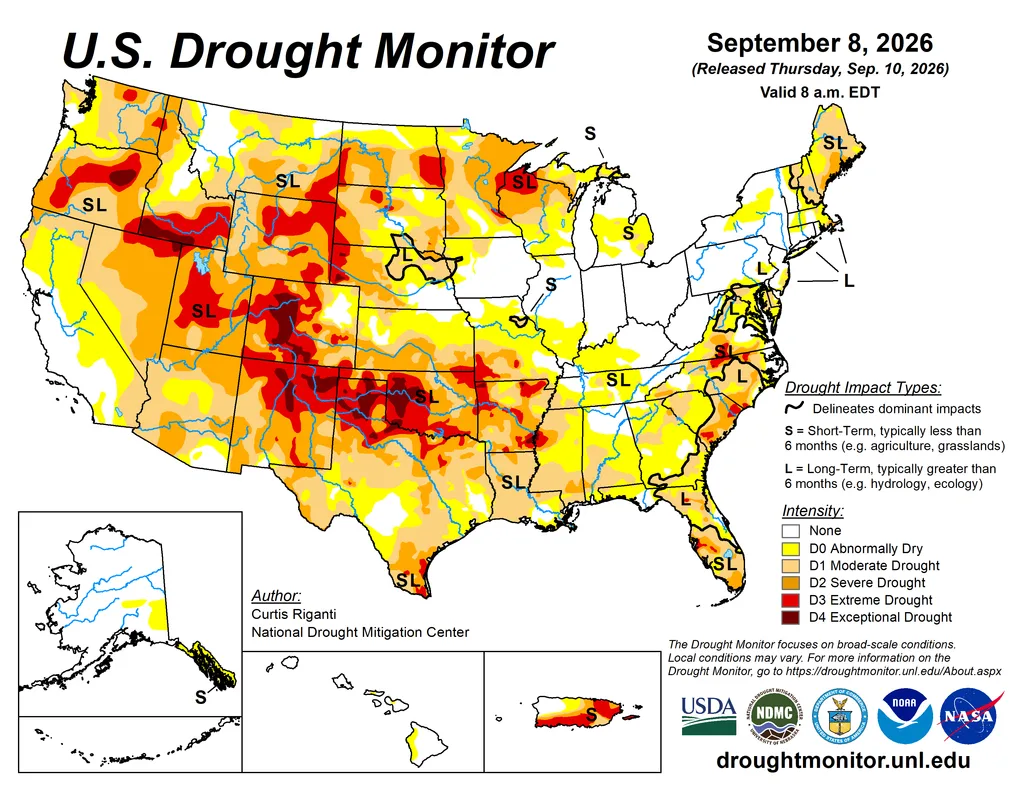
Warmer-than-normal temperatures, ranging from 10-15 degrees above normal in much of the central Great Plains, Corn Belt and Missouri, combined with mostly dry weather in these areas supported worsening drought. Drier weather also continued this week in New England, parts of the Michigan Upper Peninsula, along parts of the North Dakota-South Dakota border, southeast Montana and southwest Colorado, leading to degradation in parts of these areas.
In contrast, heavy rains fell from southeast South Dakota into western Iowa and southern Minnesota, eastern Wisconsin, northern North Dakota, western Oregon and parts of the northern Rocky Mountains in Montana and Idaho. Scattered heavy rains, locally 2-3 inches or more, also occurred in parts of Pennsylvania, New Jersey and Delaware, eastern North Carolina and Florida.

Tropical Storm Edouard and its remnants delivered very heavy rain amounts, locally 10-15 inches or more, in a narrow corridor in southeast Texas. Lowell, in the central Pacific Ocean, delivered heavy rain amounts to Niihau, Kauai and Oahu as it passed west of the islands as a hurricane earlier this week, alleviating abnormal dryness in a few areas. Conditions continued to improve in localized areas of Puerto Rico this week after recent heavy rains. While the central United States dealt with an early-autumn heat wave, near- or below-normal temperatures occurred from the Great Basin west to the Pacific Ocean.
The West
An area from southwestern Oregon to central Washington into northern Idaho and Montana received some welcome rainfall during the week. The rain resulted in regional improvements in drought conditions.
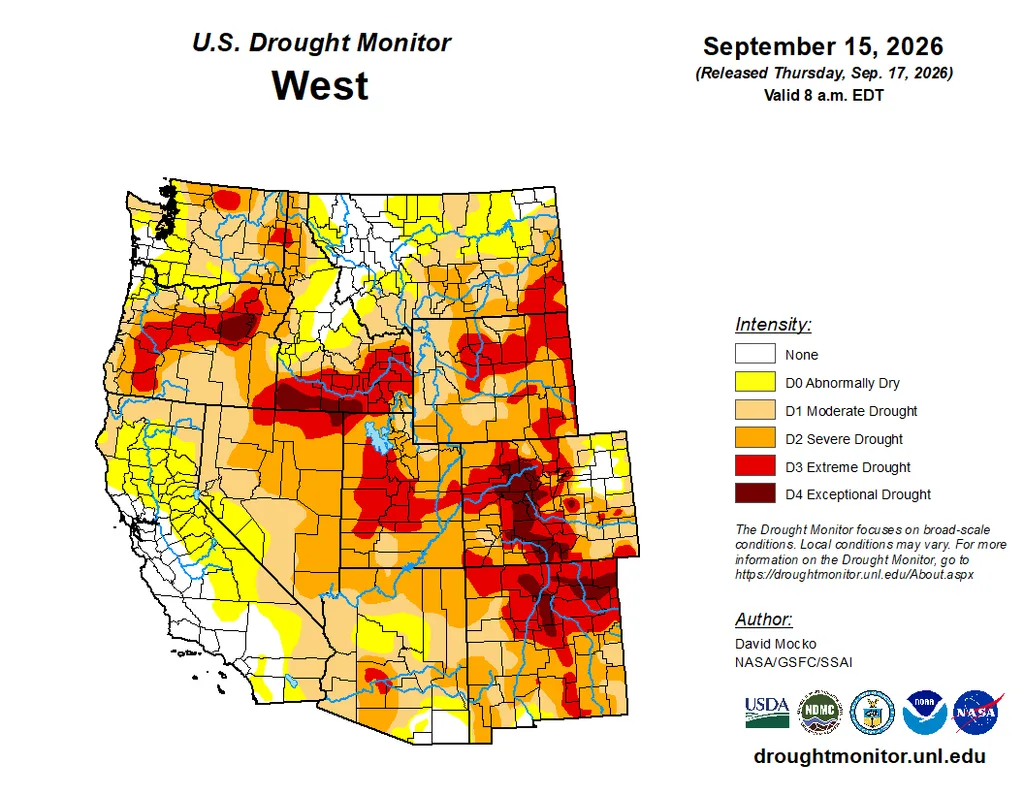
One location that just missed out was in northwest Washington on the Canadian border, resulting in a drought degradation, where continued low streamflows were observed. There were also areas on the California-Nevada border and central Arizona with drought degradation that also received little-to-no rainfall. Extreme drought is shown over much of central Oregon, central Utah, southern Idaho down into northern Nevada, and small areas in northern Washington and southern Arizona. Exceptional drought continues in southern Idaho, northern Nevada, and northeastern Oregon.
The High Plains
Eastern Kansas had above normal precipitation over the past week; this led to improvement in drought conditions in this area. Eastern Nebraska and eastern South Dakota also had decent rainfall and resulting improvement to drought.
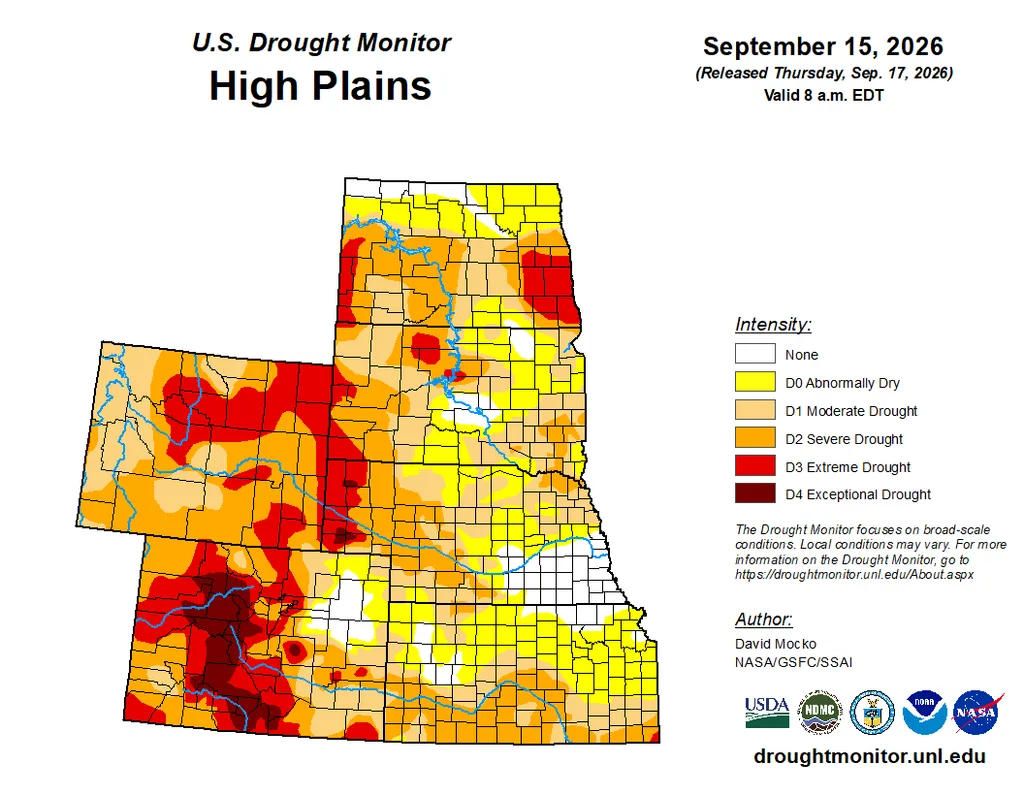
Other areas of South Dakota that missed out on the rain had drought degradation. Colorado had drought degradations in the center part of the state, with drought improvements in both the southwest and southeast parts. Extreme drought continues over much of Colorado and Wyoming, western Nebraska and the Dakotas, and in eastern North Dakota. Exceptional drought is observed over much of central Colorado as well as two localized areas in far western Nebraska.
The South
Extremely above normal temperatures continued in this region over the past week. Nearly all locations had drought deterioration, with the exceptions of northern Arkansas, northeastern Oklahoma, and coastal Mississippi.
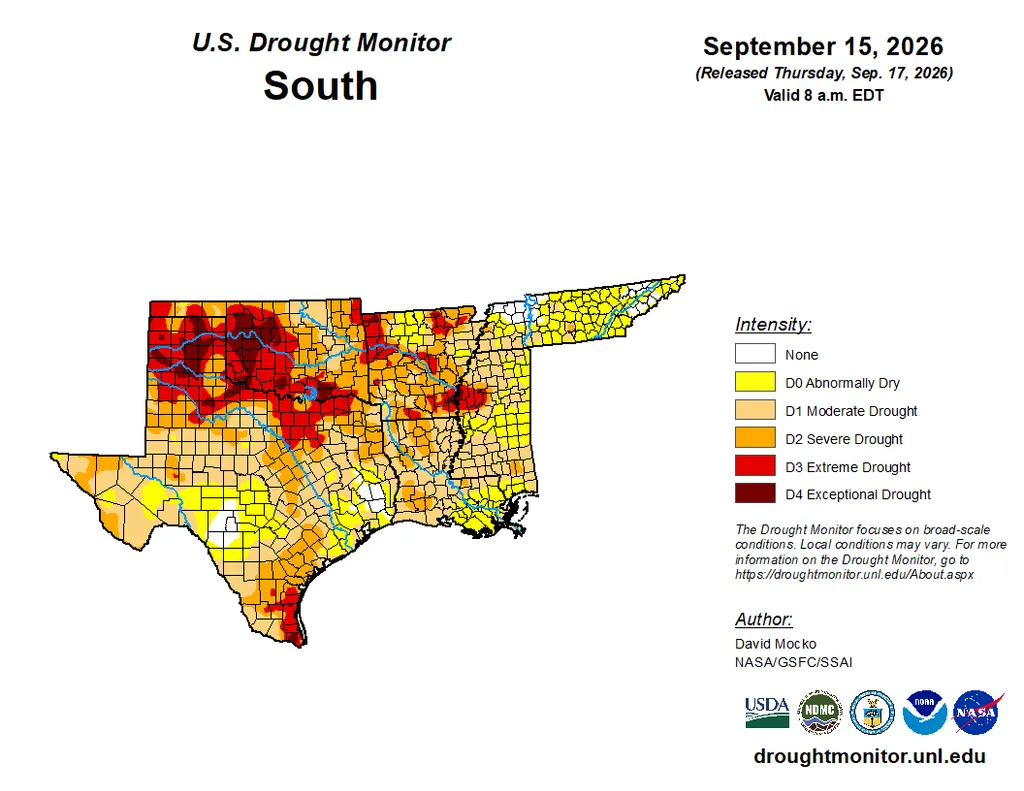
Much of Texas and into the Ark-La-Tex area experienced flash drought conditions. In addition to the heat, these areas received little rainfall in the week. Extreme to exceptional drought conditions are noted in far south Texas, most of northern Texas into western and southern Oklahoma, northwestern and northeastern Arkansas, and along the Arkansas-Mississippi border. — UNL Drought Monitor