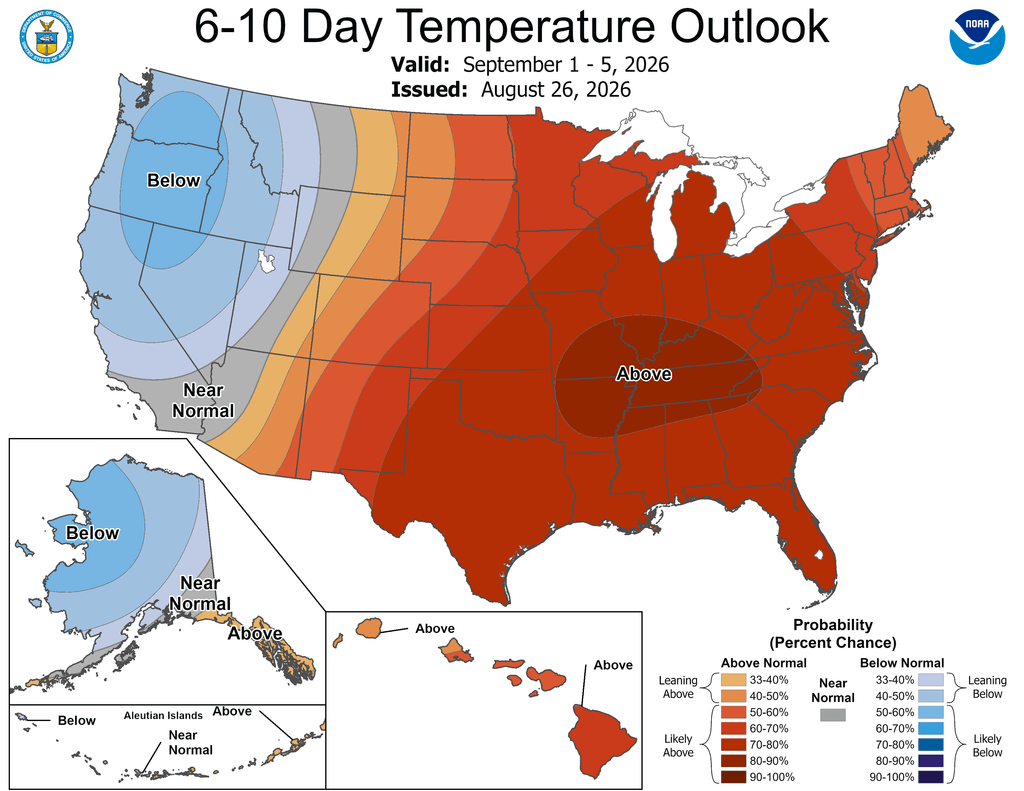
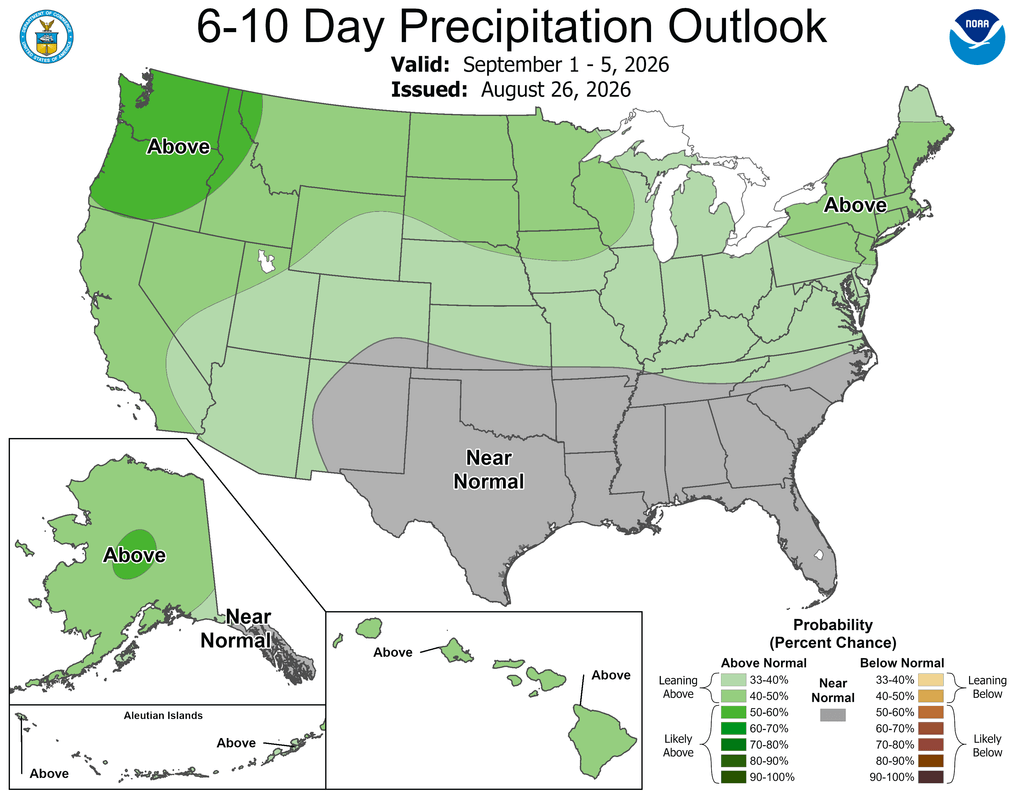
Nationwide
Early last week, an amplified ridge-trough pattern over North America brought widespread late-summer heat to the West and south-central US, with milder temperatures spreading across the Corn Belt and gradually shifting to the Northeast and mid-Atlantic states. 
The north side of the mean ridge provided a focus for convective activity, with narrow swaths of locally heavy rainfall extending across Nebraska and Missouri, while shortwave troughs brought several rounds of storms to the eastern Corn Belt and parts of the mid-Atlantic and southern New England. Underneath the ridge, dry weather combined with excessive heat continued to promote rapid-onset drought across much of the South. Across the Southeast, summer convection competed with increased evapotranspirative demand from hot temperatures, causing some degradation in areas that missed thunderstorm activity. 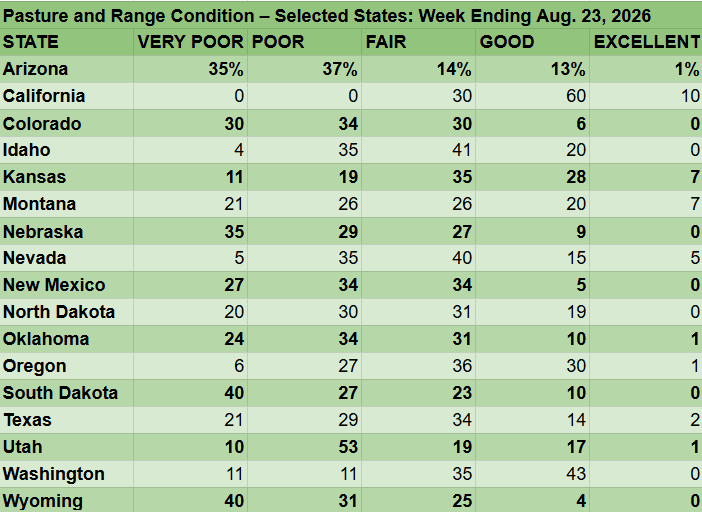
Across the West, an active monsoon pattern continued to bring localized relief to parts of Arizona and New Mexico, while excessive heat and drier conditions promoted drought expansion across eastern New Mexico and portions of the Intermountain West, Great Basin, and the Northwest.
The West
Seasonal dryness continued across the Pacific Coast states and much of the Great Basin, where persistent above-normal temperatures drove high demand on water resources and led to localized degradation. 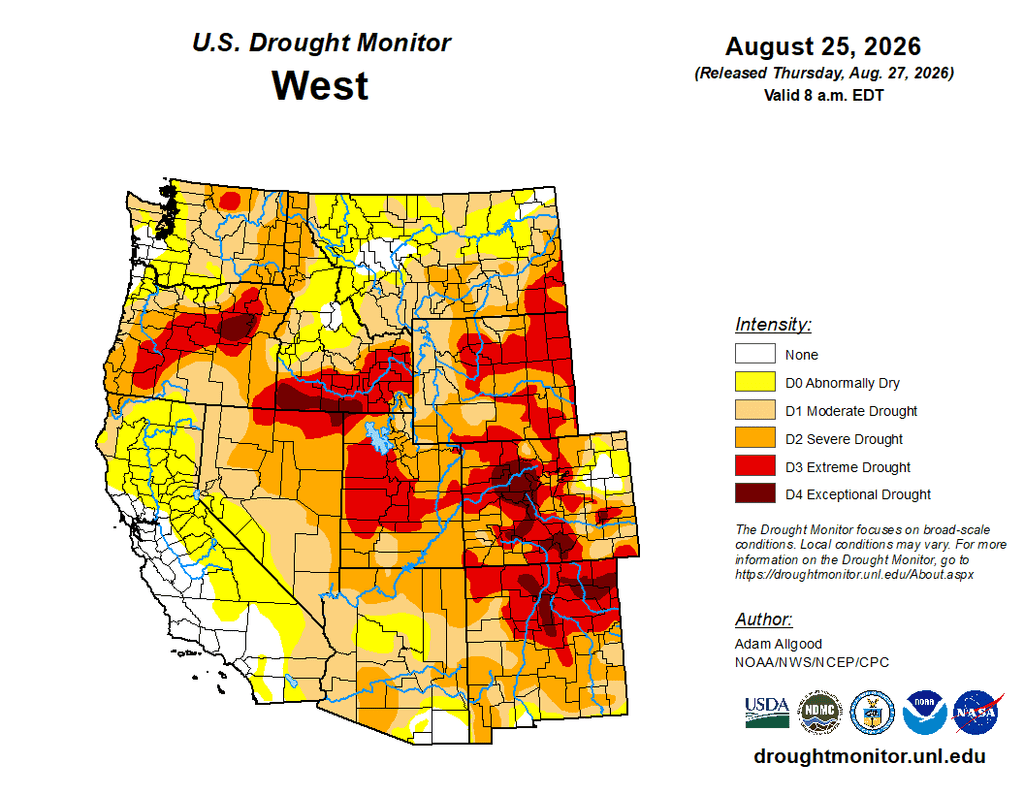
Extreme Drought (D3) expanded slightly across southern Oregon and northern Washington, where soil moisture and groundwater levels remained critically poor. Extreme to Exceptional (D4) drought also expanded into northeastern Idaho, with degradation noted in small portions of Utah and the southern California deserts. Elsewhere, ongoing monsoonal convection promoted drought relief across much of Arizona and western New Mexico, though persistent heat and dry conditions drove drought expansion across eastern New Mexico.
The High Plains
The High Plains saw a mixture of drought degradation and localized improvement. Rapid drought deterioration continued across southern Kansas and southeastern Colorado, where dry conditions and excessive heat aggravated agricultural impacts. 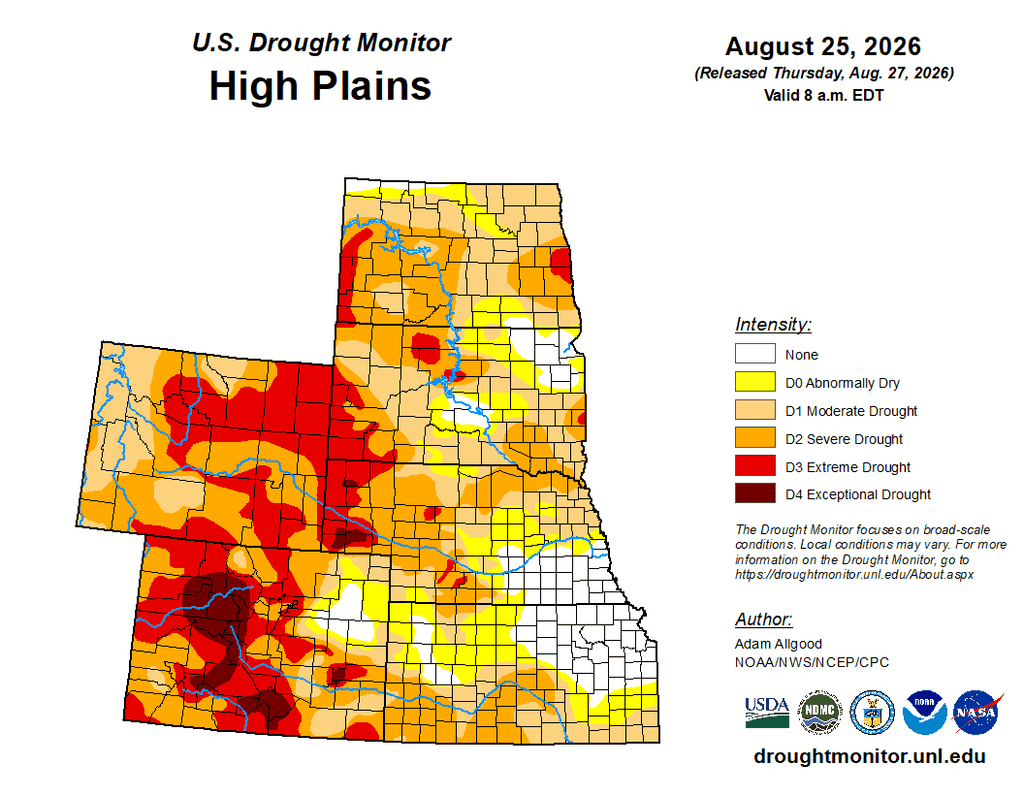
Further north, widespread convection brought drought relief east of the Front Range across eastern Colorado, though some deterioration occurred in the Rockies of Colorado and Wyoming where water storage impacts from last spring’s limited snow cover are beginning to mount. Organized convection along the ridge’s northern periphery promoted drought reduction in central Nebraska. Showers mostly maintained a status quo depiction across South Dakota, save for small areas of degradation along its respective borders with North Dakota and Minnesota. More widespread drought degradation was noted across North Dakota, where precipitation was sparser outside of a single, narrow convective event that tracked across the northeastern corner of the state.
The South
Under a persistent heat dome ridge maintaining mostly dry conditions and unrelenting heat, widespread rapid drought expansion continued for another week across the South region.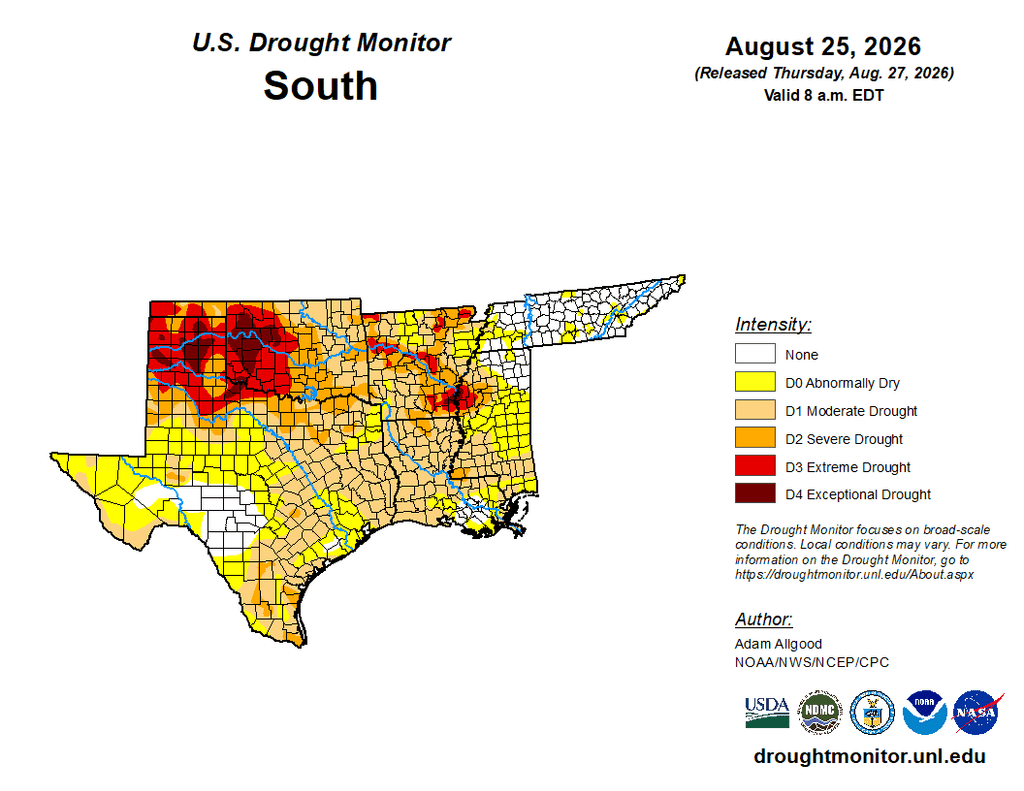
Weekly maximum temperatures exceeded 100 degrees across nearly the entire region, except in Tennessee and peaked above 110 degrees along the Texas-Oklahoma border. Condition Monitoring Observer Reports submitted to the National Drought Mitigation Center highlighted rapidly worsening impacts, including dry stock ponds, wilting trees, dust storms, and elevated wildfire activity. Drought expansion and intensification were most pronounced across Texas, Oklahoma, Louisiana, and Arkansas, while conditions also began to noticeably deteriorate across Mississippi. Small-scale convection provided only brief, highly localized relief to isolated portions of central Oklahoma and Arkansas. — UNL Drought Monitor