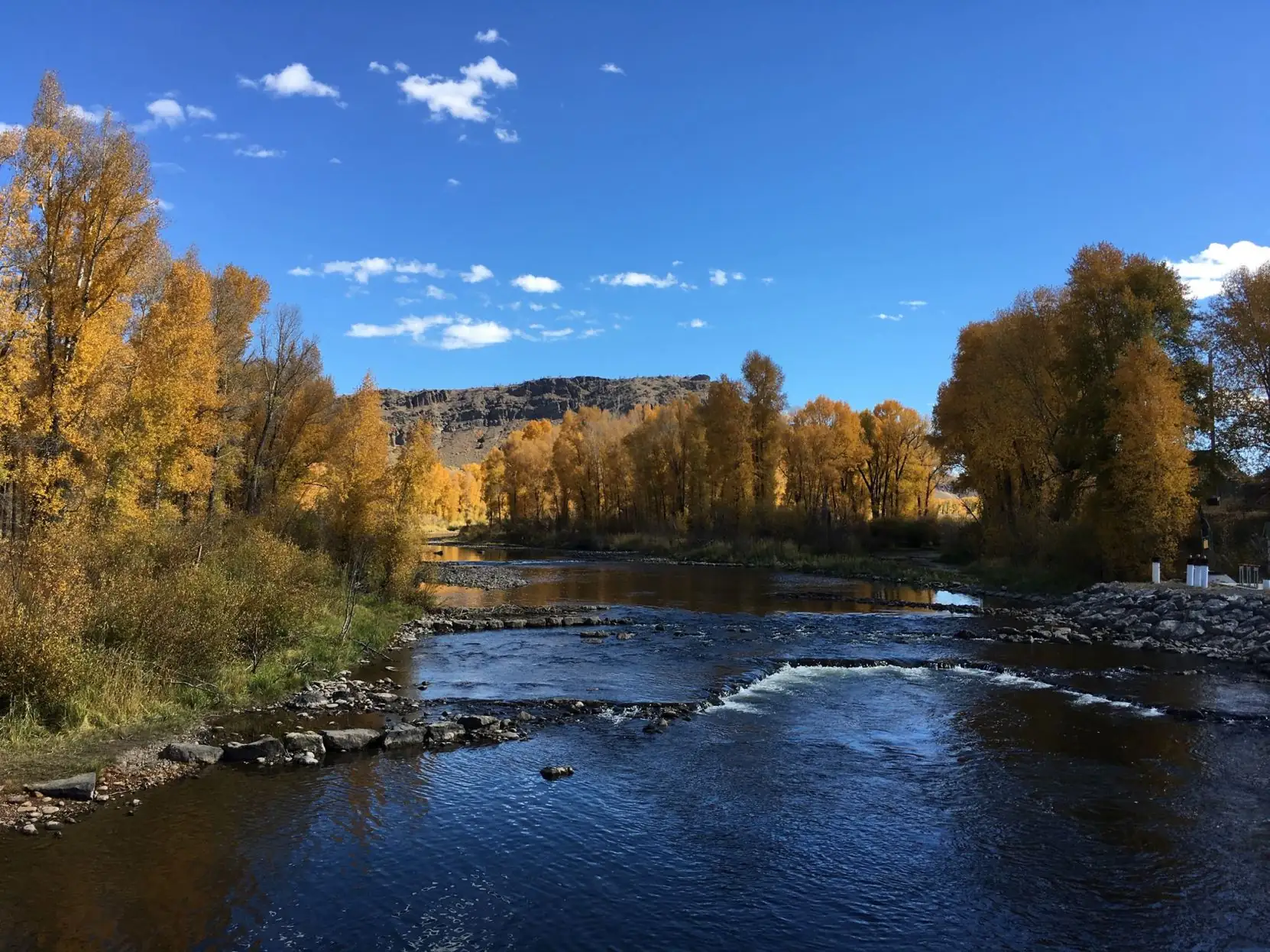
The Colorado River is suing the state of Colorado.
A radical environmental group submitted the singular lawsuit to the District Court of Colorado last Tuesday. The group and its members asked the court to recognize the Colorado River Ecosystem as a person. They also asked the court to declare actions taken by the state of Colorado—such as water allocation for profit-driven uses—as violations of the river’s rights.
“…[C]ourts and legislatures around the globe have begun to create a new kind of environmental law, one which recognizes that ecosystems themselves possess certain rights, and which allows communities to sue on their behalf for damages caused to the ecosystem,” reads the introduction of the complaint.
“Much in the same way that African Americans and women became ‘visible’ to the courts in the 1800’s [sic], courts and legislatures now are making ecosystems visible to the institutions of government.”
The complaint lists the Colorado River Ecosystem as the plaintiff of the case. The state of Colorado is the defendant. There are, of course, human participants behind these titles.
Deep Green Resistance (DGR) and members of its Southwest Coalition are “next friends” to the plaintiff. The group was started in 2011 and self-describes as seeking to destroy “industrial civilization.” They are suing Colorado Gov. John Hickenlooper in “his official capacity as the executive of the state.”
The complaint characterizes the Colorado River Ecosystem as supporting more life—both human and non-human—than any other ecosystem in the arid Southwest. It additionally notes the Colorado River Ecosystem is tens of millions of years old. It argues that the interests of the Colorado River Ecosystem are—or should be—more important than those of its dependents.
“Water, air, soil, climate and the food we eat depend on natural communities. The needs of these communities are primary,” reads part of the complaint.
“If American courts do not recognize the inherent worth of natural communities, the dominant culture will not change, and collapse will only intensify. American courts must recognize the legally enforceable rights of ecosystems and nature for those reasons.”
The complaint asks the court for three declaratory judgements:
- That the Colorado River Ecosystem be declared a “person” capable of having rights under the law, and that DGR and its members may serve as “next friends” to defend those rights;
- That the Colorado River Ecosystem has the rights to “exist, flourish, regenerate, be restored, and naturally evolve;” and
- That actions taken by the state—such as issuing use permits, over allotting the available water, and damming the river—are capable of violating those rights.
Previous precedent
Granting non-human entities “personhood” is not unheard of. The DGR complaint cited several international countries as precedent. It pointed to New Zealand’s Te Urewera National Park, Colombia’s Atrato River, and India’s Ganges and Yamuna Rivers as specific examples.
Though this is the first of its kind in the U.S., there are still analogous examples. For instance, corporations have been granted a measure of personhood for purposes of First Amendment protections. Examples include the Citizens United v. Federal Election Commission case of 2010, and the Burwell v. Hobby Lobby case of 2014.
The U.S. has also seen similarly structured cases involving arguments for the personhood of animals. Most recently, the so-called “monkey selfie” dealt with the question of whether animals can own copyright. The case was settled out of court three weeks ago.
In 2012, People for the Ethical Treatment of Animals (PETA) sued Sea World on behalf of its killer whales. In that case, PETA argued Sea World was violating the orcas’ 13th Amendment protections, which prohibit slavery. The judge threw out the case, ruling the amendment only applies to humans.
PETA and other animal rights groups have also brought many personhood suits on behalf of animals over the past decades. Great apes, whales, and elephants are often the focuses of such cases.
Jason Flores-Williams, a Denver-area attorney representing DGR, told WLJ that these sorts of cases “courageously set a model that’s worth following.”
Paradigm shift
Williams made it clear that starting a precedent-setting paradigm shift is the goal of the suit.
“Let’s put this in the most basic terms,” he said. “A reason a lot of environmental law is thrown out of court is because you cannot show … that damage being done to a finite natural resource or ecosystem is going to give direct, causal rise to an injury to human beings. What this does is it cuts through it and says, ‘injury to the Colorado River is cognizable.’”
In legal terms, “cognizable” means something a court can rule on.
“If the Colorado River has standing, we no longer have to go through this perambulation where I need to show the court … that [an action] will ultimately hurt human beings,” Williams went on. “So, an injury to the river and its right to exist would be cognizable.”
When asked where he hopes the case will go, and if it is a showpiece, Williams was definitive.
“I don’t engage in showpieces,” he said. “What this is is a legal doctrine that has been established around the world and is a very pragmatic legal doctrine.”
Later he admitted that it is doubtful that the court will grant the requests for declaratory judgements.
“What we’ll probably get in that order—what I hope—is a couple lines, or a paragraph, saying, ‘well, perhaps the court could envision that at some future point.’ And then what happens after that is that—and this is the way it happened with slaves being treated as property under our jurisprudence—similar lawsuits and complaints are filed around the country,” he projected.
“The more the courts see it, the more the doctrine gains credibility, legally,” he summarized.
Practical impacts
The complaint did not focus on downstream impacts of making the Colorado River a person. However, the complaint includes details that are worth ranchers’ attention.
In its presentation of the involved parties, the complaint states that, “In 2012, 78 percent of the Colorado’s water was used for agriculture alone.” Later it included the issuing of permits and water allocation in its list of actions the state can take that might violate the proposed rights of the Colorado River Ecosystem.
The complaint also made this lament:
“The underlying policy problem here is the American legal system’s insistence that the [Environmental Protection Agency] provides adequate protections, and is the only proper mechanism for gaining recourse for injuries to ecosystems.”
Williams’ discussion of the potential impacts was more figurative than pragmatic.
“The relationship would change,” he explained. “Nature itself would have a right. It would be a rights-bearing entity with the right to exist.”
Giving the Colorado River Ecosystem legal personhood would level the playing field in the relationship, he said.
“Where you have one party that has a panoply of rights and resources and then the other party has no rights and—ironically, since it is a resource—no resources, in interactions between the two, to tend to have negative outcomes.
“I would say that the negative outcomes that we’re experiencing right now is environmental degradation and what I believe to be—based on science—an environmental crisis that I was going to say is coming, but that we’re starting to live in right now.” — Kerry Halladay, WLJ editor