
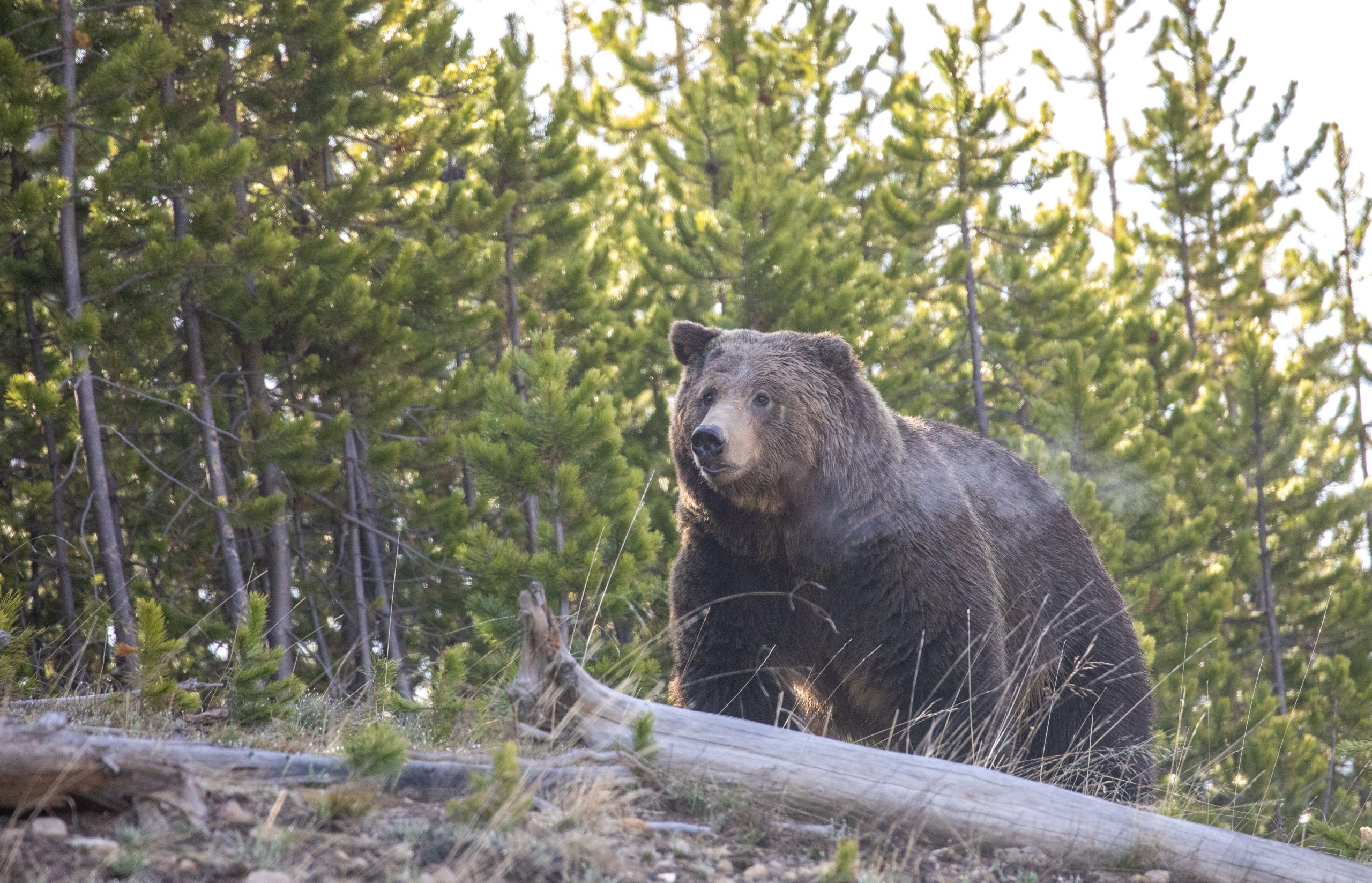
A proposal requiring California to study whether grizzly bears could one day return to the state is advancing through the legislature, drawing support from conservation groups and Tribal governments while prompting opposition from agricultural organizations that argue the state is already struggling to manage existing predators.
Senate Bill (SB) 1305, authored by Sen. Laura Richardson (D-Inglewood), would require the California Department of Fish and Wildlife (CDFW) to develop a publicly available roadmap evaluating whether—and under what conditions—reintroduction of grizzly bears is both feasible and advisable.
Under the bill, CDFW would submit the completed roadmap by June 30, 2030, to legislative policy and budget committees, the Legislative Analyst’s Office and the Fish and Game Commission. The bill also specifies that grizzly bears could not be reintroduced until CDFW completes the roadmap, determines that a self-sustaining population is biologically viable based on the best available science, consults with California Tribes, engages affected communities and satisfies several other requirements outlined in the legislation. Any work would also depend on future legislative appropriation.
The bill’s cosponsors are the Yurok Tribe and Tejon Tribe, and according to CalMatters, at least 40 organizations, including Tribes, environmental groups and animal welfare organizations, support the measure. Supporters say restoring California’s former apex land predator would help rebuild ecosystems while correcting what they view as a historical ecological loss.
“The fears articulated about bringing grizzlies back, and all the chaos and carnage that they fear will ensue, is completely overblown,” Brendan Cummings, conservation director at the Center for Biological Diversity, told SFGATE.
Previous study on viability
The legislation follows a 200-page feasibility study published in 2025 by the California Grizzly Research Network, a coalition of scientists, Tribal leaders and conservationists. The report concluded that California still contains sufficient habitat to support grizzly bears, although researchers emphasized that any reintroduction would ultimately depend on public acceptance.
Lead author Dr. Peter Alagona of the University of California, Santa Barbara, said there was “no biological reason” grizzlies could not return if Californians chose that path.
Researchers estimated roughly 34.5% of the state could provide suitable habitat, identifying the Northwest Forest, Sierra Nevada and Transverse Ranges as the most promising recovery areas. The study acknowledged livestock producers could experience depredation risks near public grazing lands but concluded those conflicts could be addressed through improved husbandry, deterrents and compensation programs. It estimated a recovery program would cost less than $3 million annually during its first decade while acknowledging CDFW already faces budget constraints.
CCA opposes proposal
Agricultural organizations remain among the bill’s strongest opponents. The California Cattlemen’s Association (CCA), California Farm Bureau and California State Beekeepers Association oppose SB 1305, arguing the state should focus on managing existing wildlife conflicts before considering the return of another apex predator.
“We’ve got a few major concerns with the bill,” Kirk Wilbur, CCA vice president of government affairs, told WLJ. “Most significantly, we believe it would be irresponsible to artificially reintroduce grizzlies to California when the state is already struggling to manage existing wildlife populations, particularly predators.”
Wilbur pointed to continuing conflicts involving wolves, mountain lions and black bears, arguing another apex predator would increase livestock losses, create additional conflicts with ranchers, rural residents and recreationists, and compete with existing predators for prey.
Wilbur questioned whether that should be a priority, noting an Assembly committee analysis found CDFW is funded to complete only about 38% of its mission. He said CCA and other agricultural groups successfully advocated this year for funding the state’s Wildlife Coexistence and wolf programs, but those requests received no money in the state budget.
Wilbur also said CDFW should conduct its own independent evaluation if the measure becomes law. He argued the earlier feasibility study devoted limited attention to agriculture and rural communities and did not adequately examine the economic and practical challenges of living alongside grizzly bears. In addition, he questioned whether California could sustain a compensation program for livestock losses when existing wolf compensation programs have gone unfunded in recent years, leaving ranchers uncertain they would receive meaningful support if grizzlies were reintroduced.
A coalition of 19 hunting and conservation organizations, including the Rocky Mountain Elk Foundation, urged lawmakers to reject SB 1305, arguing wildlife policy should be guided by science and practical management rather than symbolism. The groups said the proposal raises concerns about ecological feasibility, public safety, wildlife management priorities and the long-term costs of reintroducing grizzly bears to California.
Next steps
Wilbur expects the bill to be placed on the Assembly Appropriations Committee’s suspense file, where legislation with significant fiscal impacts is commonly held before a final decision.
Under joint legislative rules, Aug. 14 is the deadline for fiscal committees to act on bills before sending them to the floor. If SB 1305 is placed on the suspense file, Wilbur said its fate will likely be decided during the committee’s annual suspense day, which is expected to take place Aug. 13, when lawmakers decide which fiscal measures will continue advancing through the legislative process. — Charles Wallace, WLJ contributing editor


2 Comments