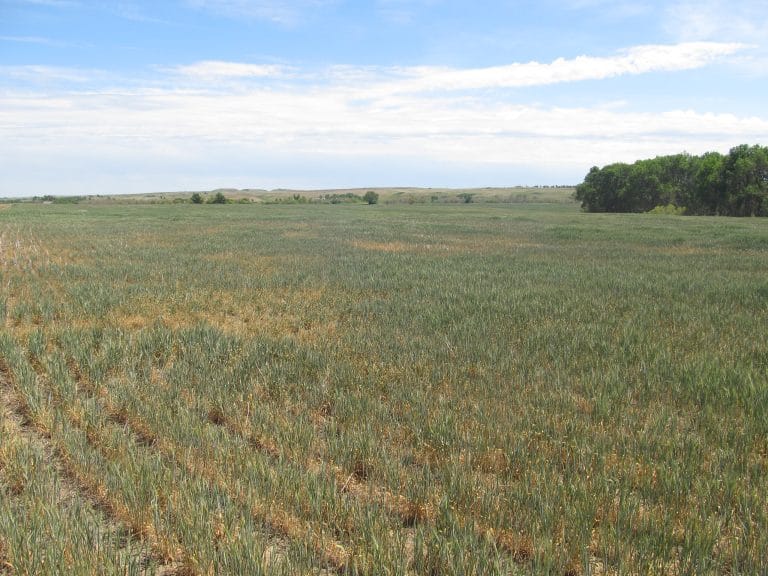
Drought conditions across much of Oklahoma have reduced pasture production and hay supplies going into winter. Many producers have already started feeding hay, raising concerns about having enough forage to carry cowherds through the winter.
Grazing crop residues following grain harvest is an underutilized way to economically extend grazing and conserve hay supplies in Oklahoma.
Corn and grain sorghum residues are a valuable grazing resources for beef cows, particularly during mid-gestation when nutrient requirements are relatively low. Cattle selectively graze the most nutritious plant components first, consuming any remaining grain, followed by leaves and husks. Stalks and cobs are selected last and are considerably lower in digestibility and should not be considered the primary source of nutrients for the cow.
The University of Nebraska indicates that corn residue from each acre of a field yielding 100 bushels can support a 1,200-pound cow for 30 days. A field yielding 150 bushels could provide approximately 45 cow-grazing days per acre. These estimates assume cattle consume approximately 50% of the leaves and husks, representing only about 15% of the total residue.
Grain sorghum produces 8-12 lbs. of grazable residue per bushel of grain harvested, so an 80-bushel/acre grain sorghum crop could provide 640-960 lbs. of grazable forage per acre.
For all crop residues, nutritional value declines as grazing progresses because cattle selectively consume the higher-quality portions first. Protein supplementation may be necessary as residue quality declines, particularly for lactating cows and growing replacement heifers.
Producers should exercise caution when grazing drought-stressed sorghum or corn residues because of potential nitrate accumulation. Grain sorghum regrowth, particularly following frost, can also present a prussic acid risk. Herbicide grazing restrictions should be checked before turning cattle into harvested fields.
Grazing crop residues can delay hay feeding, reduce winter feed costs and provide additional value from harvested cropland. However, stocking rates should reflect the amount of palatable residue available, and cattle should be moved before the remaining forage becomes too low in quality to meet their nutritional requirements. — Paul Beck, Oklahoma State University Extension beef cattle nutrition specialist