
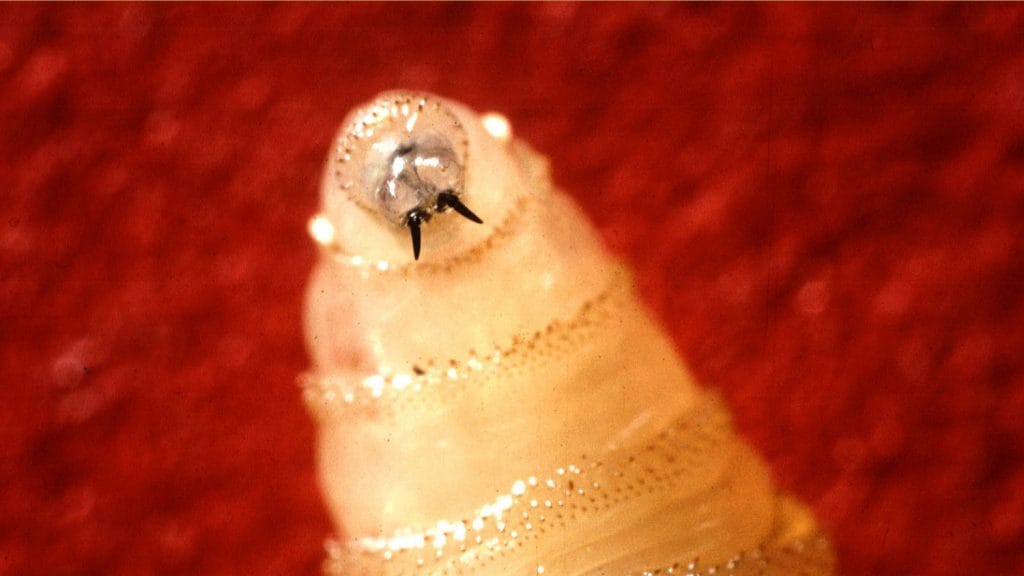
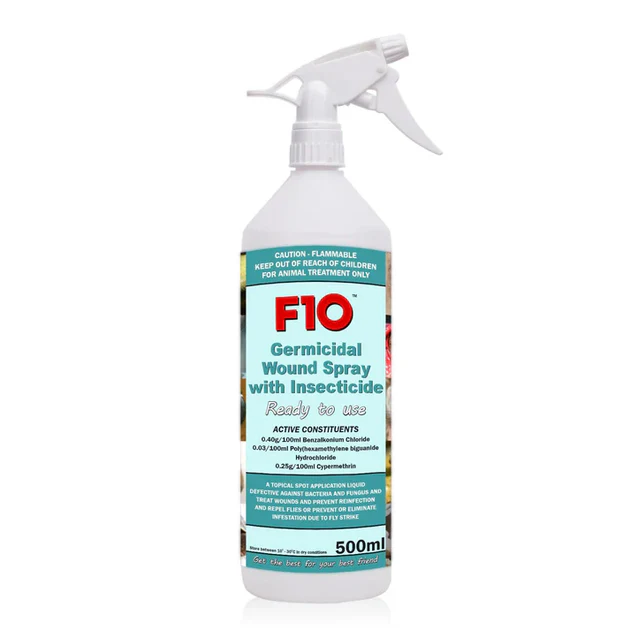
The Food and Drug Administration (FDA) has conditionally approved the use of Dectomax-CA1 (a doramectin injection) for the prevention and treatment of New World screwworm (NWS) infestations in cattle. The drug is approved to prevent and treat screwworm larval infestations and prevent reinfestation for 21 days.
“We understand the urgency with which America’s farmers and ranchers are asking for tools to fight New World screwworm,” said FDA Commissioner Marty Makary. “Today’s conditional approval—the first in the U.S. for NWS—shows our dedication to rapidly advancing important animal medicines when they are needed most.
“We continue to work tirelessly to complete review of other NWS products to protect multiple animal species in the U.S.,” Makary said. Dectomax-CA1 is conditionally approved for use only in cattle.
The drug is eligible for conditional approval because its use is intended to prevent and treat a serious or life-threatening disease, it addresses an unmet animal health need and demonstrating its effectiveness would require complex or difficult studies.
Dectomax is already fully approved under a New Animal Drug Application for treatment and control of some nematode and arthropod parasites in cattle and swine. Dectomax and Dectomax-CA1 contain the same active ingredient (doramectin injection) at the same dose. Because Dectomax’s approval required studies and additional information, FDA did not require new information for the conditional use of Dectomax-CA1.
“Under this conditional approval, the FDA has determined the drug is safe and has a reasonable expectation of effectiveness,” said Timothy Schell, acting director of the FDA’s Center for Veterinary Medicine.
The withdrawal period for Dectomac-CA1 is 35 days. The drug should not be used in female dairy cattle 20 months of age or older, or in calves to be processed for veal. The FDA encourages producers and veterinarians to use Dectomax-CA1 only when medically necessary to reduce the risk of antiparasitic resistance.
Dectomax-CA1 is manufactured by Zoetis Inc.
USDA update
Speaking at the Agriculture Outlook Forum in Kansas City, MO, in late September, USDA Secretary Brooke Rollins shared more details about the latest detection of NWS in Mexico.
“Unfortunately, what we found was Mexico has failed to enforce proper cattle movement controls infected regions and is not tending to fly traps daily as promised, which hinder our real time detection capabilities,” Rollins said.
She said Mexico must implement the agreed-upon protocols, expand survelliance immediately and lock down cattle movement in infected areas. Until 100% compliance is demonstrated, Rollins said, a border reopening plan will not be considered.
USDA is deploying 200 staff members into Mexico to work with the country’s National Agro-Alimentary Health, Safety and Quality Service (SENASICA) to continue reviewing fly traps, of which there are about 8,000 in Mexico.
“My commitment is as we are getting hourly updates, we will immediately let the public know,” Rollins promised.
Mexico measures
The Mexican government implemented regulations on livestock movement in mid-September, according to a SENASICA document acquired by Reuters. The Mexican agency said the anti-parasite drug ivermectin must be given 72 hours in advance of any cattle movement under the supervision of the International Regional Organization for Animal and Plant Health, Reuters reported.
A Mexican industry official told Reuters the ivermectin requirement would significantly delay livestock movement.
The Mexican meat sector pushed back against new measures. The Mexican meat industry group AMEG (Asociación Mexicana de Engordadores de Ganado Bovino) said recent measures “jeopardise the supply chain of the meat production sector.” The group said restricting the movement of livestock from the north to the south “threatens the economic viability of the sector that generated $192 billion in 2024.”
The group contended the only proven way to eradicate the parasite is to release sterile flies to reduce the mating population in the wild, Reuters reported.
Mexican President Claudia Sheinbaum said the country was working on new measures that would soon be announced, but that restricting livestock movement was not simple.
On Sept. 30, SENASICA said it was conducting research to strengthen scientific and technological research and called on researchers to join forces to eradicate the pest. The agency plans to test entomopathogenic fungi in traps against NWS as a method of pest control. Entomopathogenic fungi are parasitic fungi that infect and kill insects and other arthropods.
U.S. research
USDA selected three sites to support the fight against NWS, which include the Arizona Veterinary Diagnostic Laboratory, Texas A&M AgriLife and the National Nuclear Security Administration (NNSA).
The Arizona Veterinary Diagnostic Laboratory at University of Arizona conducts diagnostic testing to detect and manage animal diseases. The lab specializes in microbiology, cytology, histopathology and molecular diagnostics.
As part of the effort to eradicate NWS, the lab will process captured adult flies to determine if they are NWS. If suspected to be NWS, the lab will send the sample to the National Veterinary Services Laboratory in Ames, IA, for confirmation. USDA will then use the information to track the pest.
Veterinarians and animal owners may submit samples to the lab for processing. More details on submitting samples are available at tinyurl.com/2wm336vz.
Texas A&M AgriLife and NNSA are exploring safer alternatives to high-radioactive technologies against NWS. This includes producing sterile flies via electron beam (eBeam), which could be a potentially safer alternative to high-radioactivity cobalt-60 gamma sterilization.
“Texas A&M researchers are now confident that eBeam can effectively sterilize male screwworms Cochliomyia hominivorax, without relying on high-activity radioactive material,” Texas A&M AgriLife said. — Anna Miller Fortozo, WLJ managing editor


2 Comments