For cattle producers across the Great Plains and West, drought is more than a weather event. It is a test of business planning, land stewardship and long-term survival.
That reality was the focus of a recent United States Cattlemen’s Association (USCA) “Horn Wrap Call,” where DTN livestock analyst ShayLe Stewart, Montana rancher Dusty Emond and former Farm Service Agency Administrator Zach Ducheneaux discussed the difficult choices ranchers face when forage disappears, stock water dwindles and liquidation pressures mount. Their discussion echoed many of the same themes highlighted in a recent Good Grazing Makes Cent$ panel titled “When in Drought” on drought management.
Signals reveal drought stress
Stewart said drought impacts often become visible in livestock markets long before they appear in government reports.
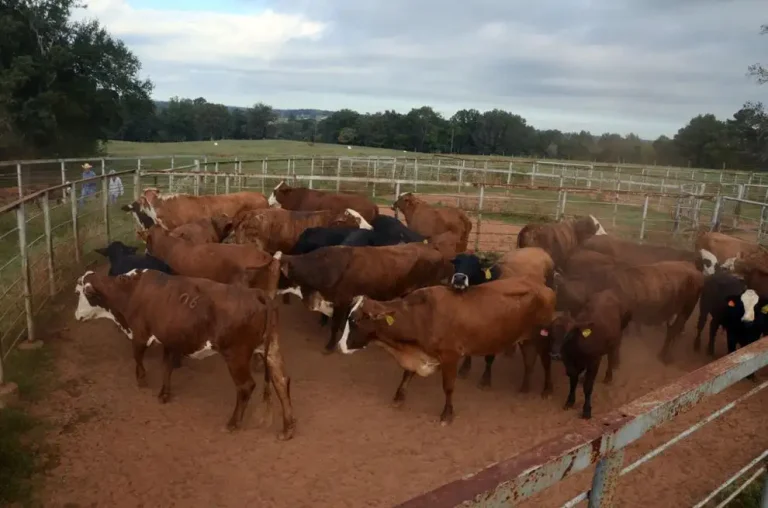
She pointed to Torrington Livestock Auction in Wyoming as an example. During one sale this spring, the market handled more than 9,000 head of cattle when weekly receipts typically range between 400 and 500 head.
“That just really echoes the significance of this drought and how producers are having to navigate this marketplace,” Stewart said.
The same observation was noted during the Good Grazing Makes Cent$ discussion, when Stewart said that unusually large sales volumes can be one of the clearest indicators of drought-driven liquidation.
Beyond auction receipts, Stewart noted producers can also monitor USDA’s Cattle on Feed report for clues. May placements were up 6%, suggesting some producers are choosing to place cattle in feedlots rather than turn them onto drought-stressed pasture.
While selling cattle may provide immediate cash flow, Stewart warned that the biggest financial consequences often appear years later.
“The biggest implication of destocking during a drought doesn’t actually financially come during the years of the drought,” Stewart said. “It comes after the year, or anywhere up to five to 10 years afterward.”
She explained that producers who sell breeding females lose not only those cows but also future calf crops. When conditions improve, rebuilding a herd often requires purchasing replacement females at elevated prices while cattle markets may already be softening.
The same concern was highlighted in the Good Grazing Makes Cent$ panel, which cited previous research showing that cash-flow deterioration frequently appears after drought conditions ease rather than during the drought itself.
Protecting grass
For Emond, a fifth-generation rancher near Malta, MT, protecting rangeland remains the top priority.
During the USCA discussion, Emond said he generally errs on the side of preserving grass resources, even if that means reducing livestock numbers. That philosophy mirrors comments he made during the Good Grazing Makes Cent$ panel, when he said he prefers to destock quickly and protect the range rather than risk long-term damage to forage resources.
Emond’s operation includes cow-calf pairs, replacement heifers, stockers, sheep and goats. That diversification gives him flexibility when drought arrives.
During the Horn Wrap Call, he explained that he has already sold his stocker cattle and some young bred cows while maintaining replacement heifers and sheep.
“We just tried to sell the overvalued and buy back the undervalued,” Emond said.
He also stressed that water availability often dictates management decisions. Depending on pasture location and infrastructure costs, the economics may favor hauling water, installing pipelines or simply removing livestock until rainfall returns.
Federal programs available
Ducheneaux argued that many producers are unaware of federal programs designed specifically to help keep cow herds intact.
He pointed to the Emergency Assistance for Livestock, Honey Bees and Farm-Raised Fish Program, which can help offset transportation costs associated with moving livestock or hauling feed during drought conditions.
“There is no valid reason for a producer to be selling a cow due to drought right now,” Ducheneaux said, noting that program flexibility adopted during the 2021 North Dakota drought remains available.
He also encouraged producers to utilize the Emergency Conservation Program, which can help fund water developments, pipelines, tanks and other infrastructure improvements.
Planning ahead
While drought often forces difficult decisions in the moment, the panelists repeatedly emphasized that preparation begins long before pastures dry up.
Stewart said producers should use the good years to prepare for the difficult ones rather than assume favorable conditions will last forever. Putting up extra hay, improving water systems and maintaining financial reserves can help ranchers weather drought when it inevitably returns.
“The time to plan for drought is not during the drought, it’s in the years with the rain,” Stewart said during the USCA call. Producers should focus on investments that improve long-term productivity and cash flow rather than short-term purchases that do little to strengthen the operation during difficult times.
Emond agreed, noting that successful drought management often comes down to making decisions based on economics rather than emotion. Diversifying enterprises, monitoring forage conditions early and acting before conditions become critical can provide producers with more options when dry weather arrives.
Whether through better grazing management, stronger financial planning, improved water systems or strategic use of assistance programs, the panelists agreed that drought preparedness is no longer optional. — Charles Wallace, WLJ contributing editor