
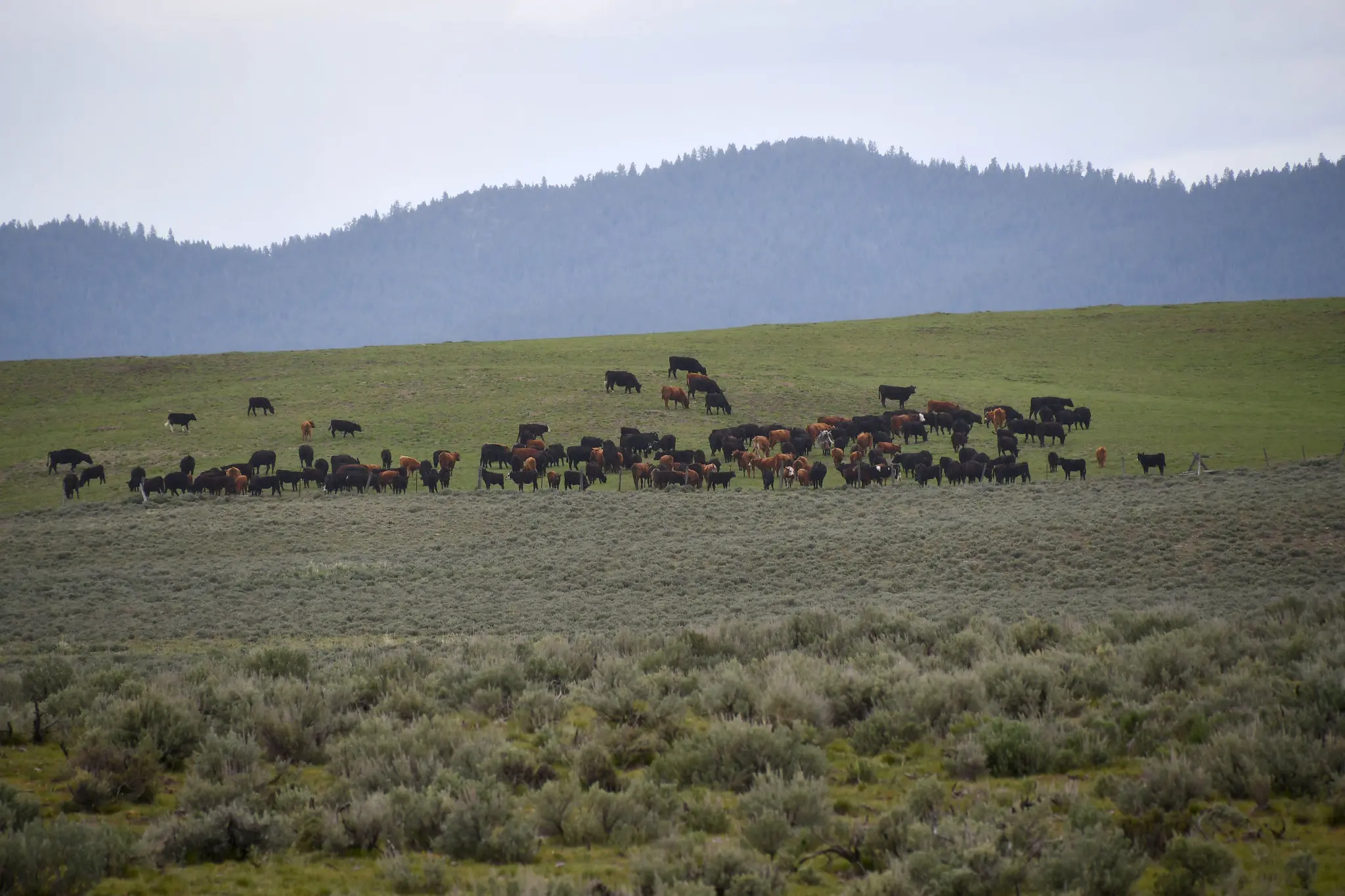
After the past drought, the beef herd was decimated and we have dropped to a 70-year low in cow inventory with approximately 27.5 million head. This is down from a high of 33 million cows in the mid-1970s. Although few people believe we will rebuild the cow herd back to previous levels, it is important to the health of our range, maintenance of our infrastructure and well-being of our rural communities that our cow herd does rebuild, with many industry leaders hoping we will see a 30 million head cow herd again.
This article will focus on the role beef cattle play in maintaining the health of our grasslands, but it is important to remember that a strong beef cattle industry also supports the local feed mill, implement dealer, cattle haulers, sale barn, order buyers, stocker operations, backgrounding operations, feedlots, packing plants and the whole host of local businesses where the employees of these operations shop.
The good news is the beef we are producing is of record-high quality, including an all-time high amount of USDA Prime and premium Choice beef, and a negligible amount of USDA Select. The result is we have won back consumers after a long decline, so the demand is definitely there to support a larger cow herd.
The majority of the U.S. and the world’s agricultural land highest and best use is for forage production, and the only way to convert this forage into food for humans is to feed it to ruminant livestock such as cattle. In addition, most of this land in forage production has a topography that the most efficient, and often only way, to harvest it is by grazing. In turn, harvesting these forages, primarily through grazing, is necessary to maintain healthy grasslands, which also support a wide variety of wildlife. This symbiotic relationship between grasslands, ruminants—which once included a herd of over 60 million bison—and humans has existed for thousands of years.
The consequences of not harvesting grasslands differ depending on the region of the country; however, in all cases, a vast amount of our agricultural land stops producing food for humans. Part of the evolution of grassland has always involved it being harvested through grazing, whether we are talking about wildlife, bison, feral Spanish cattle or today’s beef cattle. When grasslands are left feral, the results will vary by region.
For instance, in arid land, feral grasslands will revert to an unproductive desert, losing biodiversity, and will partially defoliate, which lowers carbon sequestration and exposes the land to erosion. Meanwhile, unharvested grasslands in the cooler, wetter eastern U.S. will result in the land returning to forest. The woodlands in southern New England contain a patchwork of stone walls from when the land was once farmed or grazed.
The bottom line is healthy, well managed grasslands are good for the environment, support a flourishing wildlife population and produce an abundance of nutrient-dense food for people in the form of beef and other meats.
Not only do cattle convert forage into nutritious beef, but they also value-add a whole host of byproducts, which can be incorporated into their rations. Cows graze corn stalks in the winter, and rations often contain brewers or distiller’s grains, cull potatoes and potato waste, cotton seed and cotton seed hulls, beet or citrus pulp and the list goes on.
The author of this article worked with one feedlot whose ration contained candy waste, pasta waste and corn screenings, and built a highly effective ration for another feedyard based on bakery waste and hardwood shavings. Ruminants are truly a wonder, and without cattle to value-add these byproducts, much of it would turn from being an asset in a cattle ration to becoming a major disposal problem.
The industry does face challenges in restocking the cow herd. The cost of land and pasture leases have greatly inflated, and finding experienced labor gets harder every year. The cost of replacement heifers has understandably risen. However, there are many good ideas that will help spur restocking.
For instance, Gordon Philip—who is now in his mid-80s but is still running about 500 commercial cows with just one hired hand—thinks the government should enact a $500 per head tax credit for heifers retained as breeding stock as an incentive to rebuild the herd.
Our current federal executive branch is much more pro-livestock in terms of access to grazing permits on government land, but that can change quickly depending on who is in power. One has to wonder why the land currently enrolled in the Conservation Reserve Program doesn’t become part of the permanent grasslands used for livestock production after being converted out of crop production.
In the end, a strong beef industry is an important component in maintaining the majority of the country’s agricultural land in production, as well as providing consumers with an abundant, safe and affordable source of nutrient-dense food. However, it will be economics and a strong market that will result in restocking our cow herd. — Dr. Bob Hough, WLJ correspondent
(Editor’s note: This article is part one of a three-part series about rebuilding the cow herd. Parts two and three will appear in the May 18 and May 25 issues of WLJ. A comprehensive feature article may also be found in the spring edition of The Wire on page 24.)



3 Comments