
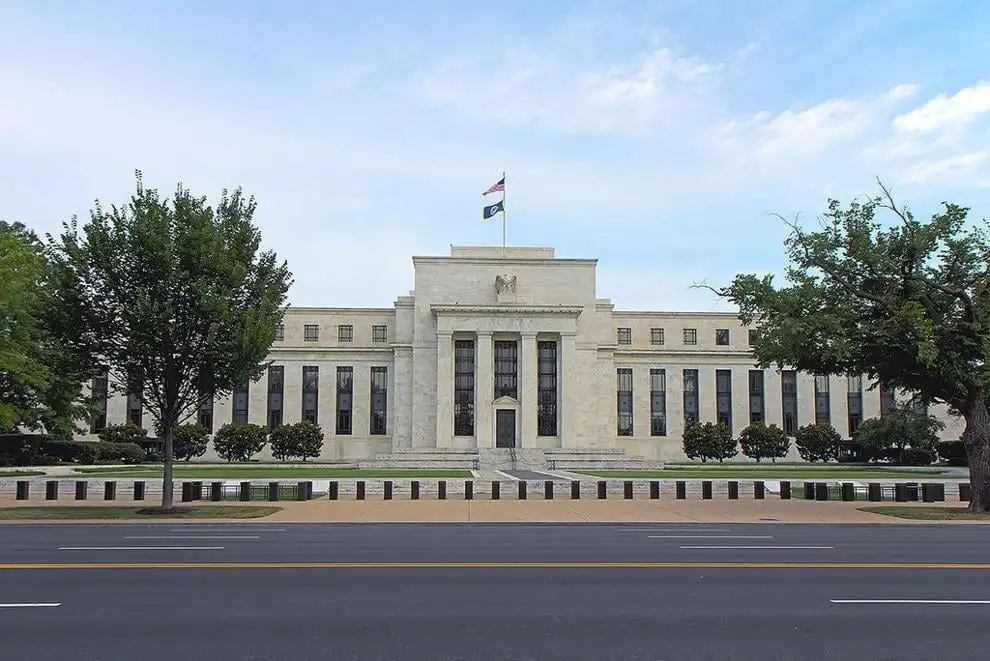
The Federal Reserve takes a lot of heat for its interest rate policies. But the Fed’s failures are more a case of poorly predicting the economy in the near future—despite its army of hundreds of economists—much less diagnosing the present. Its models are archaic and unable to explain the past or predict the future.
But the Fed is stuck with dealing with the policies enacted by Congress and the executive branch of any administration. It’s the policies of the last three years that have the economy in such a horrible place now and everyone nervous about the near future.
It is the spending policy of Congress—both Democrats and many Republicans—plus President Joe Biden’s executive orders, that have created the inflation we have now of 3.7% vs. the 1.4% of former President Donald Trump’s last year. Biden and Congress managed to get us peak inflation of 9.1—6.5 times 2020’s rate—and they are bragging now about 3.7%—2.5 times the 1.4% rate.
For beef’s consumers, slower inflation has slowed price increases but hasn’t reversed them. Prices overall are 17.9% higher since the Biden administration took over, and still climbing. Gasoline prices are 57% higher and for agriculture, diesel is 75% higher.
For food, E.J. Antoni, Heritage Foundation economist, spelled out some specifics we need to keep in mind. One in eight Americans can’t afford food without going into debt. Necessities like food and cars have increased 20%. Wages have increased but inflation has outpaced wage increases.
So, Antoni said a lot of Americans are operating on short-term thinking. The necessities have increased in cost so much, they have given up the idea of saving for a house down payment or ever being able to retire, so they are spending on “pleasure seeking.” Americans have raided their savings and gone into debt to try to maintain their standard of living. Credit card debt is costing families $240 billion in finance charges, alone, he said.
The savings rate has dropped to half its pre-pandemic level, which cuts money available for investment, which cuts business investment, which restricts worker productivity, which cuts economic growth and job growth.
Which boils down to two thoughts. Cattlemen are lucky to be involved in a business that involves a necessity—eating. There will be shifts in patterns, cut selection and away-from-home habits. We have been fortunate up to now to be regarded as both a necessity and sometimes, as affordable luxury entertainment.
Secondly, paraphrasing Herbert Stein, what can’t continue won’t. We desperately need a different Congress and president to reverse course ASAP.
The cost of regulations has become more obvious to the average citizen as the Biden administration goes to greater extremes with onerous restrictions on businesses and households. Some affect the public in general. Some appear general but could have nasty impacts on the beef industry.
On the state level, we have already seen the effect of California’s $20/hour fast food law, shutting down some outlets, cutting hours for some employees and raising the cost of hamburgers. We’ll see what effect the disruptions will have on beef volume in the highest populated state.
Not so obvious is a problem we’ve been following since the Obama years. Biden often specifies that he wants to create good union jobs. He is okay with the National Labor Relations Board (NLRB) issuing regulations again advancing their long-term goal of getting the fast food industry unionized.
The business structure concept of franchising has been under attack by the NLRB for years. Franchises are small businesses that license proven concepts from parent companies. Many fast food and casual restaurants are franchised operations. Unions have failed to organize restaurant chains because they are dispersed in ownership and geography.
So, their strategy has been to get franchise parent companies somehow more directly, legally connected by a federal rule. Then unions could make the parent companies liable for local hiring decisions via an “indirect control” doctrine. Unions would only need to target the parent companies to unionize the whole chain. There are some 800,000 franchised companies.
To stop this, Congress passed a bipartisan resolution overturning the NLRB’s last rule declaring franchises “joint employers.” Congress grasped the serious impact on small business—and consumer prices.
But “lunch bucket” Joe vetoed the resolution. For now, a federal judge has blocked the new rule, but the NLRB may appeal. But such outright attacks on businesses and consumer interests may have something to do with Biden’s “popularity.” — Steve Dittmer, WLJ columnist
(Steve Dittmer is the author of the Agribusiness Freedom Foundation newsletter. Views in the column do not necessarily represent the views or opinions of WLJ or its editorial staff.)


