Traditionally, most fed cattle were marketed through negotiated cash sales, with cattle feeders and packers agreeing on a price for a pen of cattle. Today, that is no longer the primary way fed cattle are marketed.
According to USDA Agricultural Marketing Service (AMS) data, negotiated cash sales declined from 52% of fed cattle marketed in 2005 to only 18% in 2025. Formula pricing increased from 33% to 63% over the same time period. Negotiated grid sales accounted for another 10% in 2025, and forward contracts made up the remaining 9%.
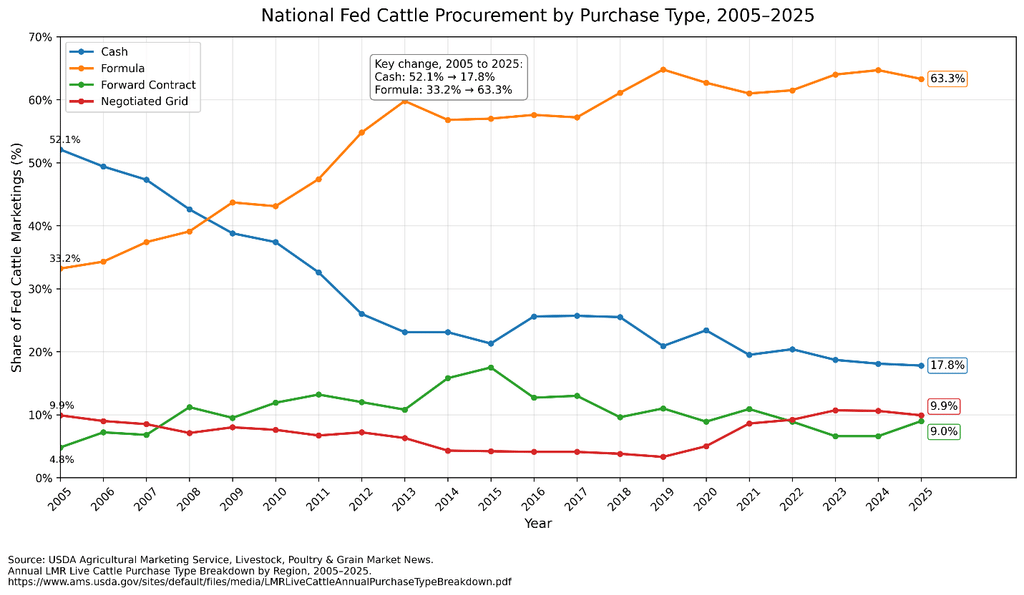
To understand the implications of the changes in marketing fed cattle over time, it helps to know how AMS defines each marketing method.
• Negotiated cash: Price is determined through buyer and seller interaction, and the cattle are scheduled to be delivered to the plant within 30 days of the agreement.
• Forward contract: Agreement for the purchase of cattle, executed in advance of slaughter, where the base price is established by reference to prices quoted on the CME.
• Negotiated grid: Base price is negotiated between buyer and seller, but the final net price is determined based on premiums and discounts applied on individual carcass characteristics.
• Formula: Cattle are committed under an advance marketing arrangement. The base price is calculated later using an agreed formula, often tied to USDA-reported regional cash prices, with possible carcass premiums and discounts.
The growth in formula marketing should not be confused with packer ownership of cattle. USDA reports packer-owned cattle separately, and these account for only a small portion of fed cattle slaughter. Most formula-marketed cattle remain owned by cattle feeders or other investors until sale. Formula arrangements allow packers to secure cattle supplies while feeders retain feeding costs and risks. However, the cattle committed to packers in advance are generally unavailable for negotiated cash sales.
The changes in fed cattle marketing have been instrumental in transforming the beef industry from marketing a relatively undifferentiated commodity into producing beef with greater consistency and higher quality. Under traditional average pricing, producers received little direct financial reward for superior carcass characteristics. Grid pricing and grids used in formula agreements, rewards agreements, rewards desirable quality grades, carcass weights and yield grades, while discounting undesirable carcass characteristics.
In 2005, only 56% of graded beef carcasses qualified as USDA Choice or Prime; this increased to 84% in 2025. Improvements in genetics, feeding management and increased days on feed have contributed substantially to this transformation. However, carcass-based marketing systems have provided important financial incentives for these investments.
The negotiated cash market remains extremely important for price discovery. Many formula arrangements depend on negotiated cash transactions to establish their base prices. As the volume of negotiated trade declines concerns grow about whether enough transactions remain to provide reliable price discovery.
Cow-calf producers should recognize that the value of their calves depends on characteristics expressed long after the calves leave the ranch. Genetics for marbling, growth and carcass composition, combined with effective health and management programs, contribute to that value. Access to carcass data and relationships with buyers who recognize these characteristics can help cow-calf producers capture more of that added value.
Cash may no longer be king in the fed cattle market, but a reliable cash market remains essential for price discovery while carcass-based pricing rewards production of the high-quality beef that consumers demand. — Paul Beck, Oklahoma State University Extension beef nutrition specialist