Due to a mild fall and winter in eastern Colorado, many producers have or may turn to grazing winter wheat pastures. This has a twofold benefit. First, the cattle are grazing a higher nutrition level forage than dormant native pasture. Second, grazing the wheat removes excess top growth, which reduces the amount of water transpired by the leaves, conserving soil moisture for the grain-filling period.
While winter wheat pastures are a great forage resource, producers should be cautious of the potential hazards associated with winter wheat grazing. Studies of wheat pastures show that magnesium, copper and zinc are typically deficient in wheat forage. Calcium and phosphorus are adequate and potassium is excessive. Excessive potassium prevents the proper absorption of magnesium.
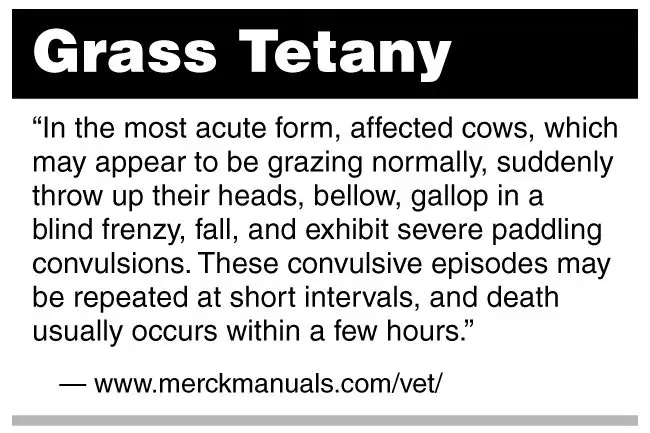
Cattle low in magnesium can develop the condition grass tetany. Grass tetany is a result of the imbalance of minerals created by the excessive potassium. Grass tetany comes on suddenly and can be fatal if not treated. Early lactation cows are most susceptible due to their magnesium requirement increasing at calving and milk production. Higher risk is to older, mature cows as they are not as able to mobilize magnesium from their bones.
Magnesium is important for proper nerve function and consequently muscle contraction. Signs of cattle with grass tetany include excitability, muscle tremors, and difficulty breathing. Untreated or worse cases can result in death. When caught early, cattle can be treated with slow, intravenous administration of a calcium and magnesium solution.
It is recommended to prevent magnesium deficiency by providing a magnesium supplement. It is best to begin 30 days before putting cows on wheat pasture and continuing through the high-risk period. “High-mag” mineral supplements contain 10 to 12% magnesium, normally as magnesium oxide. Magnesium oxide is bitter and unpalatable to cows but can be mixed into supplement forms that contain other minerals and ingredients which make the overall supplement more palatable. Consumption should be monitored to ensure cows are intaking 3 to 4 ounces of magnesium per day, which equates to 40-50% of a cow’s daily magnesium requirement.
Other forages can create the same conditions for grass tetany. Small grains such as oats, barley and rye as well as improved forages like orchardgrass, tall fescue, perennial ryegrass, timothy and bromegrass can be low in magnesium and high in potassium. Producers concerned about grass tetany can have their forage tested.
A forage mineral analysis can be used to calculate a tetany ratio. The tetany ratio assesses the quantity of potassium to the quantity of magnesium and calcium. A ratio higher than 2.2 will likely result in grass tetany. Starting cows on magnesium supplementation is then the prevention to possible grass tetany. — Colorado State University Extension