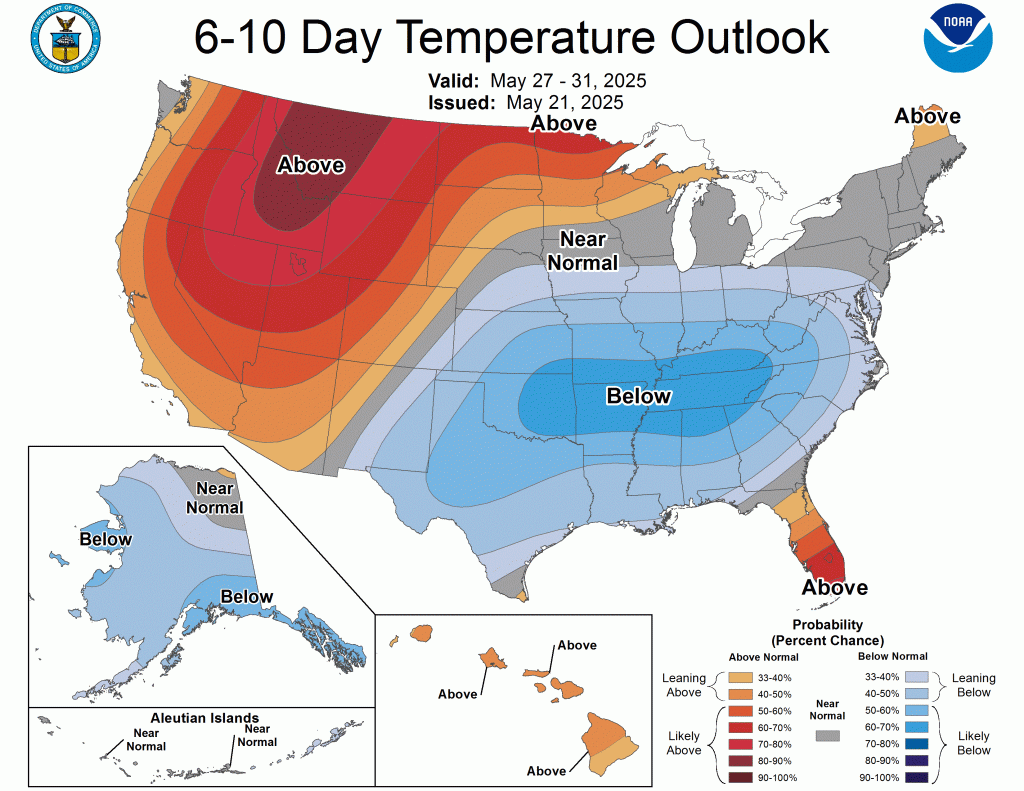
Nationwide
This week, widespread precipitation impacted much of the U.S., with heavier amounts (exceeding 1 inch) observed from the northern Rockies eastward to the East Coast, and in portions of the Pacific Northwest, Hawaii, and southern Alaska.
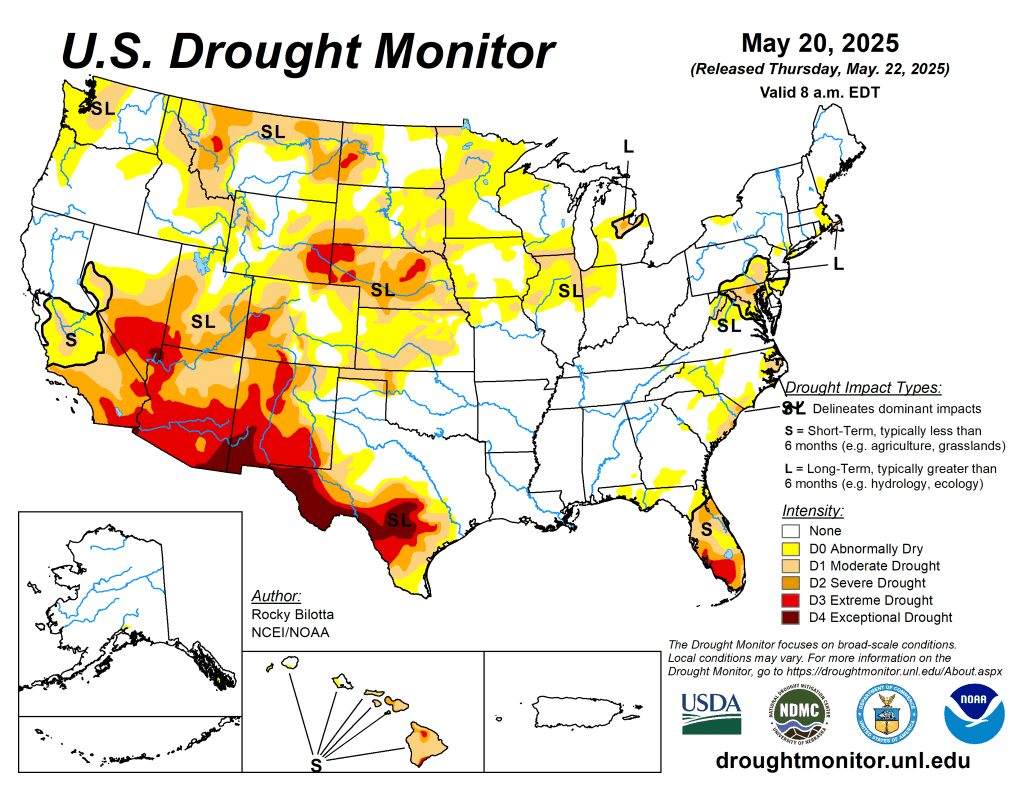
Specifically, much of the High Plains reported 2 to 10 inches of rain, while similar totals (2 to 8 inches) were seen across parts of the South, Midwest, and along the East Coast. This above-normal precipitation supported drought improvements across large portions of the High Plains and Northeast, parts of the Midwest and Southeast, and smaller pockets of the West and South. Conversely, below-normal weekly precipitation occurred in parts of the western U.S., the Midwest, and the Southeast, leading to the expansion or intensification of drought and abnormal dryness in the western High Plains, eastern West, and parts of the Midwest and Southeast. Temperatures were above normal across much of the U.S. this week.
The southern U.S., from Texas to Mississippi, saw temperatures up to 10 F above normal. In contrast, below-normal temperatures, with departures up to 10 F below normal, were observed across much of the West and western High Plains, with the largest departures noted in the Dakotas and interior West.
The West
Cooler temperatures dominated the West this week, with departures ranging between 1-10 F below normal. Much of the interior West experienced temperatures between 4-10 F below normal. In contrast, above-normal temperatures were observed across the eastern portions of the Southwest and in parts of Montana, eastern Utah, southern Nevada, and northern California.
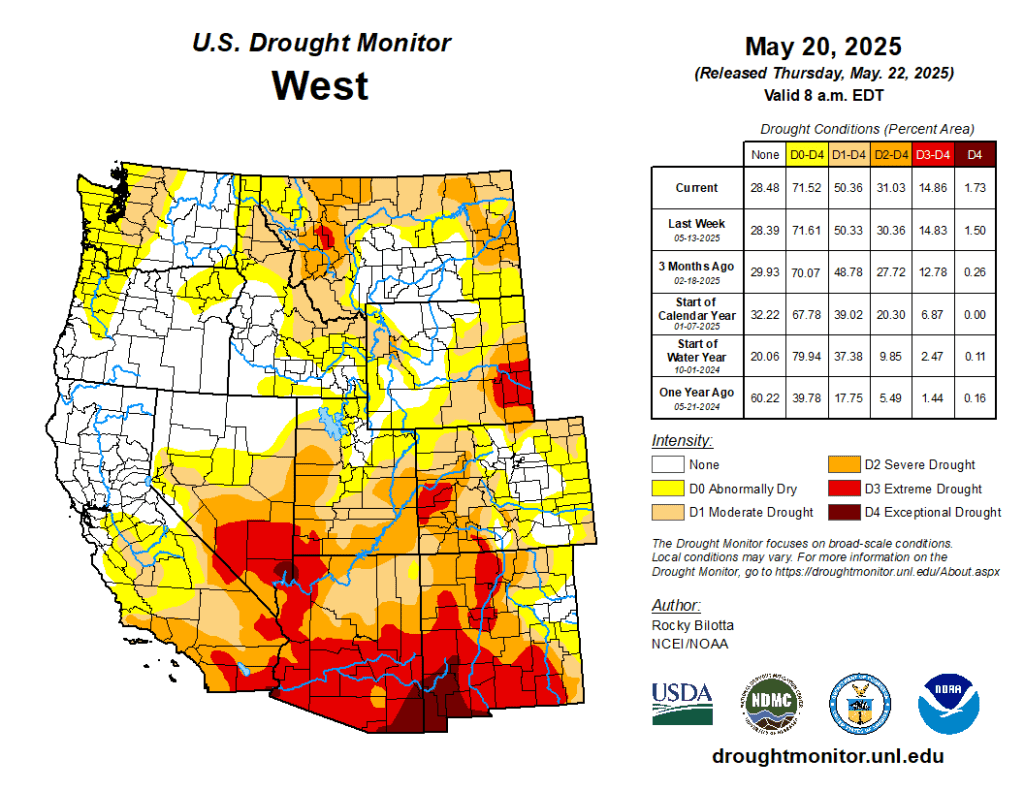
Precipitation varied across the region this week, with beneficial amounts falling in parts of the Southwest and northeastern Oregon. Moderate to extreme drought (D1-D3) was improved in eastern New Mexico, while moderate to severe drought (D1-D2) was trimmed back in western Utah, and abnormal dryness (D0) was improved in Oregon. Conversely, below-normal precipitation resulted in the expansion of exceptional drought (D4) in southwestern New Mexico and moderate drought (D1) in northern Montana this week.
The High Plains
Temperatures varied across the High Plains this week, with departures ranging up to 8 F above normal. Cooler-than-normal temperatures were observed along the western and northern portions of the region.

Heavy precipitation fell across much of the region this week, with areas from North Dakota to northern Nebraska reporting weekly precipitation totals between 400% to 600% above normal. These beneficial rains (2 to 8 inches above normal) justified widespread moderate to extreme drought (D1-D3) improvements in the Dakotas and Nebraska. Additionally, improvements of moderate to severe drought (D1-D2) and abnormal dryness (D0) occurred in northern Wyoming and eastern Kansas, where rainfall amounts were up to 3 inches above normal for the week. Conversely, dry conditions resulted in the expansion of extreme drought (D3) in southwest Nebraska and western Wyoming, while severe (D2) and moderate drought (D1) expanded in southern Wyoming and Colorado. Abnormal dryness was also expanded in eastern Colorado this week.
The South
Warmer temperatures dominated the South this week, with departures ranging up to 10 F above normal. However, parts of Texas and Oklahoma observed temperatures near or below normal this week.

Precipitation varied across the region this week, with heavier amounts (2 to 8 inches) falling across much of Arkansas, eastern Oklahoma, and parts of Tennessee, northern Mississippi, and small parts of Texas. Unfortunately, not many improvements were made due to rain falling over areas already free of drought and abnormal dryness, but conditions prevent existing drought from expanding or intensifying. Moderate drought (D1) was removed from eastern Tennessee this week, while abnormal dryness (D0) was removed from Mississippi and improved in eastern Tennessee. Arkansas, Louisiana, and Mississippi are free of drought and abnormal dryness this week. — UNL Drought Monitor