
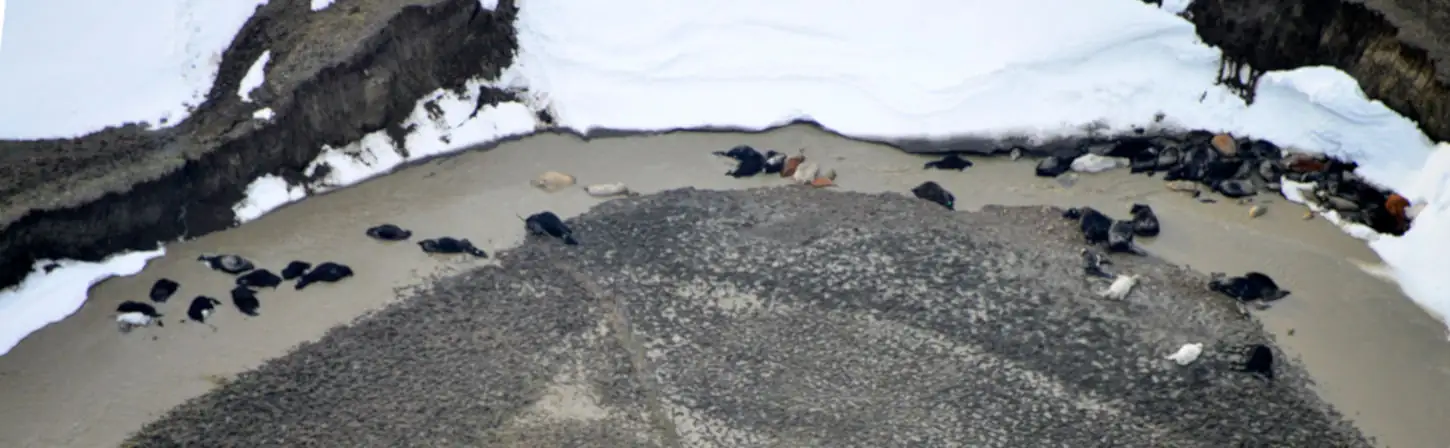
A devastating, “once-in-a-century” blizzard whose strong winds gusted to 80 miles per hour as it slammed into Washington state’s Yakima Valley in early February killed more than 1,800 cows worth an estimated $4 million at 12-15 dairies. The estimated financial losses do not include milk production impacts. One dairy alone lost 600 cattle averaging $2,000 each.
Snowstorms continued to afflict much of Washington state most of February since that blizzard struck late Saturday, Feb. 9, into early Sunday, Feb. 10, closing extensive roadways, blocking mountain passes, shutting down schools, and causing flights to be canceled. Washington state’s snowpack jumped from 74 percent of normal at the start of the month to 91 percent by its end.
While the storm’s damage toll continues to be tallied throughout Washington’s central and southeast regions, it appears the cattle killed were almost entirely dairy cows, directly impacting milk producers who had to dump large volumes of milk when tanker trucks could not reach their farms due to drifting snow and slick roads.
“We’ve been fortunate in that there were not a lot of beef producers. A lot are not calving until March or a lot are fall calvers,” said Gerri Richter, Washington State Farm Service Agency (FSA) program specialist, adding there were some feed cattle and goat losses in Yakima due to the blizzard.
“We’re hoping that what we’re getting won’t keep up much longer. … We’re going on the fourth week of it,” she said on Feb. 27.
Richter noted many dairy farmers are still trying to determine their exact losses.
“A lot don’t know, depending on how scattered the cattle are in their pastures. They’re just starting to get an idea. … The last few years it’s been a tough go for dairies. This certainly is not going to be good for the dairy industry in Washington.”
Producers have 30 days to report their losses to prepare to apply for FSA Livestock Indemnity Program payments at 75 percent of market value with no cap on the amount of money a single producer can receive.
“We’re expecting losses from several other counties,” Richter said, pointing out the dairy farmers had to continue milking the cows that survived as they dealt with the storm’s aftermath.
Chelsi Riordan, Dairy Farmers of Washington’s communication director, told the Western Livestock Journal that dairy farmers had only about 35 hours to prepare extra shelters and bedding to protect their cows before the powerful system struck their area. The Grandview and Sunnyside areas were the hardest hit.
Farmers and crews worked around the clock to stack hay bales and move cows into milking barns to shelter them. However, hundreds of them got too cold and were overtaken by a herd instinct to huddle together in corners of pens, trampling each other—dying from injuries and exposure to frigid, sub-zero temperatures. Many of the deaths were in open areas and remote parts of the farms.
Milk producers who have operated dairies for generations have never seen a storm so strong—with fierce winds averaging 40-50 miles per hour and 18-24 inches of snow dumped, Riordan said. The Yakima area normally gets only six to eight inches of rain per year.
“It was weather none had to deal with or manage before. It was absolutely devastating for them. … They had their work cut out for them.”
Dairy operators who were not directly impacted even rallied for 35 hours straight to assist those struck by the catastrophic winds, getting up at 4 a.m. to help their neighbors plow roads for milk trucks, erect wind breaks, provide extra feed and bedding for the cattle, and thaw water troughs with hot water.
In subsequent days, they also expeditiously buried the carcasses of the cows wiped out by the freak storm in compliance with USDA and ecological regulations. Gov. Jay Inslee declared a state of emergency to provide $100,000 in funding to help with hauling costs. State agencies also are exploring to see if any federal assistance is available.
“The storm hit Washington state hard, particularly in the heart of our state’s dairy industry. Through quick regulatory assistance and emergency funding, we are making every effort to help farmers with their response to this tragic event,” Inslee said.
Yakima is a huge milk production area, and many families were adversely impacted by the storm. Washington’s $1.13 billion dairy industry ranks 14th in the nation for milk production. Insurance will not cover full costs for dairy operators directly affected.
Most of the dairy operators have already composted their deceased cattle, mixing their remains with manure and keeping them buried on their property, Riordan noted. A rendering company took some of the cattle and less than a third of them were hauled to an Oregon landfill.
“Farmers are a resilient bunch of people. This storm reinforced that. … This doesn’t come at an easy time for them,” she said, noting volatile milk prices the past three years have hurt them. It will take months for many of them operating at break-even margins to recover.
“How everybody comes together makes me very proud to work in the dairy community. They’ve been able to tough it out.”
Patti Brumbach, the Washington State Beef Commission’s executive director, said the dairy operations heaviest hit were located on the Yakima Valley’s ridges, while those at lower elevations managed not to lose cattle. It will take months before some of the dairies that operate with loans can afford replacement cattle that have not been budgeted.
The farmers who helped each other are unsung heroes, she stressed, adding this happened as many ranchers were struggling with the calving season. The operators worked hard to protect their animals and strove to get roads opened, looking out for each other’s interests.
“It was pretty rough. I’ve lived here all my life,” Brumbach told WLJ. “It was much worse than weather reports were saying. … It showed the good in people. It seems the one thing we can count on in ag people is for them to step up and support each other when times get tough.” — Mark Mendiola, WLJ correspondent


