USDA offers financial assistance to farmers for implementing a wide range of conservation practices through the Environmental Quality Incentives Programs (EQIP). Two of the most popular EQIP practices for addressing soil-related resource concerns are no-till (or strip-till row crop planting) and cover crops.
Farmers practicing no-till plant crops without using any sort of plow to turn residue from the prior crop into the soil. Cover crops (such as clover, field peas, and annual ryegrass) are typically grown over the winter, between plantings of commodity crops. Planting a cover crop can improve soil health, reduce erosion, and reduce nutrient pollution to lakes, streams, and rivers.
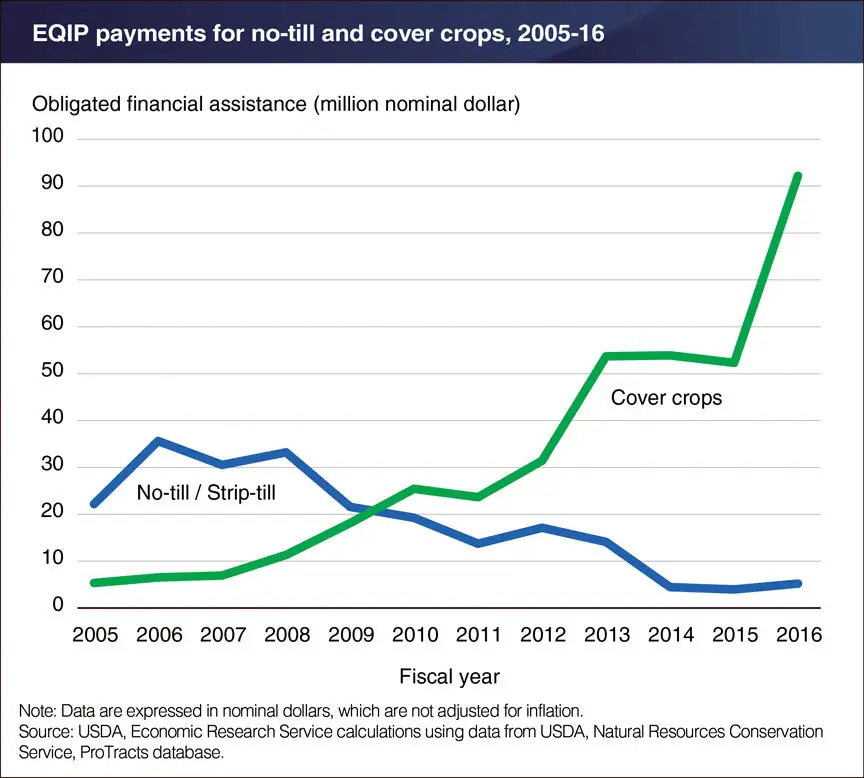
Between 2005 and 2016, USDA funding for cover crops in EQIP increased from about $5 million to more than $90 million in nominal terms. Over this same period, funding for no-till declined, in part due to increasing adoption of no-till by farmers even without payment.
The larger total annual obligations for cover crops in more recent years partly reflects the higher per-acre costs of implementing cover crops. This may include seed costs and the cost of removing the cover crop. — USDA Economic Research Service