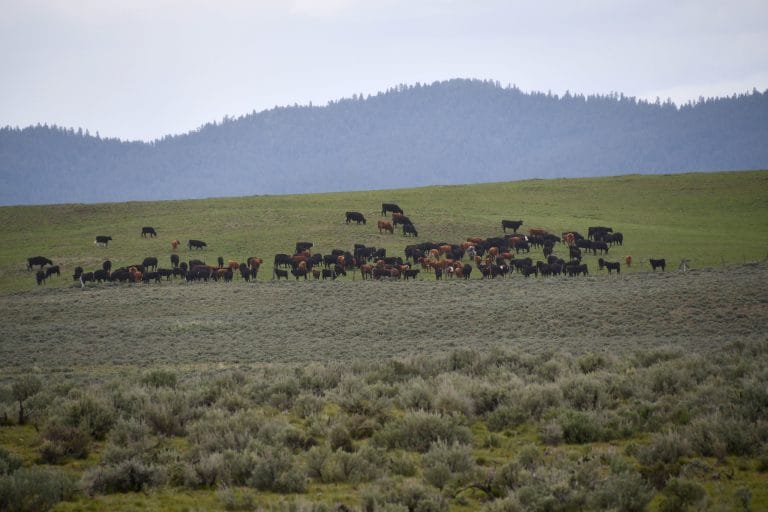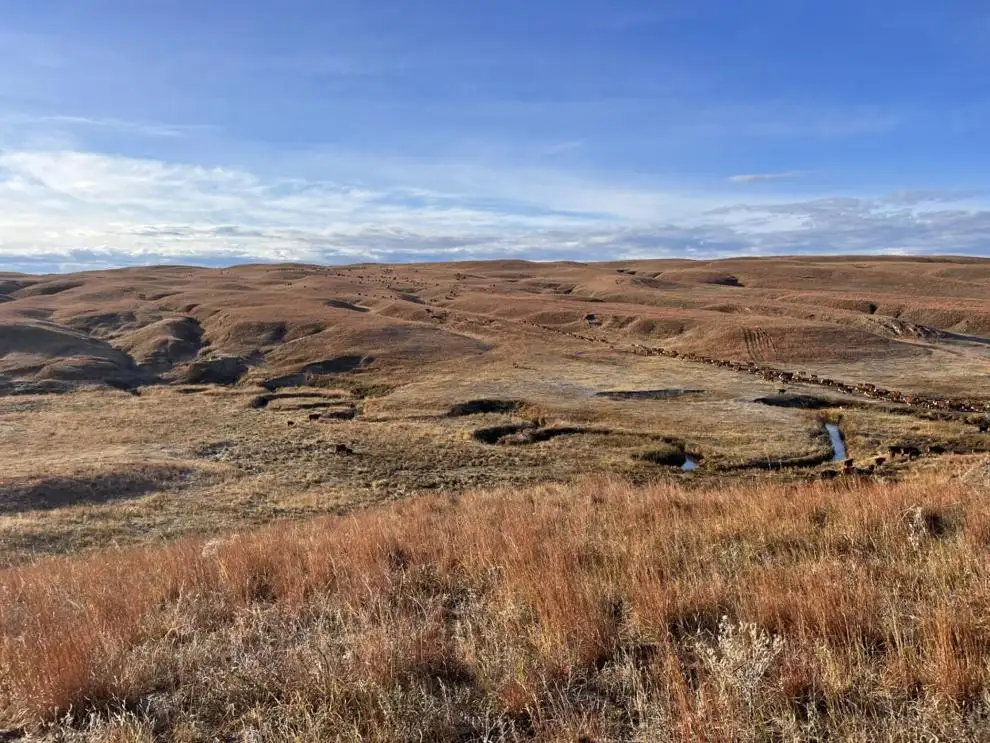
Monahan Cattle Company once started as a small homestead in 1893 on the Grant-Cherry county line in Nebraska and has grown to a Hereford and baldy commercial cattle operation spanning over 130,000 acres in three counties.
The ranch is located in the Sandhills of Nebraska and is 34 miles long, varying from 3 to 12 miles wide, with 58 miles of the Loup River running through it.
James H. Monaghan was born in Percival, IA, in 1873 and set out westward when he was 14 years old to live with his grandfather, Christopher Abbott. According to Bob Monahan, James’ great-grandson, James dropped the “G” in his last name along with his Catholic faith when he crossed the Missouri River. James purchased a quarter-section of land in 1893 and raised a few head of cattle, which he sold to the railroad crew for 5 cents a pound. After purchasing 600 head of cattle in Wyoming when he was 23, James expanded his holdings by an additional 1,000 acres.
{{tncms-asset app=”editorial” id=”009aa266-4130-11ee-81cb-5f0e783dcc46″}}
James’ son, Earl, took over management of the operation at age 21, and a few years later in 1923 the Circle Dot brand was born.
Earl continued acquiring land and established a purebred herd of Hereford cattle. He was a past president and director of the American Hereford Association (AHA), director of the American National Cattlemen’s Association (now the National Cattlemen’s Beef Association) and past president of the Sandhills Cattle Association. Earl was also inducted into the Hall of Great Westerners in the Cowboy Hall of Fame in 1990.
“My grandfather was a heck of a businessman and a heck of a cowboy,” Bob told WLJ. “He took chances and it paid off for him.”
The makings of a legacy
Jerry York, former WLJ field representative, told WLJ that Earl could always be seen at the National Western Stock Show. York said Earl was a short guy who commanded a big presence with people seeking him out and wanting advice. He said Earl was an intelligent and shrewd businessman who expanded the operation and put the Circle Dot Ranch on the map.
York relayed that when people asked Earl how big the ranch was, Earl would reply, “Big enough to feed my cows.” When asked how many head he had, Earl would reply, “Enough for my ranch.”
Earl’s son, James A. Monahan, took over the management of the operation and met his wife, Hil, while she was working at the ranch cookhouse for two summers. The two married in August 1950 and have been married for 74 years. The couple has two sons, Bryan and Bob, and two daughters, Gerri and Joan. Bob and Bryan manage the ranch, and Joan manages the finances and cooks lunch in the cookhouse.
{{tncms-asset app=”editorial” id=”3251c952-412f-11ee-a9a7-ef806c6d7378″}}
Circle Dot Ranch has eight “camps” throughout the area. Bob said, “It’s a community effort,” with family members working and living on the ranch. The headquarters is where James, Bob and Bob’s nephew, Rocky, live. Joan, her husband, other family members and the dozen staff members live in the camps.
Bob said James is still involved with the ranch and drives out in the Polaris Ranger to see what is happening with the operation. James received the Cattleman of the Year award from the Nebraska Cattlemen and was on the board of directors for AHA. The ranch also received the Ranch of the Year award from the Nebraska Hereford Association a few years ago.
{{tncms-asset app=”editorial” id=”333fb4a0-412f-11ee-a899-b72e174fd083″}}
The Circle Dot Ranch continues with the sixth generation on the ranch as Bob teaches Rocky the day-to-day operations.
Circle Dot Ranch
The ranch consists of two operations: The registered Hereford herd and the first-calf heifers bred with black and Red Angus.
The operation breeds approximately 1,000 heifers within a 45-day period and culls any cow not bred within that period, regardless of age. Bob said they chose a later calving season for the commercial cows to avoid the bad winter weather. Their heifers calve in March and cows calve in April. They wean all the calves selling on video, and background the steers, selling them to a local sale barn.
{{tncms-asset app=”editorial” id=”052a1c8a-4130-11ee-8608-d3411887d588″}}
Bob said the first-year heifers are cross-bred with Angus for heterosis and calving ease for their baldy program. He said they are doing much more with the first-calf heifers, but they will continue with the purebred Hereford program.
He said they are blessed to have running water throughout the year on the ranch; Earl believed any creature should not have to walk more than a half mile to reach water. In addition to the Loup River and its tributaries, the ranch has over 300 wells.
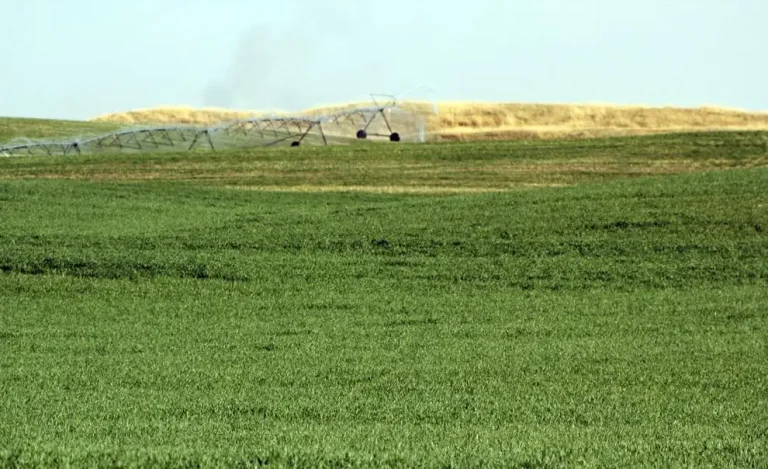
The water enables the ranch to grow hay, which they use in the winter. Bob said their hay meadows are sub-irrigated and water in some years is a problem with getting into the fields. However, it can be challenging to have enough hay for feed in drought years such as last year.
“Last year was really tough,” Bob said. “We knew we were short of hay and we sent more cows than usual to a backgrounding lot.”
Bob continued there are some years in drought where they have to buy hay and do what they must to keep things running, and every year is different.
“One of my grandfather’s sayings was ‘It always rains 30 minutes before it absolutely has to in the Sandhills,’ and it rained this spring and we are having a heck of a grass year right now,” Bob said.
Monahan Cattle Company’s Hereford herd is often recognized as one of the top producers of the AHA’s Dams of Distinction. The award recognizes females that meet the stringent ideals based on data sent to the association and includes calving and weaning records. According to AHA, Monahan Cattle Company has had 20 dams recognized as Dams of Distinction.
{{tncms-asset app=”editorial” id=”039fe732-4130-11ee-a7a4-f3fbb90e656d”}}
In addition to the Dams of Distinction, Monahan Cattle Company has consistently achieved Gold Total Performance Records Breeder status for collecting data at all production levels for the past several years.
Bob said the data he receives from AHA helps improve his herd by staying above average and improving the herd’s genetics, along with phenotypes. This dedication to continual improvement will help sustain the legacy of the Circle Dot for years to come.