Texas shoppers heading to the meat counter this summer should expect beef prices to remain near record highs, but a new Texas A&M University report suggests the wild swings of last summer are unlikely to repeat.
The Texas A&M Food Price Predictor: Summer 2026 Meat Prices report, from the Texas A&M College of Agriculture and Life Sciences Department of Agricultural Economics, projects consumers will see a more orderly price pattern through October for most cuts of beef, pork and chicken.
Lead author Simon Somogyi, Ph.D., Dr. Kerry Litzenberg Sales and Economics Endowed Chair and head of the Department of Agricultural Economics, described the outlook as cautious for consumers rather than pessimistic.
“The signal is more cautious than bearish,” Somogyi said. “We think things are going to be reasonably stable in terms of price, but we keep seeing layer upon layer of worldwide events that impact price.”
Co-authors included David Anderson, Ph.D., professor and Texas A&M AgriLife Extension Service specialist, livestock and food product marketing; Yong Liu, Ph.D., assistant professor; and Weifang Liang, a doctoral student—all in the department.
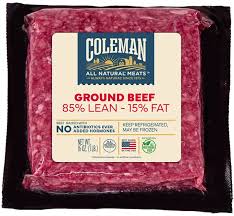
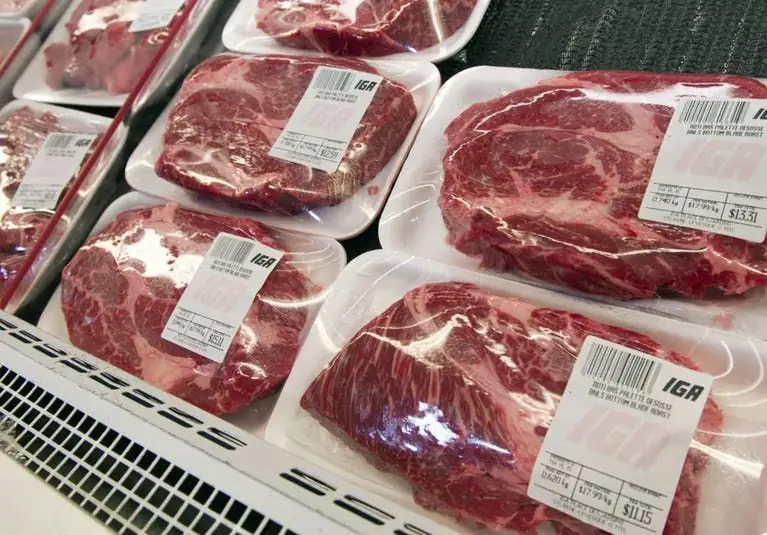
The average retail price for ground beef is forecast to ease slightly, from about $6.71 per pound in May to $6.62/lb. by October. Chuck roast and sirloin steak are expected to stay flat or edge lower, and ribeye, the priciest cut in the forecast, is projected to ease from around $18.81/lb. to $18.33/lb. Brisket is the one beef cut expected to increase, rising from about $5.83/lb. to $5.95/lb.
The biggest wild card is the New World screwworm. Livestock trade, including beef cattle, with Mexico is closed due to New World screwworm.
Confirmed cases of the flesh-eating parasite in Texas have put producers and regulatory agencies on edge. While the pest poses no major threat to the U.S. beef supply, management practices could translate into higher input costs that eventually trickle down to consumers.
“Now with New World screwworm, that’s going to cause issues that we haven’t seen yet,” Somogyi said. “We could see higher prices without those historically steady imports from Mexico.”
He said Canada’s recent halt on beef imports from Texas could offset some of that pressure by keeping more beef in the domestic market, but the screwworm’s full impact remains unknown.
Looking ahead, Somogyi said oil prices could influence meat prices more than any other factor. Petroleum production drives the cost of fertilizer, animal feed and transportation, and the U.S-Iran conflict continues to add uncertainty.
“A major factor is the price of oil,” he said. “Big fluctuations can ripple into multiple layers of the logistical chain from farm to grocery store. That potentially broad impact makes it tricky for us to predict what’s going to happen.”
Still, Somogyi sees room for optimism if oil prices stay relatively stable.
“We’re cautiously optimistic that we’ve probably seen the height of oil price increases,” he said.
Even so, he cautioned that lower oil prices and savings at the pump won’t show up at the grocery store right away.
“It’s going to take time for that to move through the supply chain and to be felt on the shelf.”
Pork chops are projected to rise from $3.54/lb. in May to $3.84/lb. by October, the largest summer increase of any cut in the report, while chicken breasts hold nearly flat, edging from about $3.24/lb. to $3.30/lb.
Somogyi credits that stability to shorter production cycles for hogs and poultry, which let supply adjust to demand far faster than cattle can.
“The biological cycle is a lot shorter for those,” he said. “That means the market can respond quicker and move product through to the grocery store more rapidly than the cattle cycle, which takes years.”
While a beef calf can reach market weight in about 18 months and a heifer can produce her first calf by around 2 years, rebuilding cattle herds is a much longer process, Somogyi said.
Expanding herd numbers requires producers to retain breeding females rather than sell them. It can take years for those decisions to translate into broader herd rebuilding and increased beef supplies, he said.
How much will resilient U.S. consumers sacrifice? The bigger question, Somogyi said, is how long consumers will keep absorbing high beef prices before shifting spending toward pork and chicken. Demand for beef held up surprisingly well in 2025 even as prices climbed, but with fuel and grocery costs both elevated this summer, that could start to change.
“We may get to a situation whereby people start really looking at the substitutes,” he said. “Ground beef is still relatively inexpensive, but those higher-cost cuts, the sirloin and rib-eye steaks, may become only for special occasions.”
For now, Somogyi said the report’s message is one of watchfulness rather than alarm, with cattle inventories, screwworm developments and energy markets worth tracking as the season continues. — Texas A&M AgriLife Extension