The U.S. beef industry has spent decades improving genetics, efficiency and productivity through research, but future breakthroughs could be harder to achieve unless public investment rebounds.
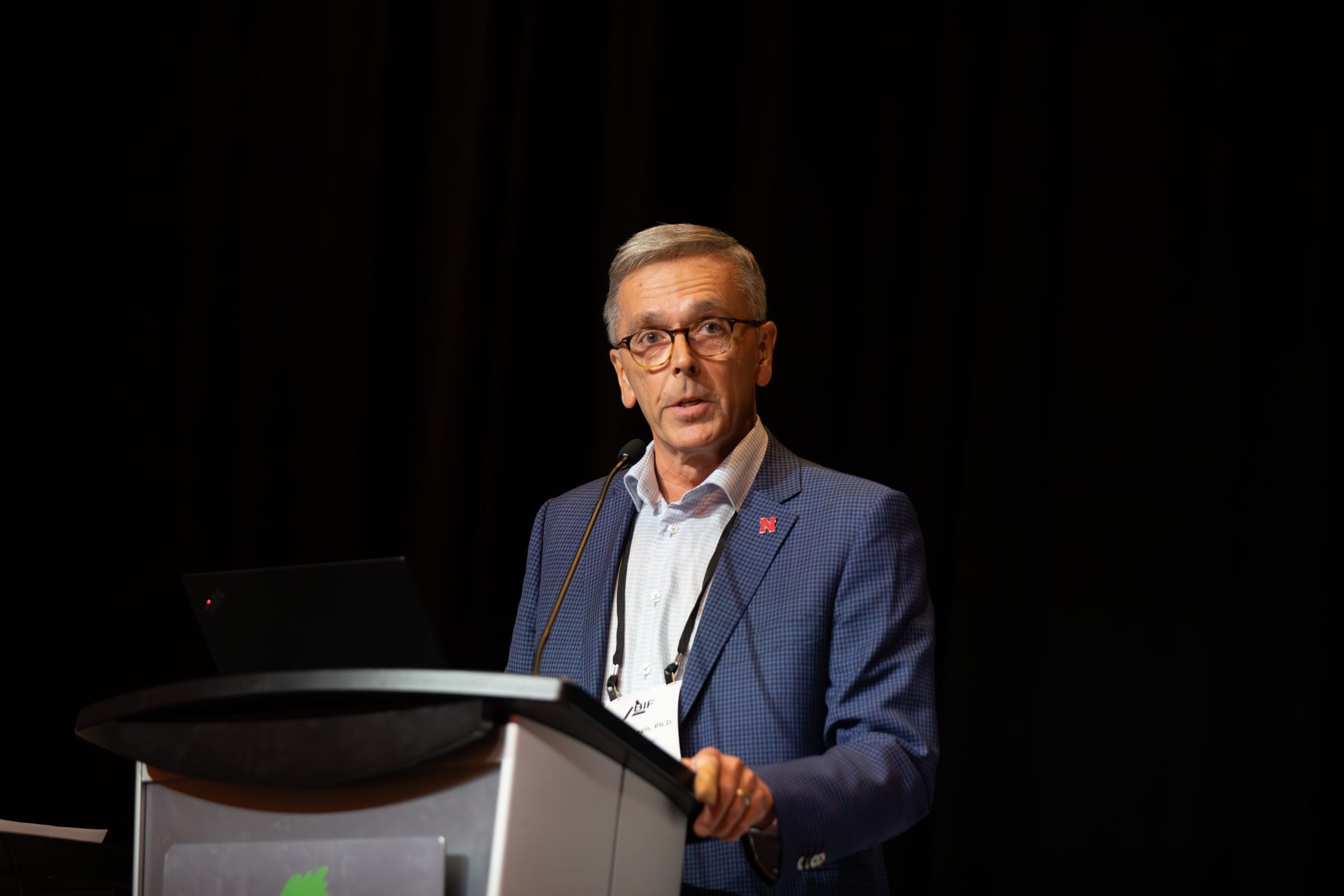
Ronnie Green, Ph.D., chancellor emeritus of the University of Nebraska-Lincoln, expressed his concern while addressing attendees at the 58th Annual Beef Improvement Federation (BIF) Research Symposium and Convention in Boise, ID. Green said the industry must move from simply benefiting from publicly funded research to actively advocating for it.
Drawing on his 40 years of experience in academia, industry and federal research leadership, Green said at the June 2026 event that many of the industry’s greatest advancements, from crossbreeding systems and heterosis research to genetic evaluation and production efficiency, were built on long-term public research investments.
“This industry cannot afford to give up the capacity that it has for public sector-funded research influencing production,” Green said. “We’re talking about public sector research that impacts the bottom line for cattle producers.”
Into the details
The U.S. once led the world in agricultural productivity because of consistent investments in research through the USDA, the U.S. Meat Animal Research Center (USMARC) and the nation’s land-grant university system, Green said. That leadership, however, has steadily weakened as other countries have dramatically increased their research investments.
China, for example, has expanded public agricultural research and development spending nearly ninefold since 2000, while the U.S. has remained largely flat after adjusting for inflation. The USDA’s overall budget further illustrates the challenge. Of the department’s more than $230 billion annual budget, less than $5 billion supports the Research, Education and Economics mission area that includes USDA’s primary research agencies.
Within that funding, Green said resources dedicated specifically to beef production research have become increasingly limited.
The USMARC at Clay Center, NE, widely recognized as one of the world’s premier beef cattle research facilities, has experienced declining purchasing power and significant staffing losses despite nominal funding increases. Green noted that when he was a graduate student in the 1980s, the center employed more than 60 federal scientists. Today, fewer than 45 remain, with many positions left vacant.
“I don’t say that to be an alarmist,” Green said. “I’m just telling you the facts. The industry needs to have a wake-up call about the danger that this institution perhaps is in today relative to funding.”
Despite those concerns, Green emphasized that public research continues to generate exceptional returns for cattle producers. Research cited during his presentation estimates productivity gains developed through beef cattle science now contribute approximately $16.7 billion annually in farm-level value. Those advances have allowed the U.S. beef industry to maintain production with substantially fewer cows while improving carcass weights, feed efficiency and overall productivity.
Challenge meets opportunity
Rather than simply highlighting the problem, Green outlined several solutions that could strengthen the future of beef research. Among them were fully funding USDA’s Agriculture and Food Research Initiative, protecting the Hatch Act of 1887 and the Evans-Allen Act of 1977 that support research funding for land-grant universities, and backing a new national maternal performance research initiative centered at the USMARC.
He also encouraged beef producers and organizations to become more engaged in federal policy discussions affecting research priorities.
“We need to have more voices at the table so that we don’t continue to see the (research funding) erosion happen in the future,” Green said.
Green concluded by reminding the audience that while the beef industry has made remarkable progress in genetic improvement over the past four decades, the work is far from finished.
“There is much left to do in these fields that are going to impact the cattle business, and I hope we can turn that cycle around to get the funding that will allow improvements to happen in the long term,” he said.
Access the 2026 BIF Symposium presentation archive, which is continuously updated, at BIFSymposium.com. — BIF