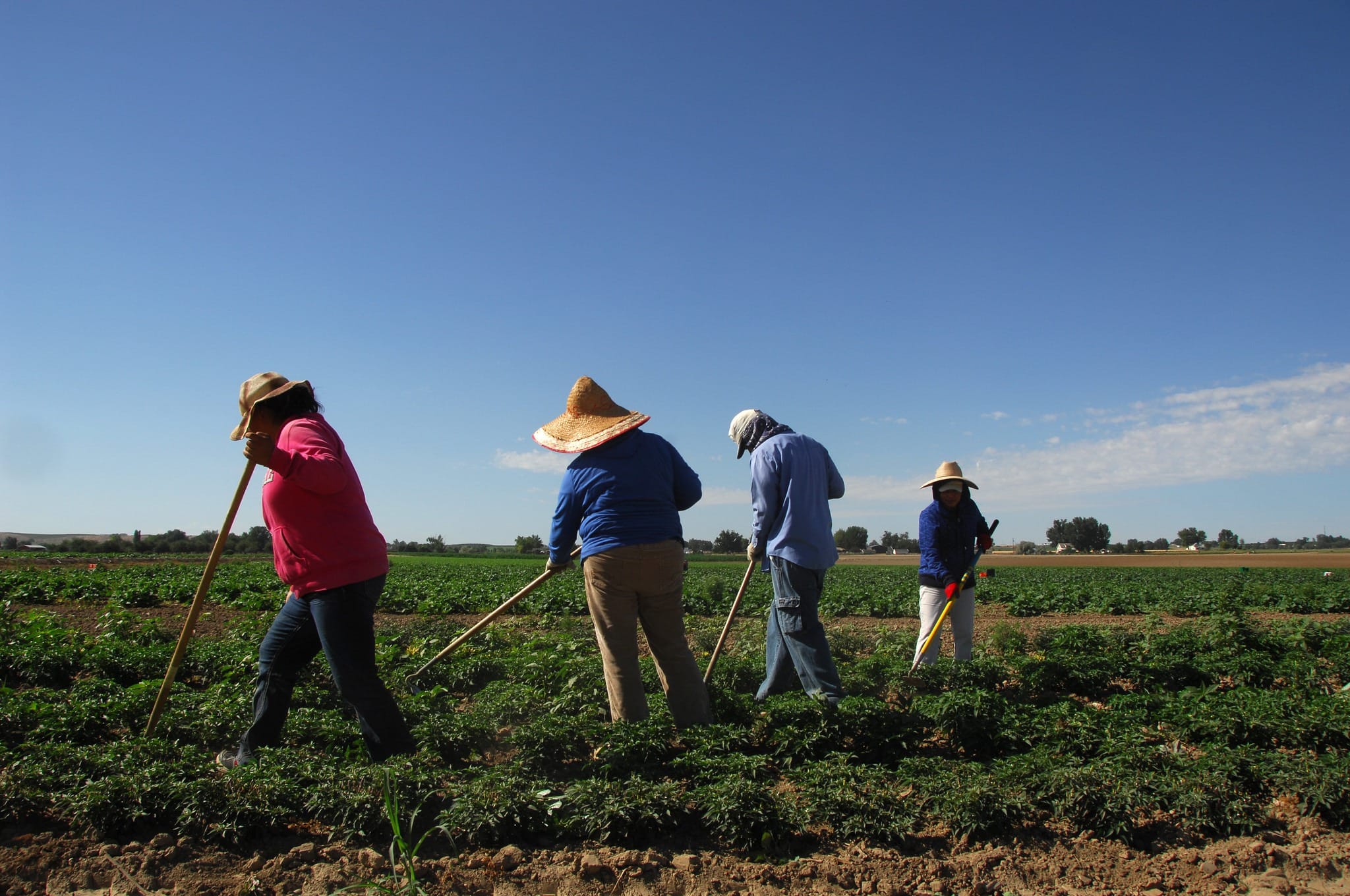
California Gov. Gavin Newsom (D) has signed two agricultural labor bills that will set a $19.75 minimum wage for certain workers and double farm labor contractor bond requirements, drawing concerns from farm groups about rising costs and regulatory burdens.
Newsom signed Assembly Bill (AB) 2227 on Sept. 18, increasing bonding requirements and expanding penalties for farm labor contractors, followed by AB 2646 on Sept. 30, which establishes a higher minimum wage for certain agricultural workers.
AB 2646
AB 2646, authored by Assemblymember Maggy Krell (D-Sacramento), establishes a $19.75 hourly minimum wage beginning Jan. 1, 2027, for what the law defines as “approved agricultural employees” and “corresponding employees.” The wage will be adjusted annually based on the Social Security cost-of-living adjustment.
Although the law does not specifically mention H-2A workers in its definition, employment law firm Fisher & Phillips LLP said workers brought into California through the H-2A program will realistically fall under the “approved agricultural employee” category.
The law also applies the higher wage to California residents who perform the same or substantially similar agricultural work during the same period for the same employer and in the same county as a covered temporary worker.
Supporters, including the United Farm Workers, argued the higher rate is needed to protect farmworkers from downward wage pressure as food, housing and other living expenses rise.
Ag opposition
Agricultural organizations strongly opposed the measure, arguing the higher wage will increase production costs for farms already facing tight margins.
California Farm Bureau (CFB) opposed both measures, raising concerns about the additional costs and regulatory requirements they place on agricultural employers and farm labor contractors.
Steven Fenaroli, director of political advocacy for CFB, told WLJ the new laws come as producers already face rising expenses, labor shortages and competitive pressures.
“California farmers and ranchers already operate under some of the most stringent labor regulations in the nation, while facing escalating costs, workforce shortages and intense competitive pressures,” Fenaroli said. “Unfortunately, these bills (now laws) move farming in the state the wrong direction by adding new regulatory requirements, administrative burdens and higher costs at a time when many family farms are struggling to stay in business.”
Western Growers President and CEO Dave Puglia said farmers cannot simply absorb the additional labor expense. Puglia also pointed to the continued decline in the number of California farms as evidence of the economic pressure facing producers.
“Next time you hear people in Sacramento talk about their love of California’s farms and the wonderful food we grow here, remember that we have lost nearly 30 percent of our family farms in the last 25 years,” Puglia said. “That is because of the economic injuries that have been caused by foolish public policies. Californians are proud of our state’s farmers. They deserve better from Sacramento.”
AB 2227
AB 2227, authored by Assemblymember Damon Connolly (D-San Rafael), makes separate changes to California’s regulation of farm labor contractors.
The law doubles required surety bonds for licensed contractors. Contractors with annual payrolls of up to $500,000 will need a $50,000 bond, up from $25,000. Those with payrolls between $500,000 and $2 million will need a $100,000 bond, while contractors with payrolls exceeding $2 million will need a $150,000 bond.
The measure also expands existing civil penalty provisions to cover violations involving licensed and unlicensed farm labor contractors. It requires bond information to be included in the state’s public contractor license database.
CFB joined other agricultural organizations in opposing AB 2227 unless it was amended. Fenaroli said the organization was particularly concerned that the changes to farm labor contractor licensing and bonding requirements would increase costs and administrative complexity without clearly showing how they would improve protections for workers. The coalition also raised concerns about the bill’s new public disclosure requirements.
Fenaroli said CFB will continue reviewing how the new laws are implemented and plans to engage in the process to make sure agricultural employers’ concerns are considered. — Charles Wallace, WLJ contributing editor