As the nation’s beef cow herd has reached a 70-year low—resulting in the industry receiving record prices for our product—our attention needs to consider how we rebuild our cow herd. The great news is we are producing the highest-quality beef we ever have, which has brought back consumer demand. Now the question is whether we will be able to fulfill this demand with U.S. product, which has no parallel in the world in terms of food safety, eating experience and palatability.
Another major consideration is maintaining the proper blend of beef products because proportionally, approximately 60% of consumer demand is in the form of grind, which necessitates the importation of wholesome lean beef to mix with domestic trim—both fed cattle and cull cattle—that is being marketed at fatter endpoints than we have seen in recent history.
This is particularly the case as we see more cull cows being put on feed before being marketed. Ultimately, our base factory that is the U.S. cow herd must be built to perform in a wide variety of environments, whether that is the hot, humid Gulf Coast, fescue pastures of the Midwest, on the native range and long winters of northern Plains or arid range west of the Rocky Mountains. The bottom line is one size does not fit all.
Challenges
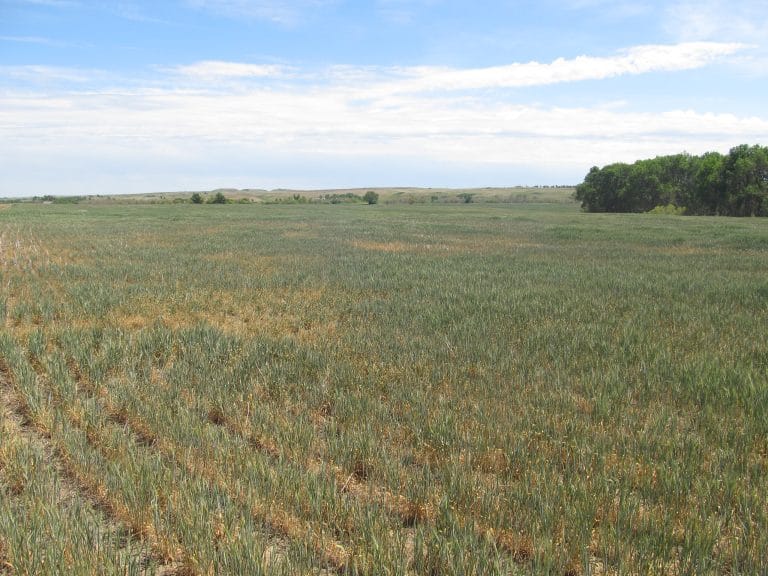
A major challenge we are facing is drought and depleted aquifers. Our cattle feeding and packing industry has largely located itself along the Ogallala Aquifer and Platte River. This aquifer appears to be stabilized in Nebraska and has even recharged some in a few places, although this year’s record-warm winter and low snowpack in the Rocky Mountains region will not help that cause.
While the news is good in Nebraska, it turns to bad news in southwest Kansas and West Texas, where wide swaths of the aquifer have depleted more than 150 feet. Based on this depletion rate, it does not appear this region will be able to continue to support the cattle feeding industry at its current levels. Look for the whole system of feedyards, dairies, packing plants and crop production to retrack in this area and move north.
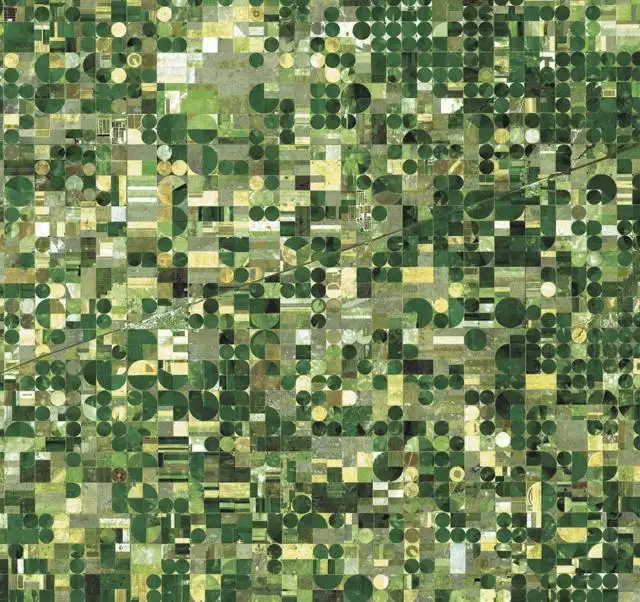
This will decrease total acreage of crop production, which will likely increase grain prices. If this happens, the practice of putting excessive fat on animals at the end of the feeding period will not likely pencil out anymore, and we should start marketing cattle at a more sensible body composition.
If whole body scanning gets implemented that will much more accurately assess fed cattle composition compared to our current USDA yield grading system, we can look for packers to put more discounts on these excessively fat cattle, which will put more focus back on red meat yield.
Genetics of the current cow herd
No matter how you look at it, Angus is the current driver of the commercial beef industry. Much of the demand for Angus is the result of more than 40 Angus branded-beef programs overseen by USDA’s Agricultural Marketing Service, and countless other Angus programs overseen by the Food Safety and Inspection Service’s labeling process. This has put Angus in the driver’s seat, even though there are very few of these products that actually require that the product is the result of Angus genetics.

Angus has fully embraced this leadership role, becoming the largest driver of our commercial herd’s genetics, which their director of performance programs estimates is 70-80% influenced by the Angus breed. Angus breeders have utilized objective genetic measures and advanced reproductive technology to a tremendous extent. Of their 309,926 registrations last year, 74.8% were genotyped, 58% were from AI matings and 16% were from embryo transfer. This has allowed them to make genetic change faster and more extreme than any other breed. With a motto of “supply the brand,” they have traditionally emphasized production traits such as growth and carcass quality, while maintaining very acceptable calving ease.
This has separated Angus from the other breeds when it comes to growth potential and the carcass traits for marbling and carcass weight as Table 1 demonstrates. The directional change is impressive. Over the last 20 years, the average Angus Birthweight EPD has decreased 0.7 pounds, while Weaning Weight Direct and Weaning Weight Maternal EPDs combined have increased 39 lbs., and the average Yearling Weight EPD has increased 62 lbs.

However, an analysis of the Angus phenotypic trends printed in the American Angus Association’s (AAA) Sire Summary, and the genetic trends for antagonistic traits like mature weight and $Energy, should give producers reason to pause. Over this same 20-year period, the expressed phenotypes for birthweight have decreased by 2 lbs. However, birthweight is positively correlated with both weaning weight and post-weaning gain, so generally the combination of low birthweight and high growth is achieved through shorter gestation length, which is potentially undesirable if taken to the extreme.
An analysis of the average Angus adjusted weaning and yearling weights reported by birth year in the Angus Sire Summary demonstrates that the increased genetic potential for growth is not being expressed. So, while the average Angus’ genetic potential for weaning weight has increased 39 lbs., the average expressed weaning weight submitted to the AAA has only increased by 6 lbs. and 4 lbs. for bulls and heifers, respectively.
On yearling weight, the average phenotype reported to the AAA has only increased by 1 lb. for bulls and has lost 1 lb. for heifers, so the 62-lb. increase in yearling EPD is not being expressed. Meanwhile, the genetics for mature weight has increased by 47 lbs. and $Energy is upside down by -26. This would be in line with the western commercial databases, which also have shown no increase in weaning weights over the last 20 years.
The study released in 2021 of mature cow weights of the various breeds at the 34,000-acre U.S. Meat Animal Research Center in Clay Center, NE, showed that Angus had the heaviest mature weight. This work involved records on 5,156 cows, which collectively had an average mature cow weight of 1,430 lbs. across the breeds.

Angus were the heaviest breed group, and when compared to Angus, the average mature cow weight expressed in pounds for the other major breeds was the following: Herefords, -38.5; Red Angus, -98.6; Shorthorn, -132.4; Charolais, -19.6; Gelbvieh, -145.4; Limousin, -95.3; and Simmental, -73.5. Although there are significant differences in mature weight between breeds, it is important to remember that cow size taken alone is not a proxy for efficiency, and breed differences can be leveraged when designing a crossbreeding system.
Looking to the future
The data indicates that our current cow herd is genetically weighted to the benefit of cattle feeders and packers, and not to the financial benefit of the cow-calf producer. It is apparent the genetic potential of the cows has outstripped many producers’ environment and feed resources. It is time for a paradigm shift, or the next drought—which much of the country is in right now—will again devastate our cow herd. Therefore, our industry needs a better balance between the cow-calf producer, feedlot and packer, where every segment has an opportunity to be profitable when the market stabilizes.

There are many that are advocating that the industry moves to an 1,100-lb. cow, but this falls into the trap of the “one size fits all” mentality, and the market signals for larger carcasses. Factually, efficient and inefficient cows come in all sizes, and cow size and production potential should be determined by each cow-calf operation’s unique matrix of environment, feed resources, management and market. The result is operations that are only divided by a fenceline will have different requirements for the genetics of their cow herd to optimize their unique situation. These differences in genetic requirements become even more magnified when talking about operations in drastically different environments.
Whatever the genetic answer is for a particular operation, the genetics for production traits must be in sync with resources which allow for those genetics to be expressed and the cow to breed back. Reproduction and getting a live, healthy calf on the ground is overwhelmingly the most important trait.
Heterosis and breed complementarity are also powerful but underutilized tools. In addition, the use of terminal sires allows producers to run more moderate cows and still produce calves with high carcass weight potential. There are many workable systems from the tried-and-true F1 (red or black) Angus-Hereford baldy cow, the simplicity of just using SimAngus, and the maximum heterosis and productivity of an F1 Tiger Stripe (Brahman-Hereford cross) cow along the Gulf Coast bred to a terminal (red or black) Angus sire. However, it is important to remember that there is tremendous variation within breeds, which must be taken into account when analyzing breed complementarity.

Summary
It is said that the definition of insanity is doing the same thing over and over again but expecting different results. Therefore, rebuilding the cow herd that mirrors the one that got decimated in the past drought is setting ourselves up for failure. However, that appears to be the direction reflected in many commercial producers’ bull-buying preferences this past spring, where more extreme traits often rose to the top.
Pioneer performance breeder George Chiga used to say that Mother Nature has little use for extremes, or freaks, as he called them, and will generally kick back when traits are taken too far. The road to profitability lies in optimums with cattle that are genetically custom fit for a producer’s operation’s unique matrix of environment, feed resources, management and market. As former president, general and Angus breeder Dwight D. Eisenhower once said, “The middle of the road is all of the useable surface, while the extremes right and left are in the gutters.”