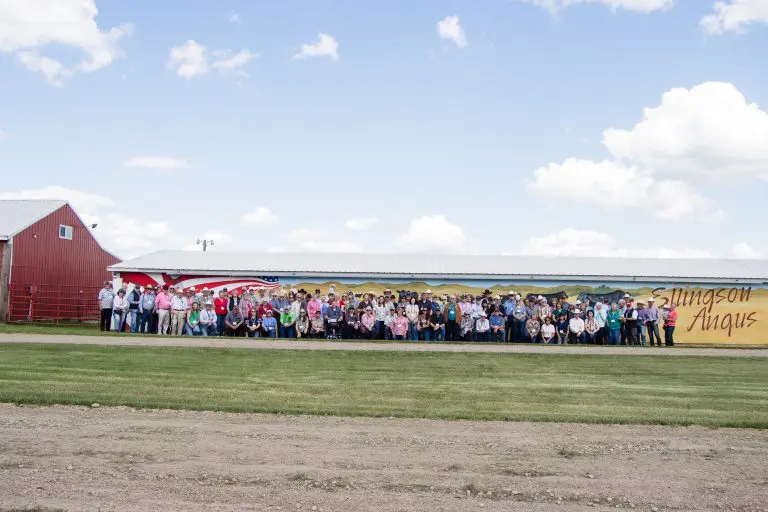
My travels recently took me to South Sioux City, NE, for Superior Livestock Auction’s annual Corn Belt Classic. Cattle were sold across the country from consignments that sampled several sectors of cattle markets ranging from California to Florida.
For producers, the message remains clear: quality matters. Buyers continue to aggressively pursue cattle with health programs, documented genetics and performance records. Those cattle are also consistently commanding the highest premiums in sale barns nationwide. As the industry moves through the summer marketing season, producers who can deliver uniform, high-performing cattle aligned with value-added programs are positioned to capitalize on one of the strongest market environments the beef industry has seen in decades.
It’s worth mentioning from my perspective how buyers are paying attention to genetic sources. The obvious players like Riverbend Ranch from Idaho and 44 Farms from Texas, who have been buying customer cattle for the last decade, continued to support those buying into their programs, but I felt that seedstock suppliers are playing an even larger role into the premium gained or discount given. I do believe the buyers of these feeders and yearlings have become educated on what genetics are working for their programs.
To my point, of all the sales speeches to entice more bidding that I’ve heard in my career, when we talked about a certain lot’s ability to “get big and still grade,” those were the cattle that earned a few more dollars. I don’t think we’ve seen the carcass weights max out yet.
In the Certified Angus Beef Insider column that Paul Dykstra does a wonderful job putting together, he posted the latest data showing there were 57,000 less cattle slaughtered over the week than the prior week, which is a huge hit, but when carcass weights come back into the equation and 29 pounds more per carcass are added back into production, the scales aren’t tipped so one-sided. Now add in the fact that a lot of these cattle are still growing on cheaper inputs, and it’s pretty easy to see how the feeders and packers have been able to stay in business. In every tracked value point in this report, the Choice/Select spread was the only spot to see a decrease year over year. The Certified Angus Beef/Choice spread doubled in value.
Fed cattle markets have also maintained remarkable strength in the first half of the year. The Livestock Marketing Information Center reported fed steer prices climbing from roughly $232/cwt at the beginning of the year to more than $262/cwt recently, highlighting just how aggressively packers have been bidding to secure inventory. USDA reports have shown negotiated fed cattle trade commonly ranging from the mid-$250s in recent weeks.
According to Stephen R. Koontz at Colorado State University, while the screwworm has taken most of the headlines, commodities have taken a hit. Ahead of the USDA Acreage report coming out just after this column goes to press, corn is down 20%, meal is down 7.5% and wheat is off about 10%. He claims the futures market is communicating that drought and other production risks are substantially mitigated.
The strength of cattle prices has created challenges further down the supply chain. Several major processors have reported substantial pressure on margins as cattle costs continue to outpace wholesale beef values. Recent announcements from JBS regarding plant closures underscore the severity of the current cattle shortage. Packers are increasingly operating below capacity across all of North America.
While working the earlier-mentioned Superior sale, it’s worth calling out how active the Canadian buyers are in the marketplace right now. Had it not been for these buyers, the market would have been different; in certain regions they added $15-25/cwt. We can’t forget that we are collectively marketing cattle and supporting our customer base is good business. If we were to lose that marketplace, it’d hurt thousands of producers. While a lot of people are talking about headlines, sometimes it’s worth just sitting back and seeing who is active in the market. We can always talk about issues, but if we don’t have someone buying our cattle, there’s only one issue left to talk about and that’s with your banker.
Looking ahead, market fundamentals remain supportive. USDA economists continue to forecast reduced beef production during 2026 as slower slaughter rates and tight supplies limit overall output. While seasonal fluctuations and market corrections are always possible, most analysts believe cattle prices will remain historically strong until meaningful herd rebuilding occurs. Given the biological realities of the cattle business, that process could take several years. For now, the recommendation is stick to what works. There were a lot of producers hoping for sky-high prices that turned down some of the highest prices ever given. I’d encourage producers to take the profit and reinvest wisely into infrastructure, debt reduction, and ensuring healthy books moving forward. The opportunity is there across the board for the cow/calf producer to have a great year once again. — LOGAN IPSEN