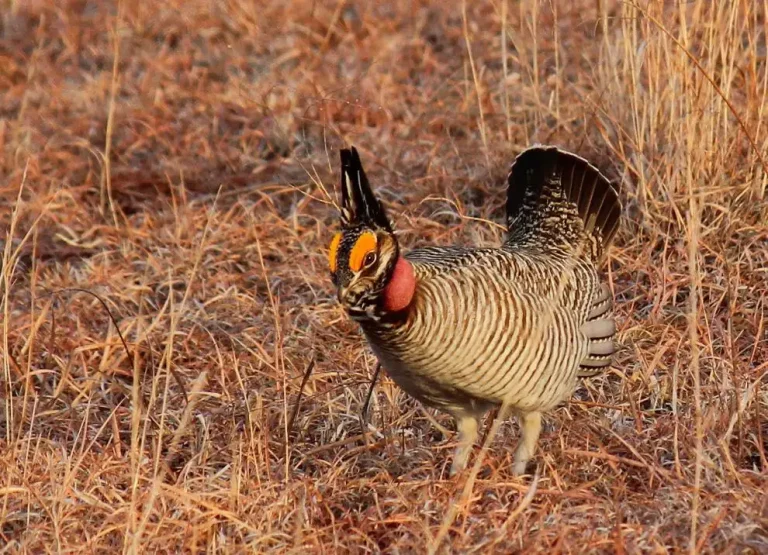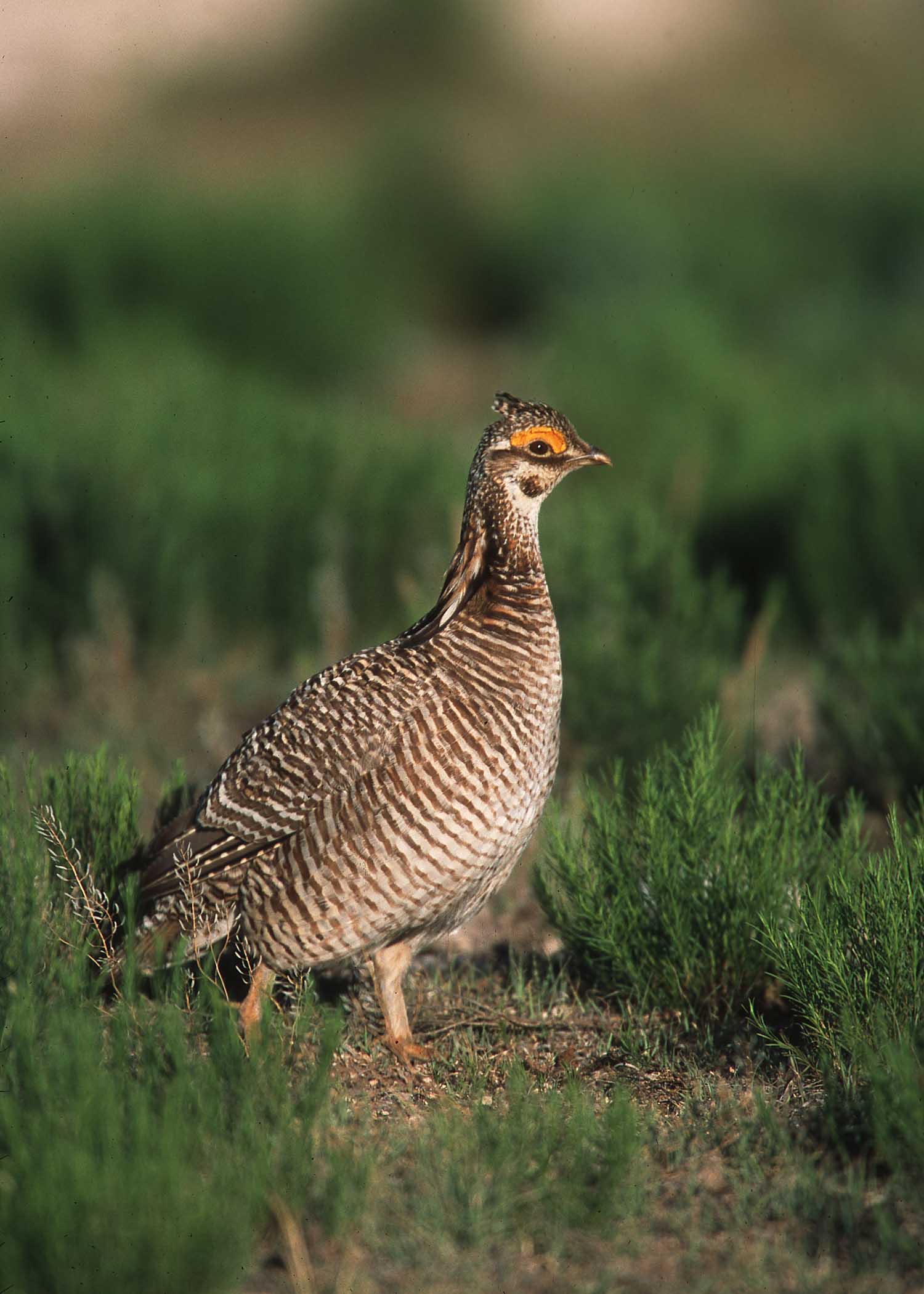
The Trump administration is seeking to undo Endangered Species Act (ESA) protections for the lesser prairie chicken, arguing in a recent court filing that the Biden-era rule granting protections to the bird is flawed.
In a May 7 motion filed in federal court, the Department of the Interior and U.S. Fish and Wildlife Service (USFWS) asked a federal judge to vacate and remand the 2022 rule listing the lesser prairie chicken as two distinct population segments (DPS)—one threatened and the other endangered. The agency cited a “serious defect” in splitting the species.
By voluntarily seeking to withdraw and revise the rule, USFWS aims to resolve legal challenges without further litigation and conserve judicial and agency resources.
According to the court filing, counsel for the state plaintiffs of Texas, Kansas and Oklahoma said they do not oppose the motion to vacate and remand the rule. Counsel for the industry plaintiffs, consisting of livestock and energy groups, did not oppose the motion but reserved the right to respond further after reviewing its contents. However, counsel for the proposed intervenors—the Center for Biological Diversity and the Texas Campaign for the Environment—voiced opposition to the motion.
Background
In November 2022, USFWS listed the lesser prairie chicken under the ESA, splitting the species into two distinct population segments. The Northern DPS—covering parts of the Texas Panhandle, Oklahoma, Kansas and Colorado—was listed as threatened, while the Southern DPS in West Texas and New Mexico was designated as endangered.
The listing quickly drew legal challenges. In July 2023, the Kansas Natural Resource Coalition and several farmers and ranchers sued USFWS, arguing that the rule’s Section 4(d) provisions severely restricted land use and failed to consider economic impacts on small businesses, violating the ESA and other federal statutes.
In April 2025, U.S. District Judge David Counts sided with the plaintiffs, ruling that the agency had not properly followed the statutory language or accounted for economic costs under the blanket 4(d) rule.
Separately, in March 2023, a coalition of cattle groups, Texas, Kansas, Oklahoma and an oil industry association also filed suit challenging the listing. They argued that USFWS ignored existing conservation efforts, misapplied its policy in dividing the bird into two populations, and failed to consider the economic impact on ranchers and energy producers. The lawsuit also took issue with the 4(d) rule, claiming the ESA does not allow the agency to delegate enforcement authority to third parties.
Motion for remand
According to the motion, USFWS acknowledged a flaw in its 2022 final rule listing the lesser prairie chicken under the ESA and said the rule should be vacated. Specifically, the agency admits it misapplied its DPS policy when identifying and listing the bird’s northern and southern DPS.
In its motion, USFWS concedes that it “did not provide adequate justification and analysis” to support the conclusion that the two segments were “significant” as required under the DPS policy. While the final rule initially found both segments to be significant due to the potential for a “significant gap” in the bird’s range if the Southern population were lost, USFWS now states that it failed to evaluate whether such a gap would truly be meaningful for the species.
Instead, the agency said it mistakenly relied on the fact that the populations are geographically separated by 95 miles to assert discreteness and significance—an approach the agency now recognizes as erroneous.
USFWS wrote, “If the Northern or Southern DPS does not qualify as a DPS under the DPS Policy, it does not meet the definition of ‘species’ in the ESA and, accordingly, cannot meet the definition of a threatened or endangered species.”
The agency also noted that correcting this flaw would require a “completely new analysis,” including a reevaluation of the significance of the DPS and consideration of updated scientific data. As such, the agency has asked the court to vacate and remand the final rule, emphasizing its authority to reconsider and revise listing decisions in light of such errors.
USFWS argues that vacating the 2022 listing would not cause disruptive consequences, noting that a new determination on the lesser prairie chicken’s status under the ESA is expected by Nov. 30, 2026. Although the species would temporarily lose federal protections, USFWS points to at least 16 ongoing conservation efforts managed by state, federal and private entities that are expected to remain in place regardless of the bird’s listing status. — Charles Wallace, WLJ contributing editor