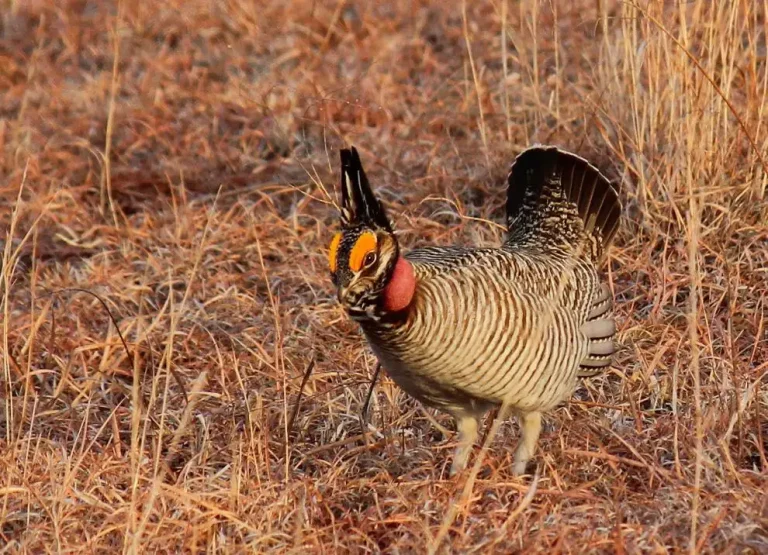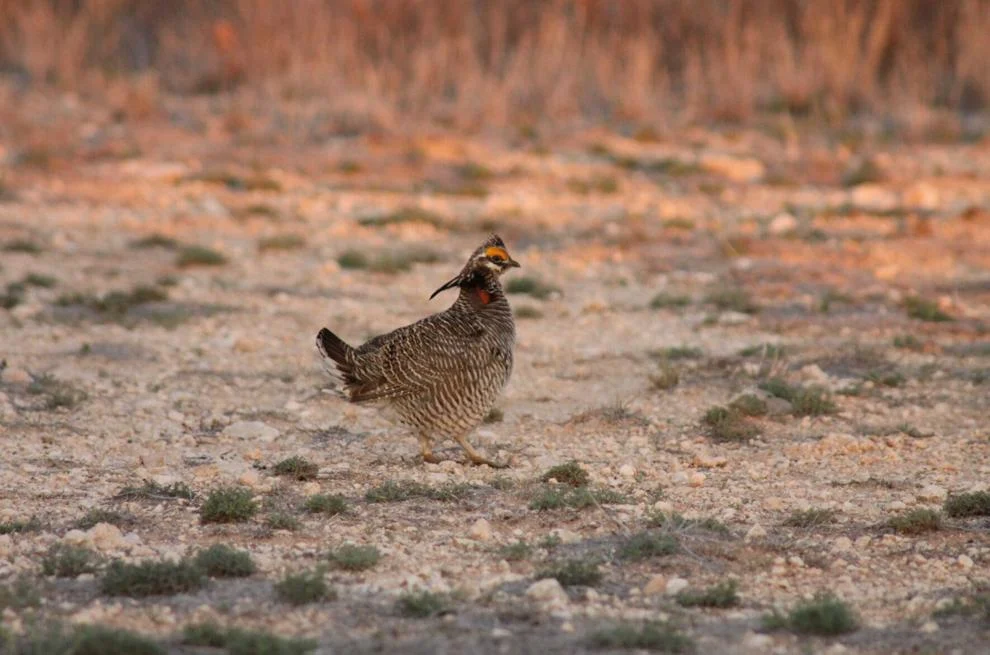
A federal judge has ruled in favor of landowners and counties challenging the U.S. Fish and Wildlife Service’s (USFWS) 2022 decision to split the lesser prairie chicken into two distinct population segments (DPS) under the Endangered Species Act (ESA).
Judge David Counts of the U.S. District Court for the District of Western Texas ruled the agency did not follow the language and economic costs stated under the blanket Section 4(d) rule.
The ruling centers on how USFWS interpreted Section 4(d) of the ESA. The section states that when a species is listed as threatened, “the secretary shall issue such regulations as he deems necessary and advisable to provide for the conservation of such species,” and may also “prohibit with respect to any threatened species any act prohibited under [Section 9].”
USFWS has historically interpreted these as separate authorizations, allowing the agency to either impose prohibitions as long as they are deemed necessary and advisable, or to apply pre-approved prohibitions from Section 9 at its discretion.
However, the court, no longer bound by Chevron deference following the Supreme Court’s ruling in Loper Bright Enterprises v. Raimondo, found no direct precedent supporting this interpretation. Instead, the court agreed with the plaintiffs, ruling that the two sentences must be read together—meaning every prohibition under a 4(d) rule must first meet the “necessary and advisable” standard before being enacted.
“By acknowledging that the Endangered Species Act requires the government to balance conservation efforts with their economic impact, the court restored the ability of these ranching families to earn a living,” said Charles Yates, an attorney at Pacific Legal Foundation, in reaction to the decision. “Unburdened by the shackles of Chevron deference, the court made clear that the United States Fish and Wildlife Service failed to follow the law when it issued the rule, and accordingly overturned it.”
Additionally, the court ruled that USFWS failed to consider economic costs when issuing the 4(d) rule. While economic factors cannot be considered when deciding whether to list a species as threatened, the court found they must be factored into a 4(d) rule.
“Such a determination requires consideration of costs,” Counts wrote. “Because Fish and Wildlife failed to account for costs, to include cost of compliance, it failed to consider the ‘all relevant factors’ and ignored ‘important aspect[s] of the problem’ before it.”
Because USFWS did not conduct this analysis, the judge granted summary judgment in favor of the plaintiffs and denied USFWS’ cross-motion.
Background
In November 2022, USFWS split the lesser prairie chicken into two distinct populations under the ESA. The Northern DPS, found in the Texas Panhandle, Oklahoma, Kansas and Colorado, was designated as threatened, while the Southern DPS, located in west Texas and New Mexico, was classified as endangered.
A 4(d) rule was implemented for the Northern DPS to tailor protections while allowing certain agricultural activities. Land cultivated within the past five years could continue to be used for farming, and grazing was permitted, provided that USFWS and a third-party certifier approved a site-specific grazing plan. Under the ESA, taking birds from the Southern DPS was strictly prohibited.
According to USFWS, the bird has lost 90% of its habitat due to fragmentation and habitat loss, despite ongoing voluntary conservation efforts. Aerial surveys estimated the five-year average population across the five states at 27,384 birds.
In July 2023, the Kansas Natural Resource Coalition and several farmers and ranchers filed suit against USFWS, asserting the 4(d) listing of the lesser prairie chicken severely restricted land use and alleged the agency failed to consider the economic impact of the rule and its impact on small businesses in violation of the ESA and other statutes.
Separately, several cattle groups, along with the states of Texas, Kansas and Oklahoma, and an oil industry group, filed suit in March 2023 over the listing of the prairie chicken. They argue the agency failed to consider existing conservation measures and the economic impact on ranchers and the oil industry. The suit also said USFWS improperly divided the bird into two distinct populations, violating its own policy for evaluating population segments. Additionally, the suit challenged the 4(d) rule, stating that the ESA does not permit USFWS to delegate enforcement authority to third parties.
That case is still pending before the court with motions for summary judgment due on April 30. Counts is also presiding over the case. — Charles Wallace, WLJ contributing editor