The Department of the Interior’s new strategic plan calls for expanding energy production and improving public land management, but its proposal to sell federal lands has drawn opposition from conservation groups and members of Congress from both parties.
The department’s 2026–2030 Strategic Plan outlines four goals covering federal lands, natural resources, water supplies and recreation. It also calls for reducing federal land ownership, streamlining permitting and improving agency efficiency.
In an introductory letter, Interior Secretary Doug Burgum said the department must balance conservation with economic development.
He identified grazing, timber production, energy development, mining, hunting and fishing as important uses of federal lands, adding, “We can and must do both,” referring to conservation and development.
Four goals guide work
The plan establishes four broad goals for federal land and resource management.
• Expand American prosperity.
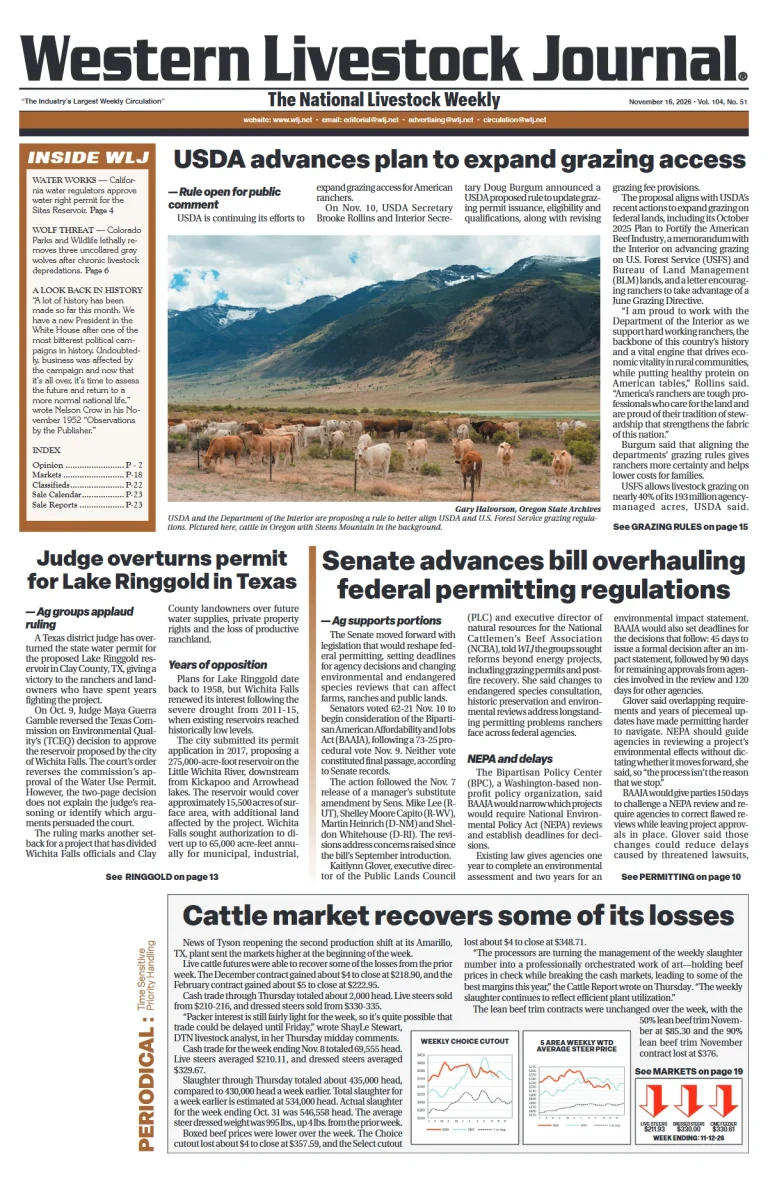
The Interior plans to expand domestic energy and mineral production while speeding up federal leasing and permitting. The plan supports multiple uses of public lands, including livestock grazing, timber production, mining and recreation. The plan calls for land exchanges, parcel consolidation and rights-of-way agreements that would support agriculture and resource development.
The agency also intends to expand mapping of energy deposits, critical minerals and other resources to guide future development and help meet growing electricity demand, including from data centers.
• Keep communities safe, beautiful and resilient, and expand access to the outdoors.
The agency plans to improve roads, dams, water systems and other infrastructure while strengthening public safety and disaster preparedness. The Interior plans to improve western water supplies through reliable deliveries, conservation and reuse. Improved forecasting and expanded water data would help farmers, ranchers and communities prepare for drought and make long-term water management decisions.
• Promote the enjoyment and conservation of our lands, waters, natural resources and cultural heritage.
The Interior plans to expand hunting, fishing and recreation while restoring habitat and controlling invasive species.
Interior’s Rangeland Health Initiative would bring public agencies and private landowners together to improve grassland health and support livestock grazing. The agency also plans to shift Land and Water Conservation Fund spending toward easements on private land to improve public access without expanding federal land ownership.
Under the Endangered Species Act, Interior would work with local communities to manage wildlife and delist recovered species. The plan also proposes transferring federal marine species protection responsibilities to the U.S. Fish and Wildlife Service to streamline permitting and oversight.
• Productively collaborate and coordinate with states, Tribes, communities and people.
The Interior plans to strengthen partnerships, streamline regulations and improve access to scientific information while consolidating its workforce to reduce costs. The plan also calls for reducing federal land ownership by offering states, local governments and Tribes opportunities to purchase public lands.
The Interior says the sales would allow the department to focus on its core responsibilities and nationally significant lands while reducing federal management costs. A portion of the proceeds would be returned to purchasers for conservation projects elsewhere, to improve public access to recreation.
The Public Lands Council said in an e-newsletter that while the group has policy that opposes mass transfer or sale of federal lands, it has “consistently supported land sales, trades, and other disposals to make management more effective and coordinated, support local communities and rural economies, and make landscapes as a whole more resilient.”
Public land sales draw opposition
While the plan does not identify sites or acreage, the Center for Western Priorities (CWP) criticized the proposal and the plan’s emphasis on energy development and artificial intelligence. CWP Communications Director Kate Groetzinger said the Interior was prioritizing development over conservation.
“At every turn, the plan prioritizes extraction over conservation, emphasizing the need to pillage our public lands in order to power AI data centers,” Groetzinger said.
Backcountry Hunters & Anglers (BHA) raised similar concerns, particularly over the Interior’s proposal to shift Land and Water Conservation Fund investments away from federal land acquisitions and toward conservation and recreation easements on private property.
BHA acknowledged that improved recreation access, habitat restoration and abandoned mine cleanup were worthwhile goals but questioned how the Interior could accomplish them while reducing federal land ownership and consolidating its workforce.
Opposition has also emerged from western lawmakers in both parties.
Sen. Martin Heinrich (D-NM), ranking member of the Senate Energy and Natural Resources Committee, argued that federal law does not require public lands to be nationally significant to remain federally owned.
“These lands belong to the American people—not private interests or corporations looking to cash in,” Heinrich said.
Montana’s congressional delegation also pushed back. According to the Flathead Beacon, Republican Montana Sen. Tim Sheehy said his office was not consulted, declaring, “I will not allow ONE ACRE of Montana land to be sold.”
Rep. Ryan Zinke (R-MT-01), a former Interior secretary, also opposed the proposal, as did Rep. Troy Downing (R-MT-02).
Burgum defended the proposed land sales during a Nov. 16 appearance on Fox Business, arguing that selling or exchanging small parcels of federal land can help western communities grow while generating money for public land improvements.
“One hundred percent of our national park land will not be touched,” Burgum said.
He emphasized that the plan calls for selling land to states, Tribes and local governments rather than directly to private buyers, adding that such transactions could help address housing shortages and improve management of remaining federal lands. — Charles Wallace, WLJ contributing editor