Environmental groups frequently try to stop logging and grazing with lawsuits claiming environmental impacts. They also file lawsuits against governments and industries for greenhouse gas (GHG) emissions causing climate change. The causes, extent and actual existence of human-caused climate change are uncertain, but it’s an issue that affects agriculture. I think that environmentalists’ opposition to logging, grazing, and at the same time, opposing GHG emissions, is inconsistent because logging and grazing as part of forest and range management can reduce GHG emissions.
Trees and grass absorb carbon dioxide (CO2) which is a primary GHG, and store carbon in cellulose, hemicellulose and lignin in wood and grass. When vegetation burns or decays the carbon combines with oxygen and is released into the atmosphere as CO2, or as methane (CH4) and other compounds. I’ve written other WLJ articles on this topic (see the References below) and here I provide updated information regarding forests and GHG.
The U.S. Forest Service (USFS) has a new 2026 report describing GHG emissions from, and GHG removals by, forests in the U.S. from 1990 to 2024. The report includes data on the amount of carbon removed from forests in harvested wood (timber), expressed as CO2 equivalents representing carbon that is not released into the atmosphere (called sequestered carbon). Data for nine years from 1990 to 2024 show that an average of 98 million tons of CO2 equivalents per year is sequestered in harvested wood and not released into the atmosphere. This includes 34 million tons in wood products and 64 million tons in waste disposal sites (landfills).
The USFS report and a 2026 report by the University of Maryland note that forests, including harvested wood products, contain the most sequestered carbon (called a carbon sink) in the U.S. Forests absorb about 15% of the total GHG emissions in the U.S. This is remarkable if you think about it; forests absorb 15% of our GHG emissions. Think about how much this could be increased with improved forest management like preventing forest fires and increasing timber harvest. The rate of carbon uptake by forests has been decreasing because U.S. forests are aging (older trees absorb CO2 at a lower rate than young trees) and fires have increased in frequency and severity. The report by the University of Maryland includes similar data for GHG in grasslands.
Forest fires are an important source of GHG emissions. The amount of CO2 emitted by forest fires in the U.S. is huge: an average of 126 million tons of CO2 per year. There is 1.3 times more CO2 emitted by forest fires than is sequestered in wood products (98 million tons) per year.
A summary of the complicated numbers in the technical reports is:
Forests absorb 15% of the GHG emissions in the U.S.; harvested timber-wood products lock up 98 million tons of CO2 per year; forest fires emit 126 million tons of CO2 per year.
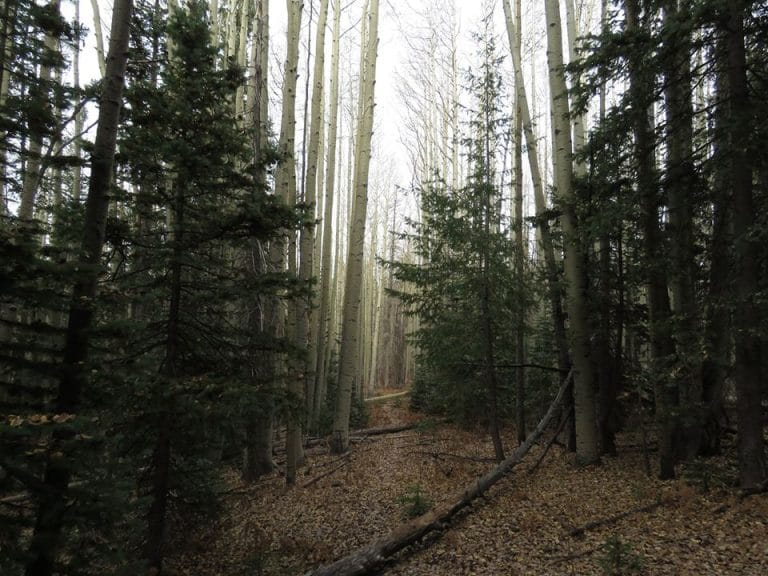
A small-scale example of CO2 and forests is seven lodgepole pine trees I harvested for fence posts and rails in two sites in Montana: four trees 35-37 years old, 5-6 inches in diameter, 33-42 feet tall, 59 tons of CO2/acre; and three trees 78-128 years old, 5-9 inches in diameter, 42-70 feet tall, 211 tons of CO2/acre. Note that the older trees have more CO2 per acre after more years of growth than the younger trees. The average for the two sites is 135 tons of CO2 per acre of small lodgepole pine (see the References for calculations).
Also, consider that 149,465 forest acres burned in Montana in 2026. Using the average of my trees of 135 tons of CO2 per acre as a rough estimate for the amount of CO2/acre in the burned forests results in 20,177,775 tons of CO2 emitted from fires in Montana in 2026. Now consider that the average timber harvest in Montana from 2002-25 contains 2,866,786 tons of CO2 per year. About seven times as much CO2 was emitted from fires as was locked up in harvested timber considering these rough estimates.
Good forest management should include timber harvest followed by tree regeneration and minimizing forest fires. Timber harvest followed by forest regeneration of young trees will absorb CO2 from the atmosphere faster than old trees and sequester more carbon over time. Timber harvest sequesters carbon from the atmosphere in wood products and regenerating trees and reduces CO2 impacts on climate change. Properly managed forests also reduce the frequency and severity of fires and their GHG emissions. And forest management supports the economies of rural communities and can improve wildlife habitat.
Climate change and forestry can be complicated. But I think my analyses indicate that instead of opposing logging, environmentalists concerned about climate change should endorse it as an integral part of forest management to sequester CO2 in wood products and reduce CO2 emissions from forest fires. — Matt Cronin, WLJ columnist
(Matt Cronin is a biologist with Northwest Biology and Forestry Company LLC in Bozeman, MT, and a teaching professor at Montana State University. He may be contacted at croninm@aol.com.)
Desai, M.; Camobreco, V.; Hedger, T. [et al]. 2026. Greenhouse gas inventory and analysis for the United States: 1990-2024. College Park: University of Maryland, Center for Global Sustainability. https://doi.org/10.13016/g1xw-qftw. Greenhouse Gas Inventory and Analysis for the United States: 1990-2024 Domke, G.M.; Walters, B.F.; Smith, J.E. [et al.]. 2024. Greenhouse gas emissions and removals from forest land, woodlands, urban trees, and harvested wood products in the United States, 1990–2022. Resour. Bull. WO-102. Washington, DC: U.S. Department of Agriculture, Forest Service. 13 p. https://doi.org/10.2737/WO-RB-102. Hoover, Coeli M.; Bagdon, Ben; Gagnon, Aaron. 2021. Standard estimates of forest ecosystem carbon for forest types of the United States. Gen. Tech. Rep. NRS-202. Madison, WI: U.S. Department of Agriculture, Forest Service, Northern Research Station. 158 p. https://doi.org/10.2737/NRS-GTR-202. Standard Estimates of Forest Ecosystem Carbon for Forest Types of the United States Explainer: Climate Litigation – Trends and Impact | Earth.Org References for fires and timber harvest in Montana forest fire acres montana 2026 forest service – Search Bureau of Business and Economic Research WLJ articles on Forests, fires, logging, and climate change: June 17, 2022 Resource Science: Timber and fire | Top Headlines | wlj.net November 11, 2022 Resource Science: Logging, forest fires and greenhouse gas emissions | Resource Science | wlj.net December 22, 2023 Resource Science: A new category of forests – Old growth | Resource Science | wlj.net August 9, 2024 Resource Science: Forests and climate change | | wlj.net October 16, 2024 Resource Science: How much CO2 is in trees? | Western Livestock Journal March 28, 2025 Resource Science: Forest fires, CO2 in harvested and regenerated trees | Western Livestock Journal November 3, 2025 Resource Science: Impacts of forest and range fires | Western Livestock Journal December 8, 2025 Resource Science: ESA, forest management and climate change | Western Livestock Journal Notes and data: The amount of CO2 (tons) in harvested and regenerating trees is calculated with a conversion of 6.1 tons of green wood per thousand board feet. Given the weight of the wood the CO2 equivalent is calculated with the wet weight minus the weight of the water content of green wood (0.4 times green wood weight) or wet weight times 0.6 to get dry weight; times the fraction of wood that is carbon (0.5 times the dry wood weight); plus the weight of the oxygen combined with the weight of the tree carbon to form CO2 (3.67 times the weight of carbon in the tree). Montana tree and CO2 data Forest plots Lodgepole Pine: LPP; Diameter at breast height: DBH; thousand board feet: mbf; 1 ton = 2000 lbs. 2026 1/20 acre plot Semicircle plot area = (pi r2); r = 26.3’ (26’3”), r2 = 691.7, 3.14159 x 691.7 = 2173 ft2 1/20 acre plot LPP > 2” DBH, avg DBH 4”, 46 trees in plot, Weight of individual tree 4 used as estimate of tree wt = 116.6 lbs., 46 trees x 116.6 = 5363.6 lbs. in plot, x 20 = 107272 lbs./acre x 0.6 = 64363 lbs. dry wt, x 0.5 = 32181 lbs. C, x 3.67 = 118106 lbs. CO2 equiv./2000 = 59 tons CO2 equiv./acre 2024 See the October 2024 WLJ article for detailed calculations. 1/10 acre plot radius of 37.1667’ (37’2”), r2 = 1381, 3.14159 x 1381 = 4339 ft2 610 trees, DBH avg 7.2 of live trees, 211 tons CO2/acre. Live log weights were estimated considering the average DBH 7.2″, and estimated as the average weight of the measured individual trees with DBH 9″ & 5.75″ (1180+360)/2=770 lbs.) with the tables in Mann, C.N. and H.H. Lyons. 1972. A method of estimating log weights. U.S. Forest Service Research Paper PNW-138, Portland, Oregon. Montana timber stats Bureau of Business and Economic Research Montana 2002-2025 average of 24 years 426,853 mbf/year x 6.1 = 2,603,802 wet weight tons x 0.6 = 1,562,281 dry weight tons x 0.5 = 7811407 carbon weight ton x 3.67 = 2,866,786 tons CO2 equivalent/year. Montana fire data forest fire acres montana 2026 forest service – Search 149,465 acres burned in MT 2026 Calculation of CO2 equivalents burned Estimated 135 tons CO2/acre from the plot data X 149,465 acres burned in MT 2026 135 x 149,465 = 20,177,775 tons of CO2 emitted from fires in Montana in 2026 Avg harvest 2,866,786 tons CO2/year More burned than were harvested.
References and notes