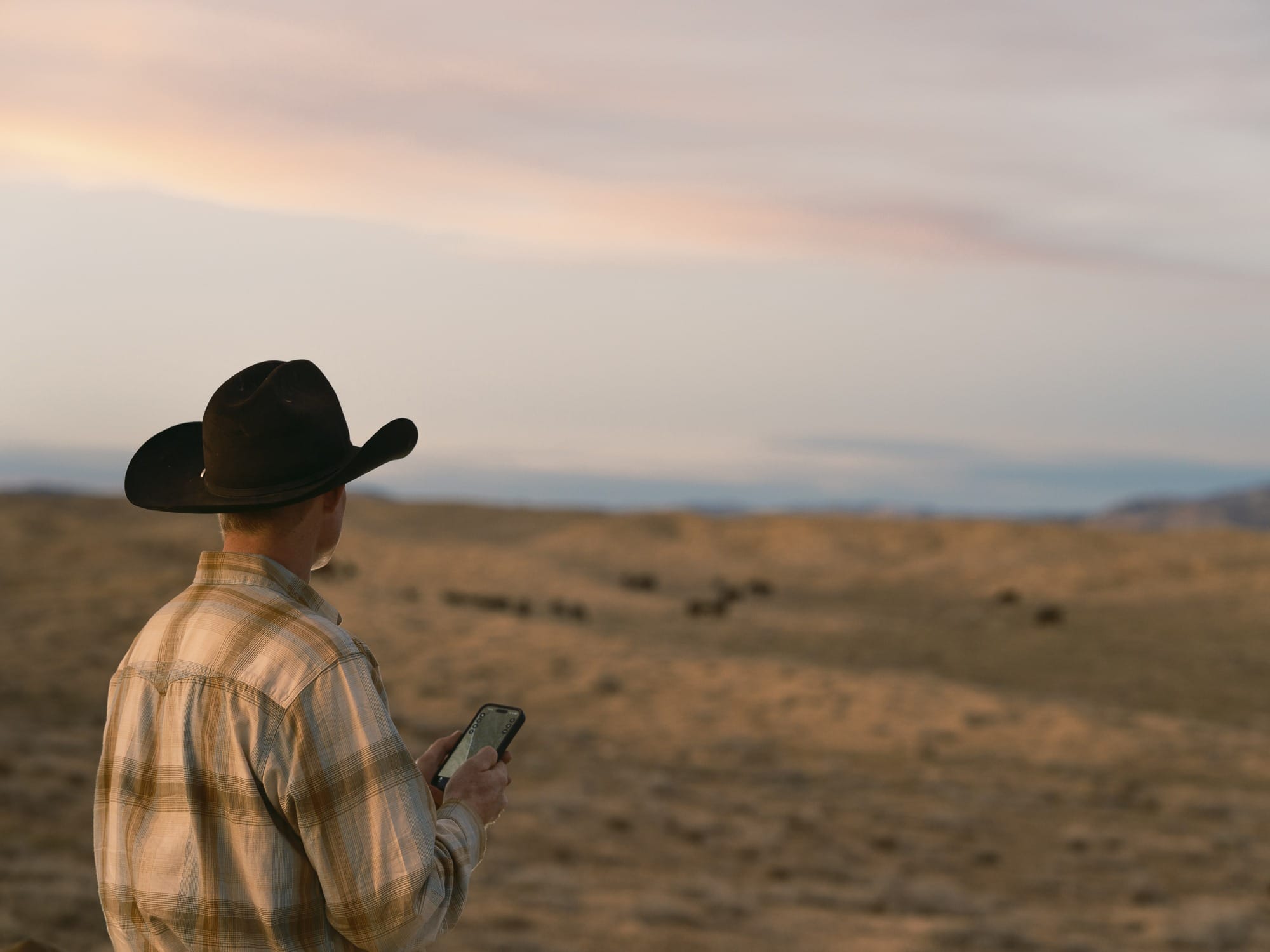
At industry conventions, product demonstrations and in the pages of agricultural publications, ranchers are introduced to a steady stream of new technology designed to improve efficiency and profitability. Manufacturers explain the latest features and capabilities, but producers rarely get the opportunity to hear how those products perform after they’re put to work on a commercial ranch, where weather, terrain and daily management challenges ultimately determine their value.
The following features offer a real-world look at how these technologies perform after they’re put to work on the ranch, where their value is measured not by product claims, but by improvements in management, labor efficiency and profitability.
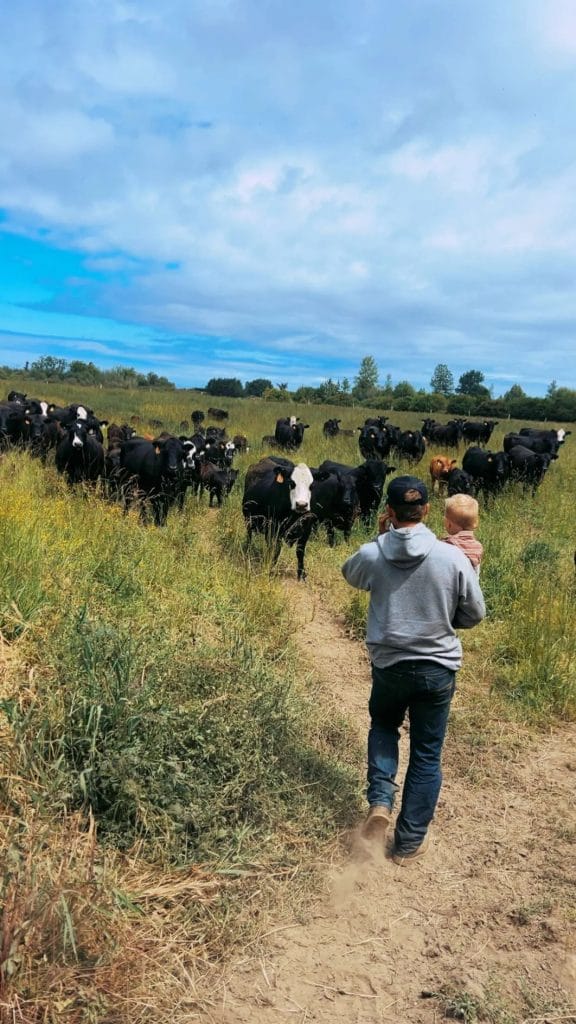
At Sequim Valley Angus & Simmentals in Washington, satellite ear tags are helping Jake Smith monitor bull performance, identify health problems sooner and protect breeding opportunities that directly affect the ranch’s bottom line. At High Lonesome Ranch in western Colorado, Lloyd Calvert is using virtual fencing to expand grazing options across nearly 225,000 acres, manage cattle with greater precision and accomplish more with the same workforce.
Together, their experiences offer a practical look at how technology is moving beyond promises and becoming another management tool on today’s ranches.
Making better breeding decisions
Smith believes technology should solve real problems on the ranch, not simply generate more data. He’s looking for information that helps him make better decisions while putting more dollars back into the ranch.
That philosophy led Sequim Valley Angus & Simmentals in Sequim, WA, to begin using 701x satellite ear tags, initially on its herd bulls, to monitor breeding activity, health and location in real time. For Smith, the investment wasn’t about replacing good stockmanship. It was about gaining information he couldn’t gather by simply checking cattle every few days.
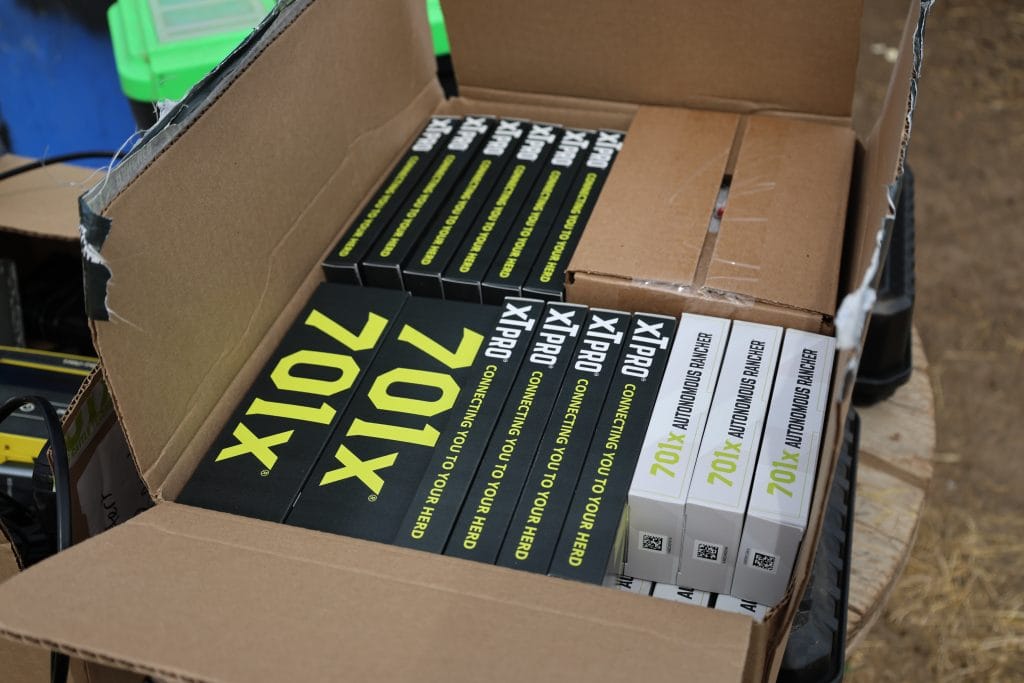
“We kind of dabble in it all,” Smith told WLJ. “We run Angus and Simmentals, commercial and some seedstock. We do embryo transfer (ET) work, AI and direct-to-customer locker beef. We got hooked up with 701x, gave them a shot on the bulls, and we’ve had them in this spring and summer. We are tickled pink with them.”
Starting with bulls
Before adopting the 701x system, Sequim Valley Angus already used electronic monitoring tags on its cow herd. Those tags track rumination, feed intake, activity and estrus, helping identify cows that may be sick or cycling. However, Smith said they rely on nearby base stations to collect data, which limits where they can be used.
“The biggest deficiency with the tags is they’re not satellite,” he said. “They have to be within about 1,700 feet of a base station. The 701x tags are satellite tags, and they can be anywhere.”
Whether cattle are grazing leased ground, remote pastures or fields miles from the ranch headquarters, Smith can still monitor them through the 701x app without worrying about cellular service or radio receivers.
But perhaps more importantly, the system offered something he didn’t previously have: the ability to monitor breeding bulls. Each tag records step count, overall activity, GPS location and mounting activity. Together, those data points provide a picture of whether a bull is healthy, actively breeding cows and remaining where he is supposed to be.
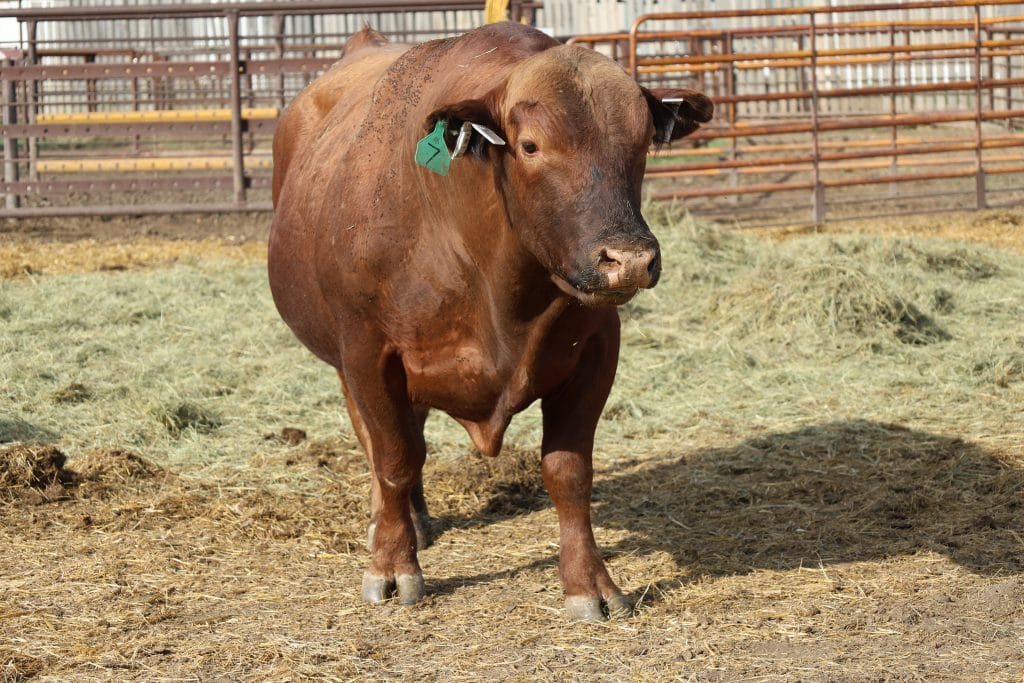
“It’s been phenomenal,” Smith said. “It’s pretty interesting to see a seasoned bull compared to the yearling bulls and how they breed differently.”
The data has revealed differences Smith expected but had never been able to quantify. Young bulls often make far more mounts on a single cow than mature bulls, while experienced sires tend to breed more efficiently.
Another feature Smith relies on is the bull activity report. The report compares mounting activity and movement among multiple herd sires running together in the same pasture. Rather than assuming every bull is contributing equally, Smith can identify bulls that may not be breeding cows because of injury, poor libido or dominance issues.
“What that allows us to do is, if we’re in a multi-sire situation, you can see exactly which bulls are doing their job and which ones aren’t,” he said. “If there’s a bull not working, to get him replaced or culled quickly has a lot of monetary value.”
Instead of discovering a problem during pregnancy checks months later, Smith can make management changes while breeding season is still underway. With breeding bulls commonly worth $7,500 or more and commercial calves bringing record prices, every open cow carries a significant financial consequence.
Health problems, location alerts
One of the biggest advantages Smith has found is the tags’ ability to identify health problems before they become expensive. Only four days after one bull was turned out, the system detected a dramatic drop in activity and sent a notification to Smith’s phone.
“We got an alert on him to go and basically check that bull,” Smith said. “Sure enough, he was foot-rotted up pretty good. His step count went way down compared to where it started.”
Smith was able to bring him home, treat him and return him to the breeding pasture before losing valuable breeding time. For Smith, those early warnings are when the technology begins to pay for itself.
He estimates every missed estrous cycle costs his operation roughly $260 in lost calf performance. Catching an injured bull even two days earlier can preserve one or two breeding opportunities that otherwise may have been lost.
“That 48 hours on the front end of breeding probably paid for that bull’s tag,” he said. “If we’re not missing heat cycles, then we’re putting money back in our pocket.”

Location monitoring has become another valuable management tool. Using virtual fence boundaries within the app, Smith receives a text message whenever a tagged bull leaves a designated pasture.
“I couldn’t believe how fast it was,” he said. “All three times it was less than 10 minutes after they crossed that fence line.”
Smith said that with breeding bulls commonly valued at several thousand dollars or more, immediate notification provides added peace of mind and allows producers to respond before animals travel far.
Return on investment
Although the XTPRO tags for mature animals cost roughly $175 each, plus an ongoing subscription fee, Smith said he never evaluates technology based solely on its purchase price. Instead, he asks a simple question.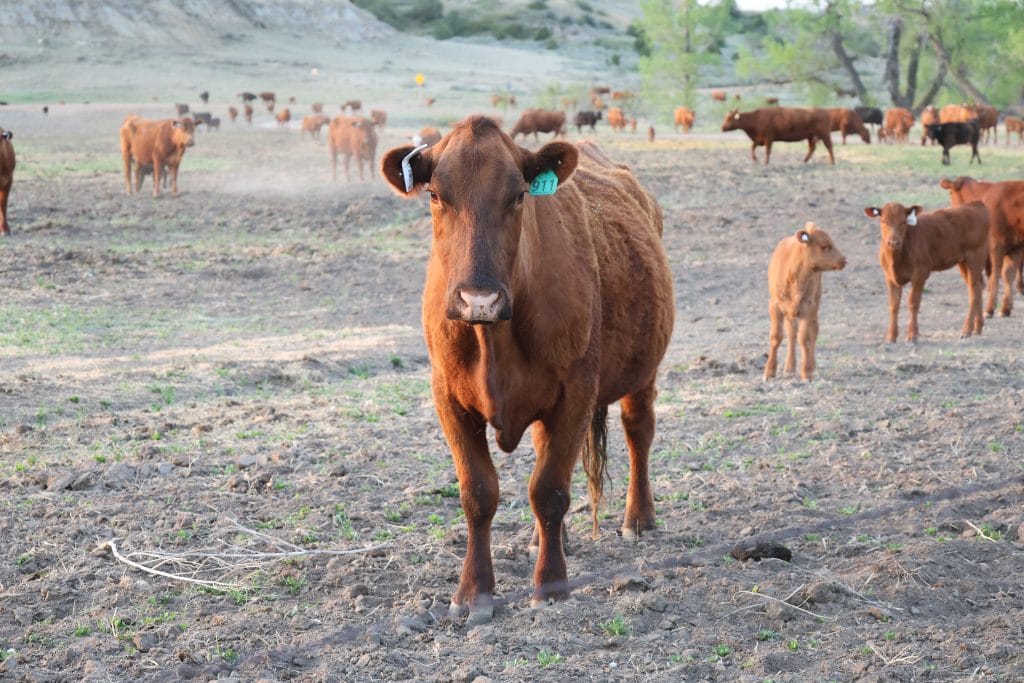
“How does that information turn into dollars?” he said. “That’s really how I look at all of these monitoring devices.”
For Smith, the return on investment comes from preserving breeding opportunities. If one bull isn’t settling cows, the mounting activity reports allow Smith to identify the problem while breeding season is still underway rather than discovering lower conception rates months later.
“If we’ve got bulls that aren’t performing, those mounting reports let you pull out your phone and see exactly which bulls are doing their job and which ones aren’t,” he said. “There’s a lot of monetary value in that.”
The tags also provide labor savings. While they don’t replace routine pasture checks, they give Smith confidence that bulls are healthy and actively breeding, allowing employees to spend their time where it’s needed most. In a state with some of the nation’s highest agricultural labor costs, those efficiencies add to the return on investment.
Although Smith currently uses the tags primarily on breeding bulls, he expects their role to expand. Today, 701x provides estrus detection in females, but Smith would like even greater precision for AI and ET programs.
“The female estrus side is the one thing I’d like to see improved,” he said. “I’m 100% confident they’ll get there, and when they do, I’m more than likely going to switch my whole herd over to the 701x tags because of the flexibility of satellite monitoring. I can have them on any lease or any property we’re running cows on and monitor them 365 days a year.”
For Smith, however, technology will always come back to one thing. The data itself has little value unless it helps ranchers make better decisions while there is still time to act.
“The convenience is nice,” he said. “It’s nice knowing the bulls are healthy and working. But at the end of the day, how does that information turn into dollars? If we’re saving heat cycles and keeping bulls breeding cows, then we’re putting money back in our pocket.”
New ground for a Colorado ranch
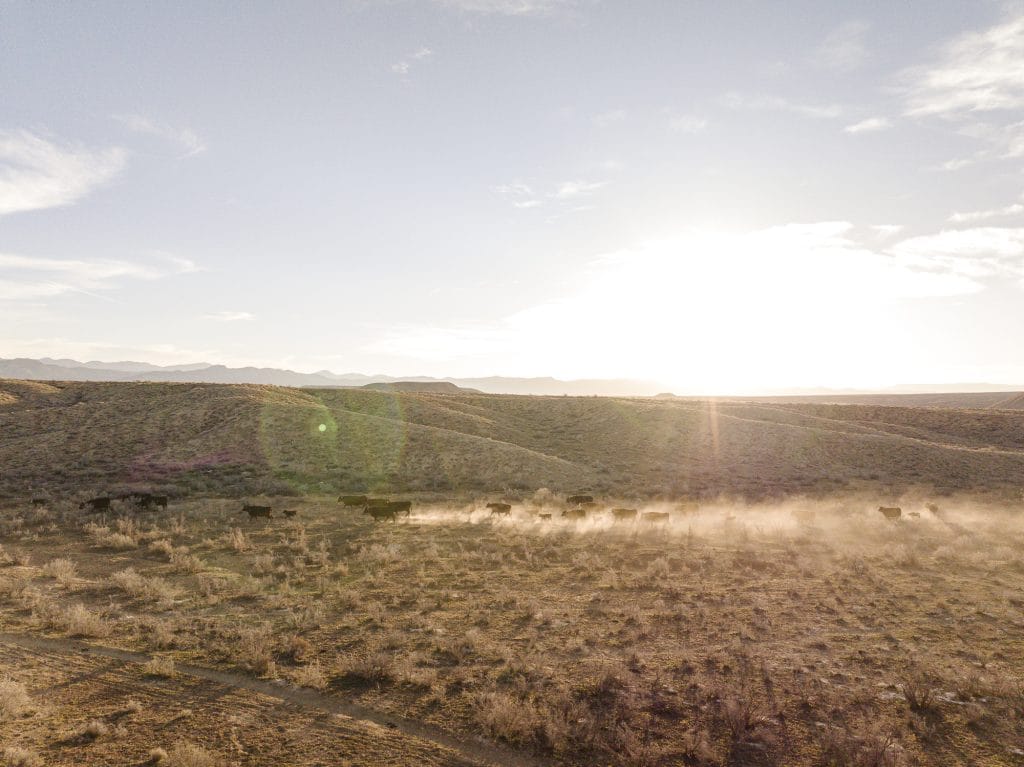
When Calvert, livestock and agriculture manager, first arrived at High Lonesome Ranch, he viewed parts of the western Colorado operation as nearly impossible to manage. The ranch’s acres of steep canyons, dense brush and remote public grazing allotments made finding and moving cattle a constant challenge.
High Lonesome Ranch stretches from Loma around the Book Cliffs to De Beque, CO, encompassing approximately 30,000 acres of deeded land and nearly 195,000 acres of Bureau of Land Management grazing allotments. Elevations range from about 4,500 to more than 8,500 feet across high-desert terrain where water is often the greatest limiting factor.
Today, thanks to Halter’s virtual fencing technology, Calvert is managing those same landscapes with a few taps on his phone, opening new grazing opportunities while reducing labor and giving the ranch greater flexibility than traditional fencing ever could.
“It’s a game changer for the industry,” Calvert told WLJ, talking about the satellite-enabled collars.
Before arriving at High Lonesome in early 2024, Calvert had never used virtual fencing. The ranch had evaluated other systems, but he remained skeptical. Earlier technology depended on fixed communication towers and batteries that required frequent replacement. Given the size of the ranch, Calvert estimated they would have needed dozens of towers to maintain coverage.
Everything changed when Halter introduced collars capable of solar charging and satellite connectivity.
“The satellite option solved the tower problem,” he said. “That was really the deal maker.”
Like many producers considering virtual fencing, Calvert initially questioned how cattle would respond to an invisible boundary.
Those concerns disappeared almost immediately.
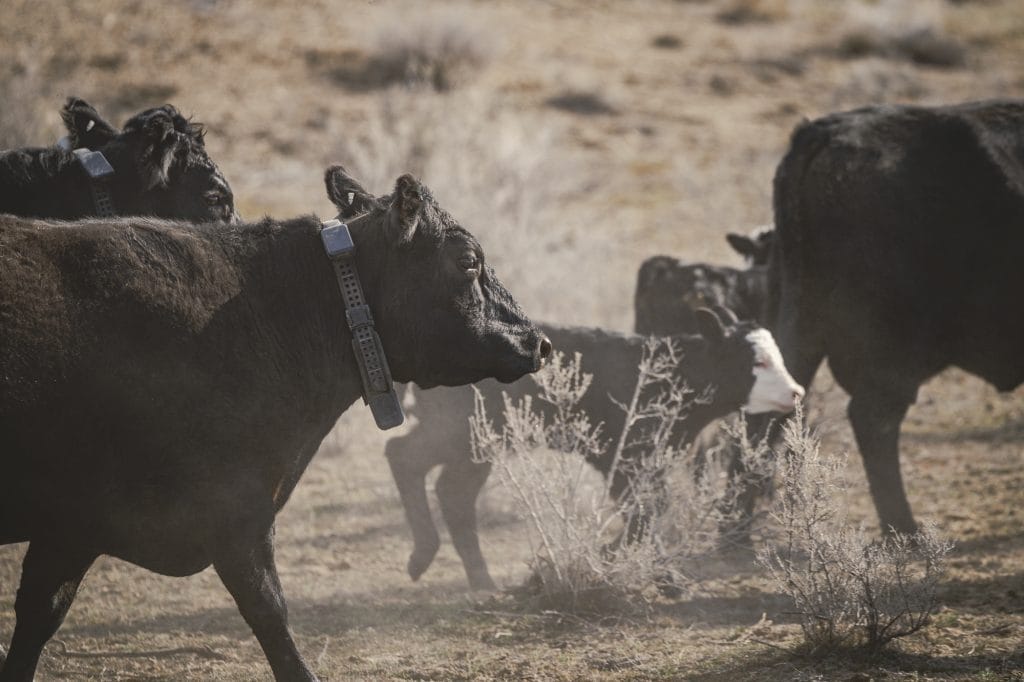
After the herd was fitted with collars and transported nearly 70 miles to winter range, Calvert created a virtual pasture inside an existing holding area.
The next morning, Calvert said he opened the Halter app and “watched the cows walking right along that imaginary fence just like they would a physical fence.”
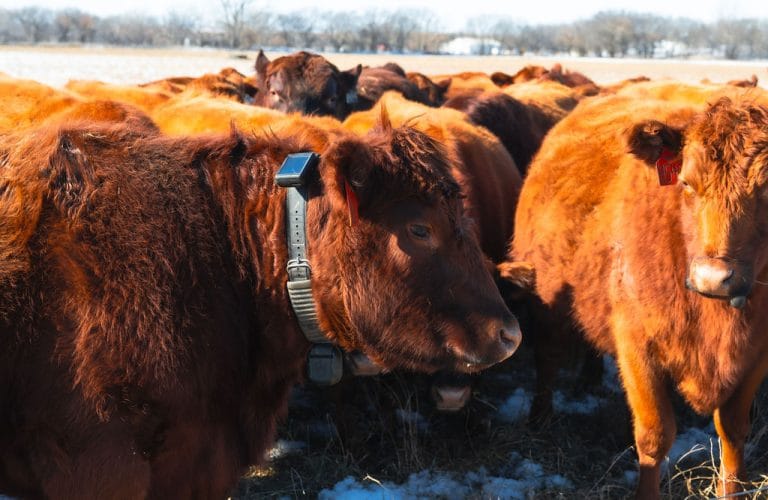
Halter collars guide cattle through sound and vibration cues. Sound cues provide left and right directional guidance, while vibration cues are used to shift animals in the right direction.
Calvert said very few cattle challenge the virtual boundaries once they understand the system. On the rare occasions animals crossed the line, simply pushing them back into the designated pasture reinforced the training, and the problem rarely reoccurred.
Labor, management drive return
Calvert said the return on investment (ROI) became obvious once the ranch looked beyond the cost of the collars.
Initially, High Lonesome evaluated Halter by asking whether the technology would allow the same crew to manage more cattle. The answer was yes.
Today, Calvert believes the return goes much further.
“We’re doing so much more with the same amount of labor,” he said. “That’s where the ROI is.”
Instead of building a temporary electric fence, moving water or spending days gathering cattle, pasture adjustments often take only minutes inside the Halter app.
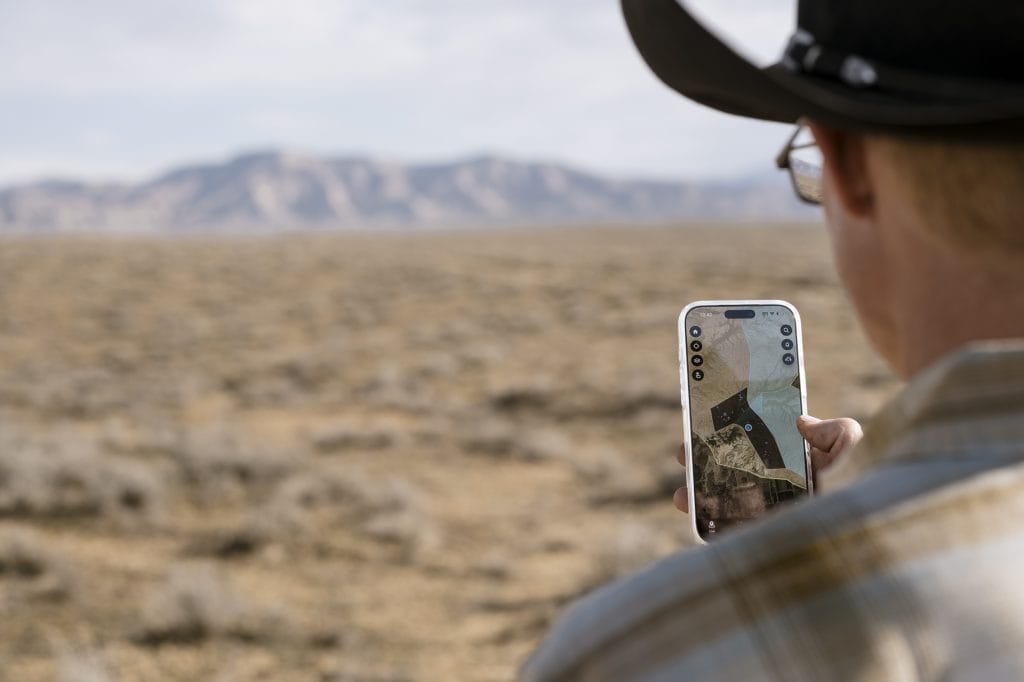
The biggest advantage has not simply been replacing physical fence. Instead, Halter has allowed High Lonesome Ranch to graze areas previously considered too remote or difficult to manage.
One example is Corral Canyon, a rugged landscape covered in dense brush where horseback riders struggled to locate cattle. Calvert recalled hiring additional day hands, gathering horses and dogs, and spending an entire day searching for approximately 200 cows.
Today, he can monitor the entire herd from his phone.
Instead of chasing cattle through brush, Calvert creates virtual paddocks around available water sources, adjusting pasture boundaries as forage is utilized. The system allows cattle to remain in difficult country while still giving managers precise control over grazing distribution.
“It’s country I honestly believed was unmanageable,” he said. “Now we’re using the cows to manage brush, build trails and learn country that we couldn’t have managed before.”
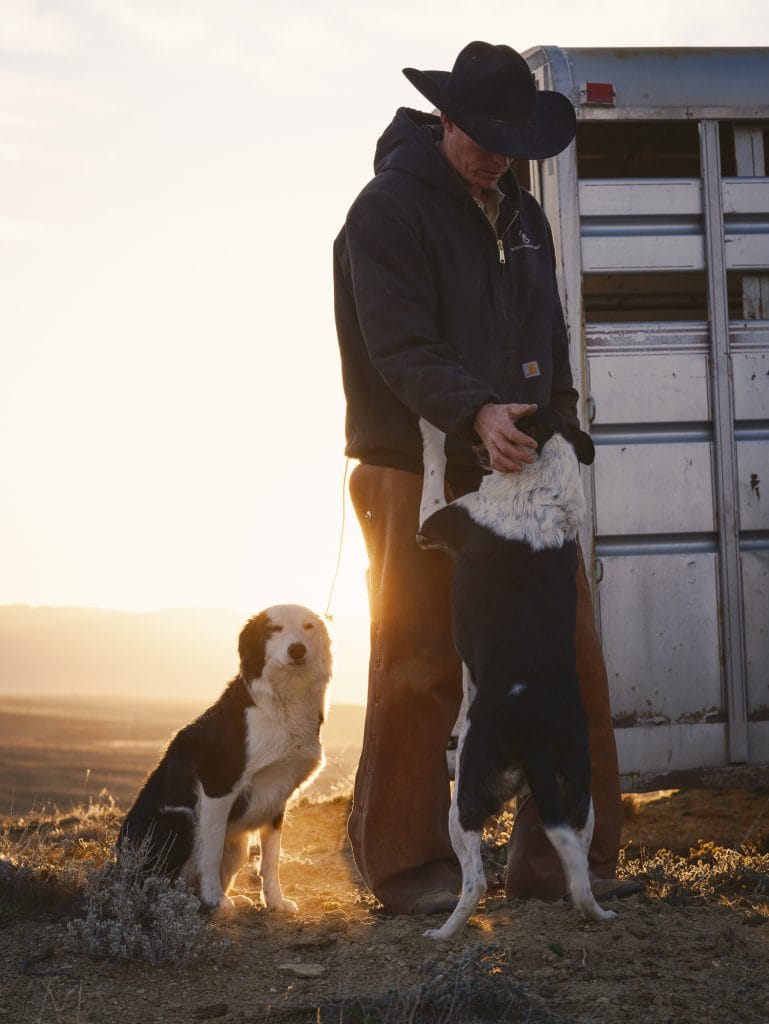
Calvert also said the GPS technology allows him and his employees to monitor the location of every collared animal and to receive alerts if an animal stops moving unexpectedly. In one case, the system notified Calvert that a cow had become immobile after falling into a hole. The alert allowed the ranch staff to locate the animal and respond accordingly. Without alerts like this, staff would have otherwise never known what had happened, likely spending additional time and labor searching for a missing animal.
For Calvert, those examples make it difficult to measure the investment with a simple spreadsheet.
“It’s a moving bar,” he said. “When we first looked at it, it was replacing labor. Now it’s allowing us to do things we simply couldn’t do before with the same number of people.”
He believes that’s where the technology delivers its greatest return: not by replacing employees, but by expanding what a ranch can accomplish with the people it already has.
Beyond virtual fencing
For Calvert, virtual fencing is only one piece of what Halter offers. The behavioral data generated by every collared animal is beginning to reshape how he manages both grazing and reproduction.
One of the most valuable features is the system’s ability to record where cattle spend their time, how long they remain in specific areas and how they move across the landscape. Detailed heat maps of grazing patterns allow Calvert to identify overused or underutilized areas and make more informed management decisions. By combining grazing records, animal behavior data and animal insights in one place, the system helps Calvert make data-driven decisions about how his land and cattle are performing.

“I used to track that through pictures and notes,” he said. “Now having factual data on grazing patterns and cattle movement, especially as we expand, is massive.”
The ranch also uses Halter’s heat detection technology, which helps identify open cows destined for its grass-finishing program while offering insight into breeding progress within the cow herd. The data is part of a broader suite of tools that help the ranch monitor animal performance and make more proactive management decisions. Looking ahead, he expects the breeding data to become even more valuable within the commercial cow herd.
“The information is starting to become almost limitless,” he said. “It’s completely redefining my decision-making, which then changes the outcomes in a much more positive way.”
Looking ahead
Because most of the ranch operates on public land, Calvert also sees virtual fencing becoming an important management tool for cooperation between ranchers and public land agencies.
Rather than building permanent fence around sensitive riparian areas or eliminating grazing, virtual exclusion zones could keep cattle away from vulnerable areas while preserving grazing opportunities. Calvert believes that level of flexibility benefits ranchers, land managers and the public alike.
For producers considering virtual fencing, Calvert offers simple advice: keep an open mind.
He admits he was initially skeptical, but after seeing what the system could accomplish, he believes its greatest value isn’t replacing fence. It’s removing management limitations that once seemed unavoidable.
“Being able to change your mind that quickly,” he said, “and manage cattle anywhere from your phone changes everything.” — Charles Wallace, WLJ contributing editor