Another milestone has been reached on USMCA; the backstage consensus gathering in Congress has come to an end. We have a deal… sort of.
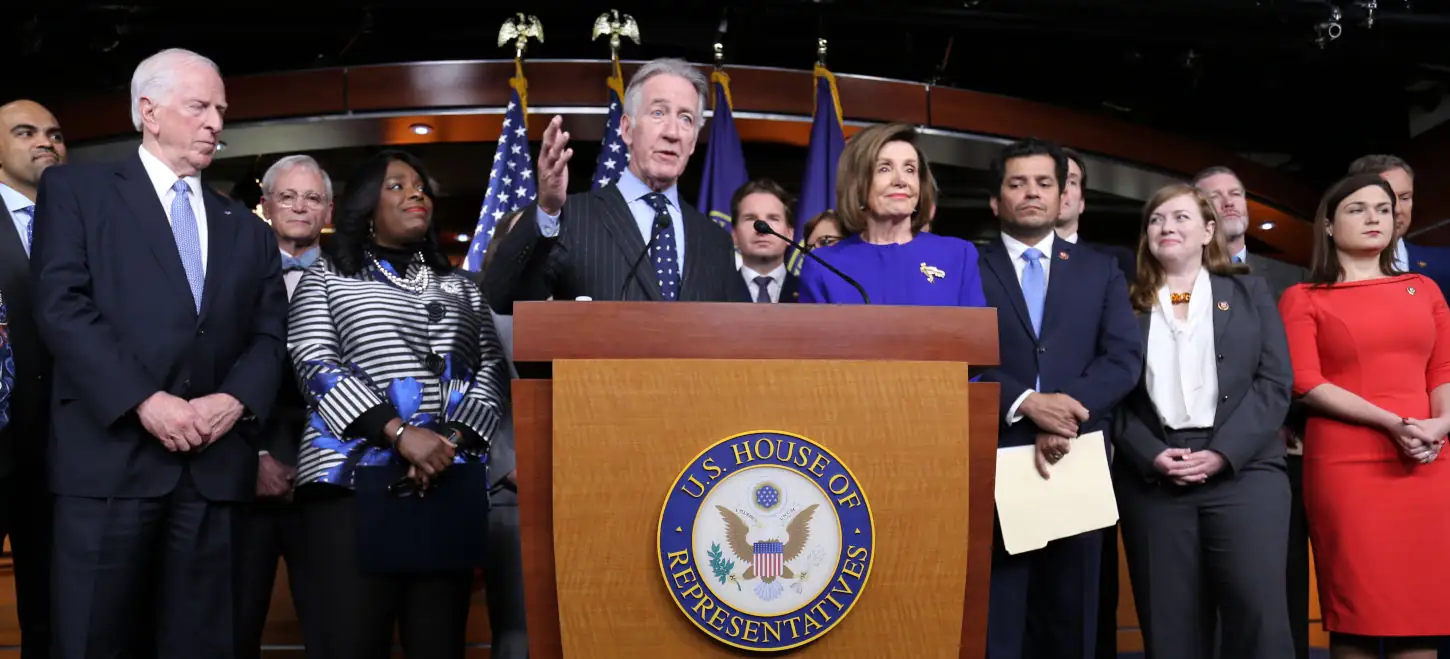
On Dec. 10, Speaker of the House Nancy Pelosi (D-CA-12), Chairman of the Ways and Means Committee Richard Neal (D-MA-01), and members of the House’s U.S.-Mexico-Canada Agreement (USMCA) working group announced that a deal has been made on USMCA.
“This is a day we’ve all been working to and working for on the path to yes,” said Pelosi during the Tuesday morning press conference, calling it a victory for American workers.
Neal called the agreement an “it will never happen moment” and transformative.
“This is more than a triumph for organized labor, it’s a triumph for workers everywhere across America.”
Both Pelosi, Neal, and others who took the podium during the announcement described the agreement they had reached backstage with other members of Congress and trade representatives in all three countries as wholly different from the one originally agreed to last year by the three countries.
“Our constant emphasis was on enforceability, enforceability, enforceability,” Neal said. “We fixed that.”
According to a factsheet from the House Ways and Means Committee, the changes made to the original USMCA include: strengthened the labor standards with verification mechanisms and enforcement; strengthened environmental rules with special attention to water concerns between the U.S.-Mexican border among other things; and efforts to limit prices and monopolies on prescription drugs via exclusivity requirements.
The full text of the amended USMCA was not available as of print time.
The House Ways and Means Committee’s summary of the amendments can be found below:
What happens now?
Despite all the attention and fanfare on the announcement—including most beef and agricultural groups welcoming it in glowing terms—it isn’t a done deal yet and there’s still a long way to go.
“As far as next steps go, the amended text was agreed to and signed today by the executive branches of all three governments,” explained Kent Bacus, senior director of international trade and marketing access for the National Cattlemen’s Beef Association, speaking to WLJ shortly after the announcement.
“Now that text will have to be ratified by the legislative bodies in all three countries.”
For the U.S., this will involve the text of the amended USMCA being submitted to the House in the form of a bill. The bill must be passed through the Ways and Means Committee, which will issue a report, and onto the full House for consideration and a vote.
“I think it’s important to remember that under Trade Promotion Authority, this is a straight up or down vote. Congress can’t amend this,” Bacus said during NCBA’s Beltway Beef podcast the following day.
An important detail that Bacus has shared with WLJ in the past is that, once a USMCA bill is introduced to the House, it starts a 90-day congressional countdown. The bill must be passed within 90 congressional workdays.
“Given the urgency of this, there probably won’t be many [procedural hurdles] to try to move things through the House,” Bacus told WLJ. “We expect this to move rather quickly through the House of Representatives.”
During the Tuesday press conference, both Pelosi and Neal said they expect to submit something this week and hope to be done by the end of the congressional calendar on Dec. 20.
After the USMCA bill passes the House, it will go to the Senate’s Finance Committee, which will report on it and send it to the full Senate for a vote. This will also be a up-or-down vote with no amendments. From there it would go to the president’s desk for a signature. An implementation date will be set after that, depending on the legislative calendars of Mexico and Canada, and eventually a transition period to shift the countries from the still active North American Free Trade Agreement to USMCA will be set.
Senate setbacks?
Though Bacus voiced optimism on USMCA’s prospects to quickly pass the House, he acknowledged there are some challenges that lay ahead, particularly in the Senate with the impending impeachment process.
“Once the impeachment process starts, it’s going to be really hard to get anything done with the Senate being the jury,” he explained. He also noted that, if things carry over into January, “Election year will be in full swing so we need to get this done right now.”
Senate Majority Leader Mitch McConnell (R-KY) added to potential timeline concerns. On Wednesday, he called USMCA a “casualty of Democrats’ impeachment obsession,” and said, “it is now impossible for the USMCA to become law in 2019” in reference to a potentially tight Senate timeline with the impeachment potentially in play.
However, neither the bill introducing the USMCA had been submitted, nor was H.Res. 755—the articles of impeachment against President Donald Trump, announced on Monday and introduced on Tuesday—on the congressional committee calendar as of press time.
The U.S. timeline isn’t the only one in play, either. The amended USMCA must also be passed by the legislative bodies of both Canada and Mexico before an implementation date is set. Mexico’s legislative body passed the original version of USMCA back in June of this year but will have to re-ratify the amended version. The Canadian legislative body has not taken up USMCA, but has instead been waiting on the U.S. — Kerry Halladay, WLJ editor