When considering the proper genetics needed to rebuild the cow herd, it is important that cattle carry a balance of traits that give the different segments of the industry—cow-calf, feedlot and packer—a reasonable opportunity to be profitable.
However, the recent article by this author that appeared on page 24 of the spring edition of The Wire magazine demonstrated that while genetic potential for production traits has exponentially increased, the payweights for commercial cow-calf operations have remained largely unchanged.
The U.S. commercial cow herd of recent years has been dominated by Angus, which has provided feeders and packers with cattle with the genetic potential for fast gains, heavy carcasses and high-quality beef. Conversely, it has often resulted in cow herds with higher maintenance requirements than the environment and feed resources in which they are managed can sustain.
When this occurs, the result is decreased reproductive efficiency and stagnant feeder cattle payweights. Essentially, many commercial cow-calf producers are equipping their cows with “jet engine” genetics and then trying run them on regular fuel. Conversely, when these cattle get to finishing yards with steam-flaked grains and ideally balanced rations, they have the “jet fuel” to express these genetics.
However, when we rebuild our commercial cow-calf herd, if it is done with cows whose genetic potential for production exceeds what they and their calves can express, we will have set ourselves up for failure.
It is also important to remember that efficient and inefficient cows come in all sizes, and ultimately what is paramount is that a cow herd’s genetics are custom fit to each operation’s unique matrix of environment, management, feed resources and market. The bottom line is, one size does not fit all.
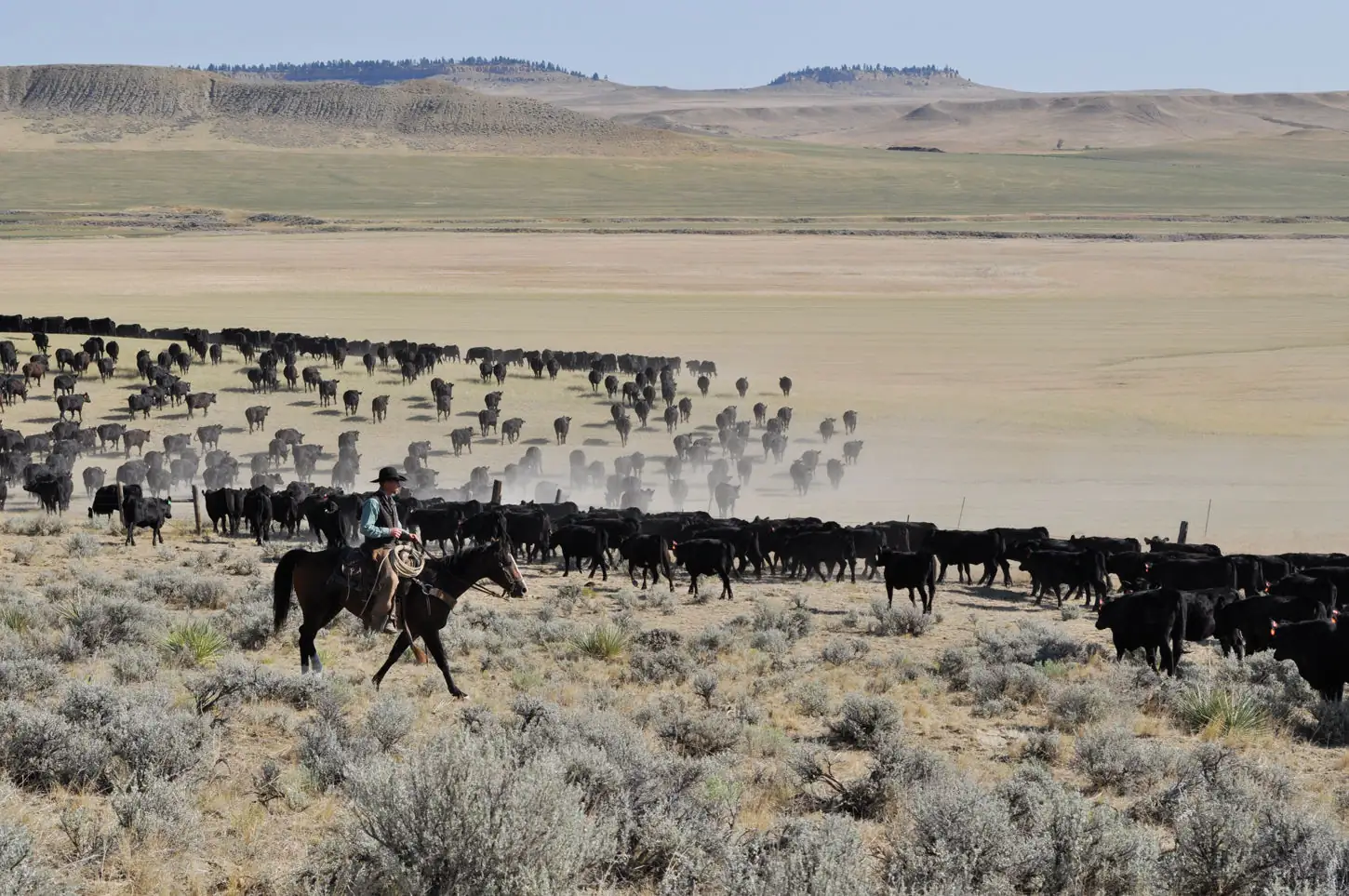
For instance, in cases where cows have access to plentiful nutrient dense feed, a large cow with high production potential is called for. However, where feed is sparse, like certain desert ranges where stocking rates can be as extreme as one cow per 100 acres, smaller cow size is called for so that she can travel and eat enough to meet her nutrient requirements each day.
Likewise, a colder environment favors larger cows than a hot environment. This is because metabolic body weight is the relationship of body surface per pound of body weight. Larger cattle have less body surface per pound, which makes them more efficient in maintaining body temperature in cold environments.
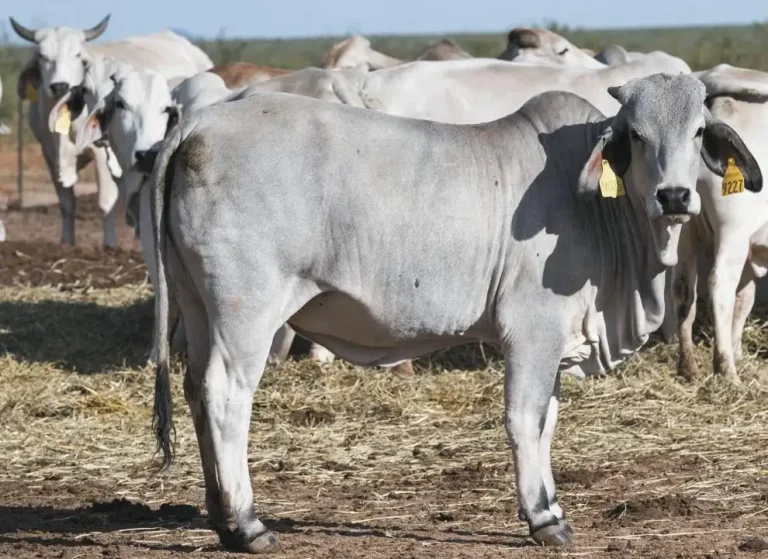
Meanwhile, in hot climates, smaller cattle have more body surface per pound, so they can dissipate heat easier than a larger cow. This is magnified in Bos indicus, or “eared” cattle, whose loose hides provide even more body surface to serve as a radiator to dissipate heat.
Two of the most underutilized tools in the cattle industry are the use of heterosis and breed complementarity. Breed differences need to be celebrated and strengthened rather than trying to convert breeds so that they are all the same. However, there are too many examples of this occurring.
One of these is a recent study headed by Mulim and his colleagues at Purdue University, which found that genetic drift in the Red Angus gene pool has resulted in it being uniquely different than their black counterparts. This makes perfect sense when one considers that the Red Angus Association of America was formed in 1954 to build a breed based on objective measures including required reporting of weaning weights.
In 1995, the reds implemented mandatory whole herd reporting and set a breed goal to become “the maternal common denominator in progressive commercial producers crossbreeding systems.” This included pioneering genetic predictions for female reproductive traits. Meanwhile, black Angus was leading the industry in identifying carcass merit and many breeders were geared to “supply the brand,” emphasizing terminal traits. Both were successful in meeting their goals resulting in the unique gene pools found between the two populations.
Inexplicably, many Red Angus breeders today are in a mad rush to incorporate black genetics into their programs. This is occurring just as their black counterparts may be needing to consider a course correction, because the genetic production potential of the average of the breed exceeds what can be expressed in the environment most commercial cow herds are managed. Meanwhile, the red cattle emphasis on reproduction and longevity has put them in an envious position that is quickly being bred out of the cattle with black genetics.
Other examples would include Gelbvieh, which according to the U.S. Meat Animal Research Center’s across-breed EPD adjustments have the highest genetic milk potential among the mainstream European and British breeds, but tend to be below average in marbling. Cattle with the genetics for high milk production have higher maintenance requirements due to a higher percentage of high maintenance organ and gut tissue.
Therefore, one would think that producers breeding Balancers (Gelbvieh-Angus hybrid) would use Angus bulls that would moderate milk while significantly increasing marbling. Breeders are increasing the genetic potential for marbling in their Balancer breeding programs, but are further increasing genetic milk potential instead of moderating it.
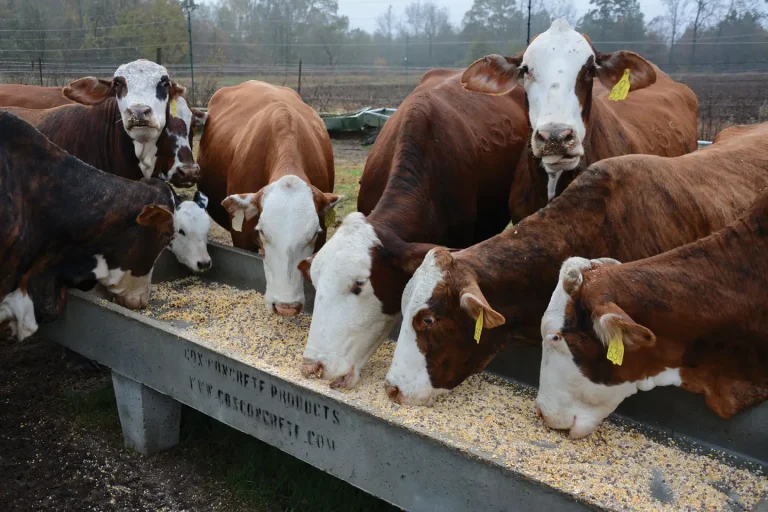
Some producers with high percentage, high horsepower Angus-based commercial herds are looking to Hereford to crossbreed to make baldy cows, but many breeders are selecting Hereford cattle with extremely high growth potential. Although the producers’ cattle will gain from heterosis, from a breed complementary standpoint, they are selecting stock very similar to the Angus they want to moderate, which largely defeats the purpose that they set out to achieve.
Bos indicus (eared or humped cattle) influenced cattle—also known as the American breeds—have much to offer in a crossbreeding system in hot humid environments. Most of the American breeds like Brangus and Santa Gertrudis were designed to have five-eighths Bos taurus blood (Angus, Shorthorn, etc.) and three-eighths Bos indicus (Brahman, Zebu) genetics. Three-eighths was considered the minimum amount of indicus needed for the cattle to sweat, which allows Bos indicus to dissipate heat better than tradition breeds that primarily pant to lose heat.
Indicus cattle sweat is different than what most people think. Although it does contain some fluids that result in evaporative cooling, it is mainly oils that keep the hair slick to better dissipate heat, as well as reflect sunlight and repel insects.
In addition, Bos indicus-influenced cattle’s loose hides allow them to better dissipate heat, and they have a tremendous advantage in maternal calving ease. Many of the American breeds have drifted more toward taurus-type cattle, losing the ability to sweat, developing tighter hides that reduce heat dissipation and giving up much of the maternal calving ease found in Brahman genetics.
Taking advantage of breed complementarity and heterosis is one of the quickest ways to custom fit a cow herd to a producer’s environment, management, feed resources and market. For instance, some of the highest Stayability cattle can be found in the subset of performance breeders found in the Shorthorn breed. Also, utilizing terminal sires is another way to run moderate cows and still achieve desired carcass weights.
Ultimately, seedstock producers must maintain, and even enhance, what makes their breed useful in a crossbreeding system, while making sure they are adequate in other traits so that they are useful in a broad range of production systems. — Dr. Bob Hough, WLJ correspondent
(Editor’s note: This article is part three of a three-part series about rebuilding the cow herd. Parts one and two were published in the May 11 and May 18 issues of WLJ. A comprehensive feature article may also be found in the spring edition of The Wire on page 24.)