Economic concerns are shifting from a global focus to more of a domestic focal point, according to a new Quarterly report from CoBank’s Knowledge Exchange. With the election coming up this fall, voters are keyed into top concerns. Usually, the No. 1 concern is the economy. Right now, it is immigration policy, according to CoBank.
The potential for a workforce shortage is looming as a much larger, long-term problem for the domestic U.S. economy. With the country’s fertility rates on a steep decline, the supply of workers is limited, which means legal immigration will be the only way to maintain a stable domestic labor force, the report said.
The modernization of the farm bill is getting down to the wire, with just over a month left for Congress to come to an agreement to reauthorize a new bill. “Historically, the agriculture committees had been the most bipartisan group of legislators in the U.S. Congress; in our current embittered political environment, that’s no longer the case,” the report said.
Immigration concerns
Rob Fox, director of CoBank’s Knowledge Exchange, calls immigration a political problem, but a potential economic solution.
“Due to the sharp decline in U.S. birth rates since the global financial crisis, we are poised to enter a long, potentially permanent period in which the number of retirees will outpace the number of native-born workers entering the labor force,” Fox said. “And the declining supply of workers will drive wages higher causing inflation and hurting our overall global competitiveness.”
He cited data from a Gallup poll that found 27% of Americans view immigration as the most important problem facing the country, followed by government (18%), economy (17%) and inflation (13%).
The effect of immigration on the economy is difficult to measure, because various complex effects that last for decades make research limited on the effect on per capital GDP. There is a common argument that immigration takes away middle-class jobs, but Fox said the data doesn’t support the theory.
“We would argue that the steep loss in manufacturing jobs (held by both natives and immigrants) from 2000 to 2010 caused by cheaper imports from China and elsewhere had a much greater impact on the U.S. economy,” Fox said.
The report noted that some level of steady legal immigration will be the only option for maintaining a stable workforce, especially amid an aging workforce, decreased birth rates and a federal debt larger than an annual GDP.
Unemployment was just over 4% in June, rising a total of 0.7% since January 2023 when unemployment hit its cyclical low at 3.4%. The average number of jobs added per month was only 177,000 during April-June, which isn’t enough to keep up with the slow but steady increase in the labor force participation rate, Fox said.
Almost all of the unemployment increase was in the 16-24 age category due to tight labor conditions—the labor market is now returning to normal, he said.
“In our opinion, of bigger concern than the incremental increase in the unemployment rate is the monthly job openings number which has dropped by more than a third since mid-2022 and has now fallen below the pre-pandemic trend line,” Fox wrote.
Animal proteins
A recent Kansas State University meat demand monitor survey showed a moderate decline in consumption of meat among respondents who said they were financially worse-off than a year earlier. However, beef inclusion in meals is still holding strong in all income sentiment categories.
Protein producers are looking at production costs to evaluate expansion opportunities but are receiving mixed signals. The cow herd isn’t quite looking at expansion, but beef production remains high for the time being. Pork production has increased minimally, and broiler production inefficiencies are moderating any supply response. Animal protein production grew about 1% year over year during the second quarter.
Animal protein exports continue to impress at 17.5 billion pounds exported over the last 12 months, 16.5% of production, which is about even with the previous year.
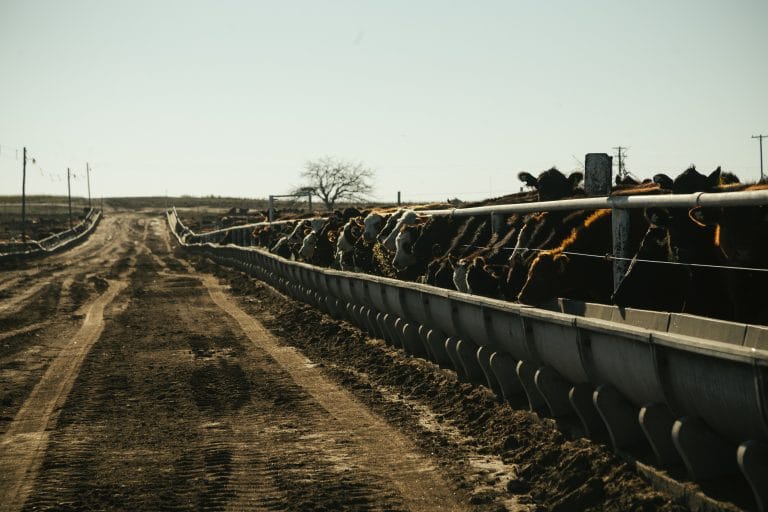
Beef production is in decline as expected for the year, but it is not falling as quickly as projected. Feeder cattle have stayed in feedlots for longer and put on more weight. Feed costs have softened, and weather conditions have improved, which have added money to the beef producer’s pocket.
“At the end of June 2024, packers were losing $79 per head and feeders were profiting $499 per head to widen the margin spread to $578 per head,” wrote Brian Earnest, lead economist for animal protein in CoBank’s Knowledge Exchange. “This correlates with year-to-date federally inspected cattle slaughter being down 4.4%.”
If weights stay high and slaughter numbers remain low, wide beef spreads are expected to continue widening. — Anna Miller, WLJ managing editor