“We don’t buy cattle to trade; we buy cattle to last,” says Daniel Shuler of Shuler Farms, who relies on Hereford-sired F1s to thrive rather than survive during Missouri’s humid summers running on fescue pastures.
Three truckloads of bred baldy replacement heifers Shuler purchased in 2022 serve as a sterling example. He purchased them from the TH Pitz Heifer Development Program (TH Pitz), a partnership between Topp Herefords, Grace City, ND, and Bill Pitz, Farley, IA.
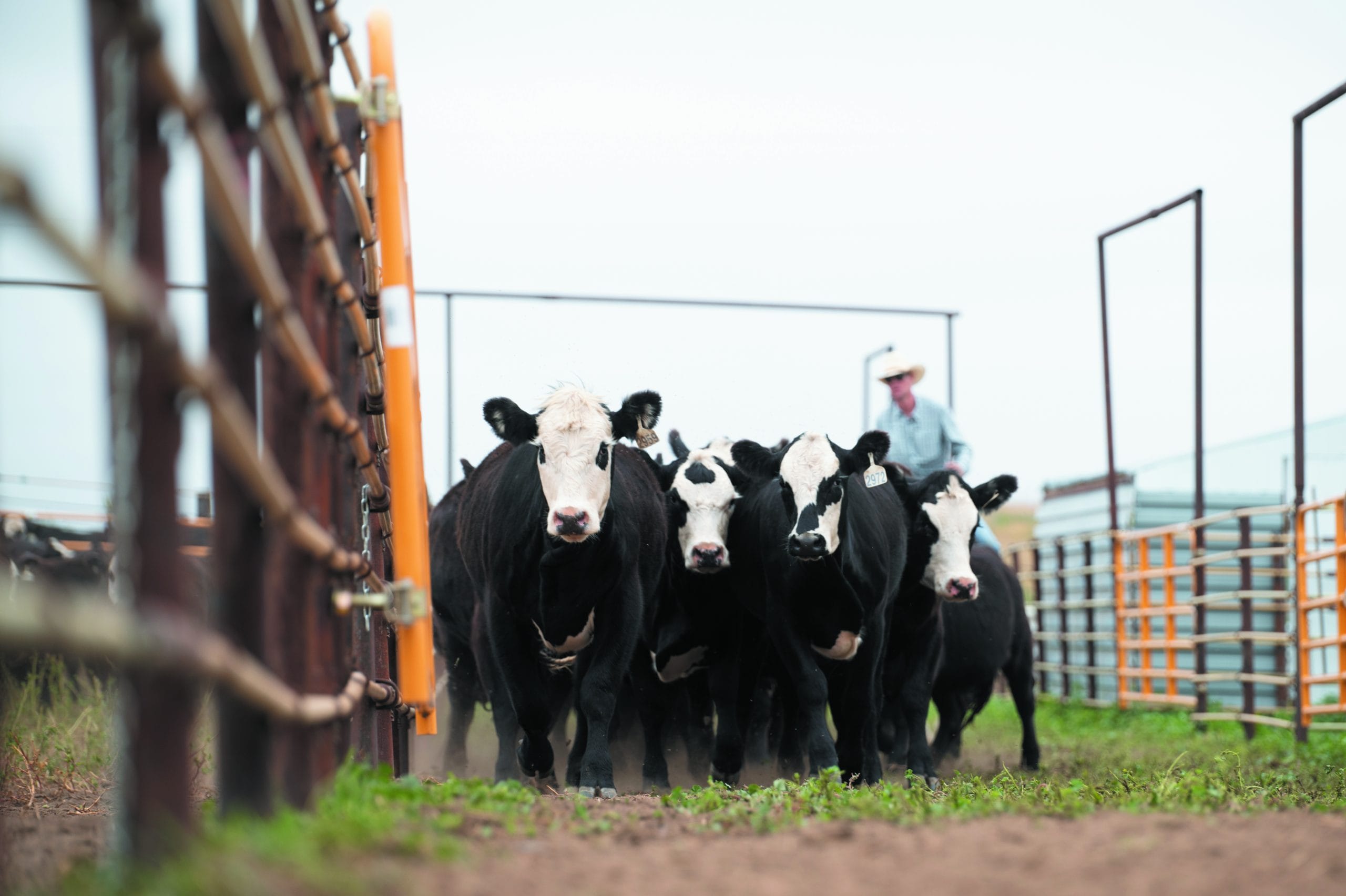
The heifers arrived in good flesh from North Dakota and easily adapted to their new environment. Shuler maintained their condition well over the winter, but after they calved, the first-calf heifers were turned out in a pasture an hour away from the home farm and spent the summer with the mature cow herd. Even with no special treatment, this set of efficient and fertile bald-faced females had a 92-93% breedback rate—outperforming straightbred, black-hided peers. And that set of baldies continues to breed back, wean nice calves and, most importantly, remain profitable.
Frankly, Shuler doesn’t have time to baby them while balancing 700 mama cows with 2,500 acres of crops and a precision agriculture business.
“They’re an overall commercial mother cow that generates money year after year,” Shuler says. “We have a lot more luck with an F1 cow—weaning weights, breed-backs, efficiency; and they’re easy fleshing as far as maintaining them.”
Shuler scales everything at his place, and his best guess is that the added maternal heterosis of baldy dams adds about 5% to the weanling weights of their calves. The Hereford-sired females boast a natural mothering ability, docility, longevity and fertility.
In fact, Shuler was so happy with the heifers that he purchased bulls from Topp Herefords to make his own F1s in his operation at Trenton, MO.
He’s not the only one. Each year, the TH Pitz program typically markets 2,000-2,500 head of baldy replacement females sired by Topp Herefords bulls—black-white-face, red-white-face and commercial Herefords. And, each year, these powerful baldy replacements demonstrate the money-making maternal heterosis the cross is known for.
Kody Woodward was looking for a set of 30-40 replacements in 2021 when he stumbled upon a TH Pitz online ad. After making the trip to Grace City to see the set being preg-checked, though, he bought 120.
Today, the fourth-generation cow-calf producer still has 95 of those females in production at his Dupree, SD, ranch. While this set might not have had to travel as far as Shuler’s to settle into their new home, they had to work once they arrived. As Woodward says, they expect their cattle to make it on their own. The family needs their cattle to thrive on winter grazing, and like all commercial cattlemen, they’re chasing pounds.
Woodward Ranch runs some Charolais bulls on their baldies to optimize heterosis with smoke-colored, three-way-cross feeder calves, and their baldy dams know how to pack on the pounds to their offspring.
“I really believe in the Hereford breed,” Woodward says. “I love the maternal instincts, their conformation and disposition, but, more than anything, I’m after pounds.”
With the bang-up job these baldy cows did for Woodward, it’s little surprise that when his family happened upon a quality set of commercial Angus cows, they added some Topp Herefords sires to create their own replacements.
Baldy boom
These producers buying the genetics to make their own baldy replacements is even less surprising when you know the demand for the TH Pitz heifers. This year, the program offered 1,850 bred baldy heifers, and after featuring the offering on social media the TH Pitz crew received more than 500 inquiries. The demand for Hereford-sired replacement females is growing as more producers realize the added pounds maternal heterosis brings.
As TH Pitz heifer development manager Jordan Staton says, word gets around about these baldy females.
“Somebody buys a set (of baldy replacements), and their neighbors are like, ‘Hey, what are those?’ Then, the neighbor comes over to help brand cattle, and they’re seeing what kind of calves these cattle are throwing. They’re seeing these cattle out in the pasture, and the demand is really starting to grow,” he says. “This year, we’ve got a list of people trying to buy these baldies.”
With a growing list of cattlemen and women looking to buy these baldy replacements, Topp Herefords and partner Bill Pitz strive to sustain this program for years to come. As Staton says, “The sky is the limit with the F1 Hereford cross.”
Raising and developing
Putting together such a quality set of replacement heifers year after year is no small task. Staton points out the logistics of developing these females, from procurement to feeding and development, health and estrous synching protocols to breeding and preg-checking. The entire Topp team works diligently year-round to put the set together.
Topp Herefords owner, Ryan Topp, says they reach out to their previous bull buyers in October to offer at- or near-steer prices to contract the top-cut of their replacement quality, Hereford-sired heifer calves. Cattle producers call the Topp Herefords office to lock in their contracted price and weight on a sliding scale that goes both ways. All eligible females must be vaccinated, but the program accepts delivery from October through January, receiving anything from bawling calves to backgrounded heifers. Sellers receive a premium for heifers that have been weaned for 45 days.
TH representatives visit the producer’s ranch to sort out the top cut of their potential replacements. Generally, about 60-85% of the top-end of the group will land in the TH Pitz Heifer Development Program. Ryan explains they’re selecting heifers that will make profitable cows for commercial producers. They want easy-doing, big-middled prospects that will forage well and maintain their condition. Topp Herefords’ crew also knows commercial cattlemen are paid ultimately on pounds, so their heifers have the scale needed to add weight to their calves.
Chad Miller, TH Pitz heifer procurement representative and one of the main representatives sorting the replacement stock, notes demand for the baldy heifers continues to grow based upon their ability to breed-back, last and wean big calves. As a man who sorts a lot of stock, he commends their docility as well.
“When you’re walking through the baldies, you really see the docility compared to the straight blacks or anything else,” Miller says.
Reliable docility is an added bonus for the TH crew who have a hands-on approach to heifer development, breeding females in groups of 500 head, synching them and adding heat patches, before heat checking the bunch a couple of times each day to AI, rather than using a timed breeding protocol.
Unsurprisingly, this is where the baldy replacements really shine. Out of nearly 2,000 head, less than 5% preg-checked open after a 60-day breeding season.
After the heifers are bred, there are three ways potential buyers can take delivery—straight out of the AI chute to cover with their own clean-up bulls, out of the preg-check chute or at the beginning of October. Each option gives ranchers the flexibility to crunch the numbers and balance their budget with their available forage.
Pitz notes the management it takes to develop this many quality replacement heifers. When he picked up the phone to call Topp Herefords about five years ago, Pitz was looking for a set of Hereford-sired replacements he could develop with a solid, consistent genetic base, and he found that and more. Together, Pitz and Topp Herefords can offer Topp Herefords’ bull buyers a value-added market for front-pasture type heifers, while offering commercial cattlemen a consistent set of F1s with known genetics.
For Pitz, the white face was an essential part of his heifer development program.
“The disposition is better. The fertility is better; they average 15% better on AI,” he says. “Plus, that bald head makes them have a little more pizzazz.”
Pizzazz might be one way to summarize the extras the bald face brings commercial cattlemen and women, but it starts with the Hereford genetics.
The breeding behind the bald face
The Topp family produces Hereford cattle with their commercial customers in mind, in part because they know the bald-faced fundamentals of fertility, longevity and efficiency add value to their operations and in part because Topp Herefords offers their bull customers buyback programs for replacement heifers and facilitates contracts for their feeder cattle. These marketing programs give the Topp Herefords crew front-row seats to see how their genetics perform in the field.
“Topp Herefords were early adopters of genomic testing, but we need to take a step back and remember there is a very practical side of genetic improvement that happens in the real world—out in the pasture with actual performance. What you see with your eyes is feed efficiency and docility, and what you see in the books is fertility and longevity,” Ryan says. “By us having the two programs—the heifer program and the feeder cattle program—it has just been very, very valuable to see how these cattle perform.”
Ryan adds that being a seedstock producer isn’t enough for Topp Herefords; they want to see their customers succeed with their genetics and realize added value.
Keith Herberg, Topp Herefords seedstock manager, works with the Topp family to make sure they have a top-quality set of Hereford cows. To him, a good cow is the start of the industry, and she must be good-uddered and good-producing for several years—weaning eight or nine calves during her time on the ranch.
This maternal power behind TH-bred bulls creates great baldy females. Herberg sees the Topp Herefords cow herd selections come full circle with every load of replacement females the TH Pitz program develops.
“I have a lot of confidence in how good our cow herd is and that the bulls they produce are going to go on and make a lot of really good females,” Herberg says. “Good cattle produce good cattle.”
With current market conditions in the cattle cycle good cattle are worth more than ever before, and it is extra important that they can pay for themselves—and then some.
“Now more than ever, maternal heterosis is of the utmost importance,” says Logan Topp, Ryan’s son. “Then on the other end of it, once they’re older, that seventh or eighth calf is so valuable in terms of what you’re getting for your initial investment in that female and the cost to maintain her over the years … How much money can you make if a cow lasts two more years?”
As Ryan says, when much of the beef industry chased black-hides and heavy marbling, they did so in a way which sacrificed other important profit traits for commercial cattlemen, such as longevity, fertility and efficiency. But today, Hereford-influenced baldy cows stand poised to right the ship.
“Herefords have stayed the course on many of the most profitable traits of the beef industry,” Ryan says. “Now it has come full circle because people have lost growth, efficiency and longevity, and now they’re coming back to the plate.”
Simply put, a bald face pays because heterosis pays. Baldy females make calves year after year, which pay the only way commercial cattlemen are cut checks—by the pound. — Katie Maupin Miller, Hereford World assistant editor