A recent study from the University of Wyoming (UW) highlights the economic and ecological impact of invasive weeds on the state’s agriculture.
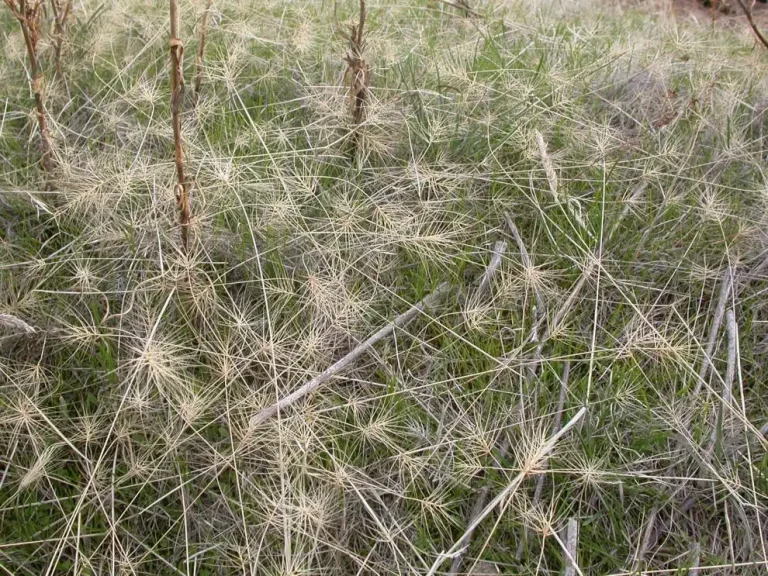
Researchers Amy Nagler, John Ritten and Brian Mealor spearheaded the pilot study, quantifying the current and potential future damages caused by 10 key invasive weed species. Cheatgrass emerged as the most concerning species.
“This report represents an important step to better understanding the impacts of invasive weeds on Wyoming’s agricultural economy and gives some insight into how bad it could be if such weeds were left unchecked,” said Mealor, director of UW’s Sheridan Research and Extension Center and the Institute for Managing Annual Grasses Invading Natural Ecosystems.
Cheatgrass has established itself as a pervasive threat across Wyoming’s rangelands, covering over 15 million acres statewide. In 2021, the study found direct economic losses from cheatgrass are estimated at a 40% reduction in annual cash rent for rangeland with reported presence, increasing to 80% in areas with heavy canopy cover and posing a statewide annual loss of $32.1 million.
Counties such as Campbell, Lincoln and Big Horn bear the highest losses, collectively exceeding $11 million. Platte County has the most significant proportional loss, at 41% of its non-impacted agricultural value. The study warned that potential losses across suitable habitats could reach $110 million annually, with Fremont County alone at risk of losing $10.9 million.
“If considered in the broader context of Wyoming’s economy, these numbers are likely a very conservative estimate of impacts because we only accounted for losses due to grazing reductions,” the authors wrote.
The study assessed nine additional invasive species: hoary cress, leafy spurge, medusahead, Palmer amaranth, perennial pepperweed, Russian knapweed, Russian olive, ventenata and yellow starthistle. Each species poses distinct threats, ranging from reduced forage to direct crop competition.
The study found that ventenata had the second-highest impact on Wyoming rangelands, causing an estimated $1 million in direct agricultural losses from reduced rangeland cash rents in 2021. Potential losses on suitable habitats—an average of present and impacted percentages—are highest for Russian knapweed and hoary cress, with projected statewide impacts of $90 million and $83 million, respectively, accounting for 35% and 32% of non-impacted agricultural value. Although other species show statewide losses below $1 million annually, local effects, such as hoary cress’ $323,000 impact in Big Horn County and leafy spurge’s $199,000 impact in Crook County, are significant.
The highest economic losses in areas where the 10 weeds studied were Palmer amaranth and medusahead, with reductions of 70% and 65% in agricultural value, respectively, followed by cheatgrass, Russian knapweed and ventenata at 40%. In heavily infested areas, where canopy cover exceeds 20%, the study found that Palmer amaranth and medusahead led with estimated losses of 100% and 95%, respectively, while cheatgrass, Russian knapweed, ventenata, hoary cress and perennial pepperweed each resulted in an 80% loss.
“Each year, invasive plants reduce the value of both forage and crop values across Wyoming. Beyond this, part of every dollar lost by an agricultural producer to weeds would otherwise be spent at the local feed store, restaurant or doctor’s office,” said Nagler, a research scientist in the UW Department of Agricultural and Applied Economics. “Estimating these economic losses due to weed infestation is an important tool for prioritizing limited funds for control.”
Beyond immediate economic losses, the authors said these infestations threaten Wyoming’s broader ecosystem services. Cheatgrass, for example, diminishes biodiversity and accelerates wildfire cycles, impacting wildlife and native plant species. Similarly, leafy spurge and yellow starthistle encroach on grazing lands, diminishing their utility for livestock production.
While these figures primarily reflect reductions in grazing cash rent, a relatively small component of the overall economy, the authors noted they highlight the broader potential for unmeasured impacts on ecosystem goods and services such as recreation, wildfire mitigation and wildlife habitat.

The authors said the pilot study offers a foundational framework for future research and management strategies, highlighting the urgent need for statewide and localized action against invasive weeds. As Wyoming grapples with these ecological invaders, the findings provide a roadmap to mitigate their growing economic and environmental impacts. — Charles Wallace, WLJ contributing editor