
U.S. Senate Agriculture Committee Chairman John Boozman (R-AR) has released legislative text for the Farm Bill 2.0, opening the latest chapter in Congress’ long-running effort to pass a new five-year farm bill.
“We can all agree that we must take steps to help America’s farm families, and one of the most important ways we demonstrate that commitment is by passing a bipartisan farm bill,” Boozman said in a statement announcing the proposal.
He said the draft reflects input from Republicans, Democrats and rural stakeholders and is designed to strengthen the farm economy, increase investments in rural communities and improve agricultural resilience.
Highlights of the bill
The bill would expand the Livestock Indemnity Program to cover losses of unweaned livestock and adjust payment calculations to better reflect the value of animals. It would also broaden eligibility for the Emergency Assistance for Livestock, Honeybees and Farm-Raised Fish Program, allowing producers to receive help with the cost of hauling feed and water during drought and other adverse weather conditions.
The proposal includes measures intended to speed disaster assistance by allowing certain USDA relief funds to be distributed through state block grants. It would also expand access to loans for fertilizer and propane storage facilities and direct the USDA to study livestock marketing and risk management tools.
Animal health is another focus of the legislation. The bill would strengthen disease preparedness efforts, support animal disease traceability programs and require the USDA to evaluate its readiness to respond to foreign animal disease outbreaks. It also calls for a review of the Cattle Fever Tick Eradication Program and encourages trade agreements that would help limit market disruptions during disease events.
Beyond livestock programs, the draft expands conservation efforts to address long-term drought and maintains the Conservation Reserve Program’s current acreage cap. It also increases funding for agricultural trade promotion programs designed to expand export opportunities for U.S. producers.
The legislation includes investments in rural broadband, precision agriculture technology, healthcare, childcare and water infrastructure, while providing additional support for small meat processors. Forestry provisions focus on active forest management and wildfire mitigation through streamlined project approvals and expanded partnerships with states and local governments.
Farm groups react
The American Farm Bureau Federation (AFBF) welcomed the release of the discussion draft while noting several important priorities remain unresolved.
AFBF President Zippy Duvall said the legislation contains positive provisions related to agricultural credit, conservation, research and fertilizer market transparency. However, he emphasized that producers continue to need additional economic assistance, year-round access to E15 fuel, and protections against a patchwork of state regulations that affect interstate commerce.
“We look forward to working with the chairman and members of Congress to address three top priorities not included in this farm bill draft,” Duvall said.
One of the most notable omissions is language addressing California’s Proposition (Prop) 12. The absence of a Prop 12 fix immediately drew criticism from livestock groups that have advocated for federal action on the issue.
The National Pork Producers Council (NPCC) recently led a coalition letter urging Senate Agriculture Committee leaders to include a solution to Prop 12 and similar state laws in the 2026 farm bill. The letter was signed by numerous state organizations and national groups, including the National Cattlemen’s Beef Association and AFBF.
“While there is certainly room for improvement, we appreciate the chairman putting forward a discussion draft to guide a path forward,” said NPPC President Rob Brenneman. “He is spot on when he says, ‘it’s the Senate’s turn to deliver’ on a farm bill for all of rural America.”
Brenneman added that pork producers will continue advocating for a legislative solution.
“America’s pork producers will continue to advocate for a Prop 12 fix in the formal farm bill like our livelihood depends on it—because it does.”
SNAP debate creates challenge
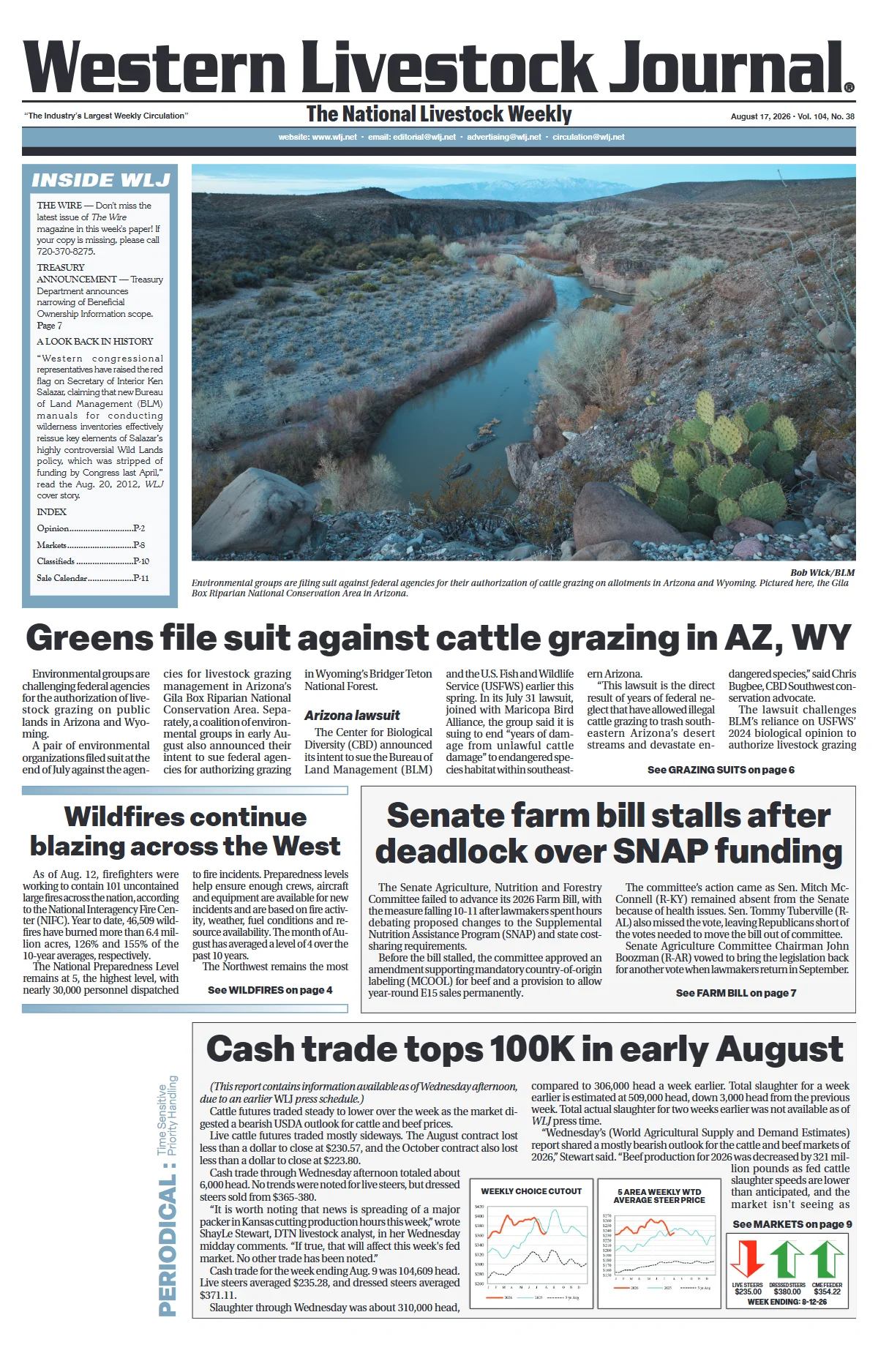
Another significant obstacle involves nutrition policy. The Senate draft leaves in place Supplemental Nutrition Assistance Program (SNAP) cost-sharing changes enacted through the One Big Beautiful Bill Act, which shifts a greater share of SNAP costs to individual states.
While acknowledging the inclusion of bipartisan provisions, Senate Agriculture Committee Democrats said they remain concerned about the SNAP provisions and their impact on states.
“Senate Agriculture Committee Democrats have been clear that a Farm Bill must meet the needs of both farmers and families across America,” the lawmakers said in a joint statement. With Republicans holding 53 Senate seats, Boozman will need support from Democrats to move the bill through the Senate’s 60-vote threshold. Even if approved by the Senate, lawmakers would still need to reconcile differences with the House version of the farm bill.
According to Hoosier Ag Today, Boozman hopes to leave the draft open for discussion over the coming weeks before pursuing committee action later this summer.
At the same time, he is seeking separate economic assistance for producers facing continued financial pressure from weak commodity prices, inflation and elevated borrowing costs.
“I think it’s vital that we have another bridge payment as soon as possible,” Boozman said, adding that he hopes direct producer assistance can be included in a future supplemental spending package. — Charles Wallace, WLJ contributing editor




2 Comments