While livestock deaths often receive immediate attention after a wildfire, many producers face additional costs that continue long after the flames are extinguished. The Emergency Assistance for Livestock, Honeybees, and Farm-Raised Fish Program (ELAP) may help address some of those losses.
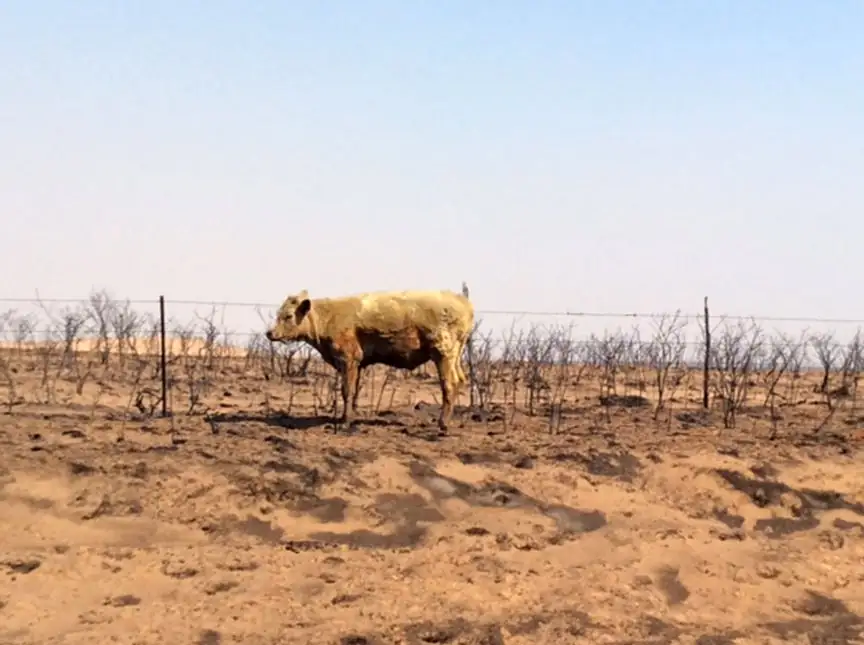
For many ranchers, one of the most significant impacts of wildfire is the loss of forage. Burned pasture may no longer provide adequate grazing, forcing producers to purchase feed, haul hay, transport water, or relocate livestock. These expenses can quickly add up.
ELAP is designed to provide assistance for losses not covered by other livestock disaster programs. Following a wildfire, ELAP may help eligible livestock producers with grazing losses, feed losses, transportation costs for feed and water, and costs associated with moving livestock to alternative grazing locations. ELAP has several eligibility conditions not only for producers, livestock, and land but also for each type of loss. Work with your Local USDA FSA Office to verify eligibility.
ELAP is not intended to make producers whole after a disaster. Instead, it helps offset some of the extraordinary costs associated with keeping livestock fed and watered when wildfire disrupts normal operations.
Why records matter
One of the most important steps producers can take after a wildfire is documenting losses. To qualify for ELAP assistance, producers should carefully document these additional costs. Records may include: feed purchase receipts, hay invoices, fuel receipts, trucking bills, water hauling expenses, grazing lease agreements, livestock inventory records, documentation of burned grazing acres, etc.
Good recordkeeping is particularly important because ELAP often reimburses documented losses or expenses. Without supporting records, producers may find it difficult to substantiate claims.
Producers should also maintain records showing livestock numbers before and after the wildfire. These inventories help demonstrate the need for additional feed, grazing, or transportation assistance.
Work with your FSA office
Producers should also notify USDA’s Farm Service Agency (FSA) as soon as possible after discovering losses. Local FSA staff can help producers determine eligibility, identify required documentation, and complete necessary forms. Even if producers are uncertain whether losses qualify, scheduling a conversation with the local USDA Service Center is often the best first step. For 2026 wildfire losses, producers who are seeking ELAP support must submit their final application for payment by March 1, 2027.
USDA disaster and conservation programs are often designed to address different types of wildfire losses. However, federal rules generally prohibit receiving multiple payments for the same loss, expense, or conservation practice. Producers should discuss all wildfire-related damages with their local USDA Service Center so staff can identify the combination of programs that best fits their situation.
In addition to program-specific eligibility requirements, USDA disaster and conservation programs are generally subject to payment limitations and Adjusted Gross Income rules. These provisions can affect the amount of assistance a producer may receive. — Nebraska Extension and the Center for Agricultural Profitability