The 9th Circuit Court of Appeals upheld a decision by the district court that agriculture leasing in the Klamath Basin National Wildlife Refuge Complex complied with environmental regulations.
The court also rejected arguments by agriculture groups that the U.S. Fish and Wildlife Service (USFWS) has no authority to favor wildlife on leased agricultural land.
The decisions by the court failed to find a solution to a decades-long disagreement in the Klamath Basin of California and Oregon over land and water use and the attempt to balance resource preservation with the tradition of long-standing ranching and farming operations.
Background
The Klamath Basin National Wildlife Refuge Complex encompasses approximately 200,000 acres and straddles the California/Oregon border. The Klamath Basin is home to six national wildlife refuges: Klamath Marsh, Upper Klamath and Bear Valley in southern Oregon; and Clear Lake, Lower Klamath and Tule Lake in northern California.
The Bureau of Reclamation established the Klamath Project in 1906 to provide operational oversight and responsibilities for water delivery via irrigation districts to farmers in the Klamath Basin.
In recent years, factors outside the control of the Klamath Project have significantly reduced the amount of water available for the complex. This has forced the Department of the Interior to balance the needs of Tribal obligations, divert water to protect five species of fish listed under the Endangered Species Act, and support the needs of farmers amid extended droughts.
The refuge complex is governed by two statutes, the Kuchel Act and National Wildlife Refuge
System Improvement Act as amended by the Refuge Improvement Act (Refuge Act). The Kuchel Act, enacted in 1964, governs four of the six refuges and requires the secretary of the Interior to maintain the refuges “for the major purpose of waterfowl management, but with full consideration to optimum agricultural use that is consistent therewith,” according to court documents.
The Refuge Act governs the entire National Wildlife Refuge System and requires the preparation of a comprehensive conservation plan (CCP) to fulfill the purpose of the refuge system and “the specific purpose for which that refuge was established.”
In 2017, USFWS issued a record of decision adopting the combined environmental impact statement (EIS) and CCP for the complex. Environmental and agricultural groups filed several lawsuits opposing the record of decision, and the cases were later consolidated.
The U.S. magistrate judge ruled in favor of USFWS, and U.S. District Judge Michael McShane affirmed the magistrate judge’s ruling. The environmental and agricultural groups appealed McShane’s decision, raising several arguments, which the 9th Circuit Court rejected.
The Audubon Society of Portland (ASP) and two other environmental groups sued USFWS, alleging the agency violated several environmental regulations when they adopted the EIS/CCP for five of the six refuges in the complex.
ASP argued USFWS violated the Refuge Act by failing to provide adequate water for the refuge. The judges ruled that given the constraints on water availability due to drought and several other factors outside the Klamath Project—which provides water to the refuges—USFWS did not violate the act.
“We are sympathetic to the concerns of ASP. All agree that the water currently available for the Lower Klamath Refuge is inadequate to serve the purposes of the refuge. But we are also cognizant of the constraints on (USFWS), whose ability to provide water is severely limited,” the ruling stated.
Secondly, ASP asserted the EIS/CCP authorizes an improper mix of agricultural land and natural habitat. They also point out the EIS/CCP allows runoff, degrading the water quality for waterfowl. USFWS acknowledged some of the crops harvested for waterfowl do not meet the complete nutrition needs of the birds, but a cooperative farmland program guarantees a minimum amount of crops for food.
The 9th Circuit judges also found USFWS considered the alternatives proposed in the EIS/CCP as per the National Environmental Policy Act, including one alternative to decrease the acreage of leased agricultural land, which ASP asserted the agency did not thoroughly analyze. USFWS said the loss of agricultural leases would result in lower water quantities for the refugees, and “agricultural lands represent a component of the overall refuge habitat mosaic and contribute to proper waterfowl management.”
Environmental concerns
The Center for Biological Diversity (CBD) and Western Watersheds Project (WWP) challenged two aspects of the CCP for three of the five refuges in the complex. CBD challenged the CCP’s pest management approach for the Lower Klamath and Tule Lake refuges. WWP challenged the CCP’s limited allowance of livestock grazing on portions of the Clear Lake Refuge.
The judges found CBD’s arguments that USFWS failed to consider reduced pesticide alternatives for the Lower Klamath and Tule Lake refuges “unavailing.” The judges felt USFWS adequately explained that some pesticide use was necessary for the refuges to ensure sufficient crop production, on which waterfowl depend.
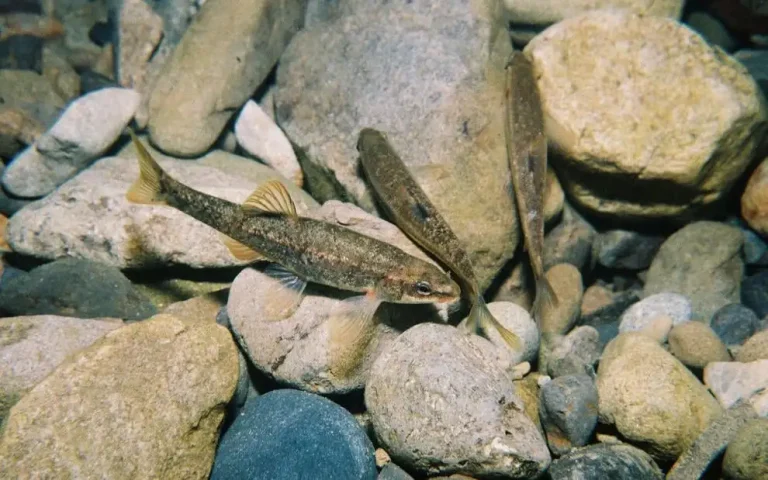
WWP argued USFWS violated the National Environmental Policy Act by failing to take a hard look at the effects of continued grazing on the greater sage-grouse and two species of suckerfish. The judges found USFWS evaluated and explained the impact of grazing on the sage grouse habitat and that managed grazing in the Clear Lake Refuge was essential to protecting and restoring their habitat. The judges also said the CCP looked at the effects on the suckerfish.
Agriculture concerns
The 9th Circuit judges also ruled against agricultural groups who asserted the reduction in crop production violated the Kuchel Act.
Agricultural groups argued the Kuchel Act does not authorize USFWS to regulate the uses of leased land to ensure that they are consistent with proper waterfowl management. The groups further argued that agriculture is a “purpose,” not a “use,” of the refuges. Therefore, a compatibility determination by USFWS is not authorized under the Refuge Act.
The judges stated the groups misread the act, and USFWS’ intent is to ensure that any farming in the refuges is consistent with waterfowl management. The judges held that under both the Kuchel Act and the Refuge Act, USFWS was required to ensure that agricultural use of leased land in the refuges was consistent and compatible with proper wildlife management.
Bob Sallinger, conservation director of the Audubon Society of Portland, told Reuters he was disappointed with the ruling.
“Continuing to allow Lower Klamath and Tule Lake Refuge wetlands to go bone dry and putting tens of thousands of birds at risk of death … while refuge land continues to be irrigated to grow onions and potatoes for big agribusinesses, is not ‘consistent with’ the purposes for which these refuges were set aside,” Sallinger wrote. — Charles Wallace, WLJ editor