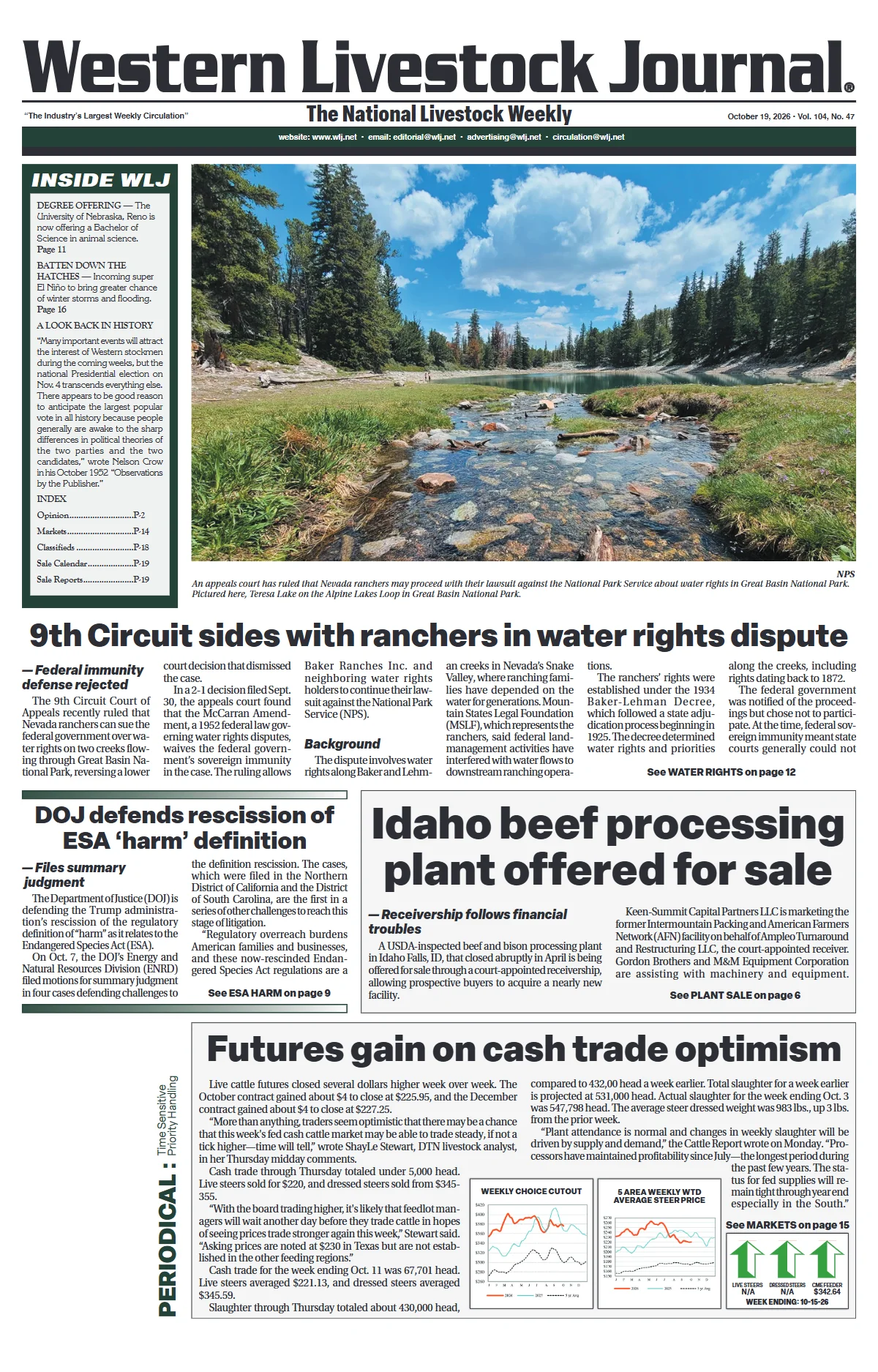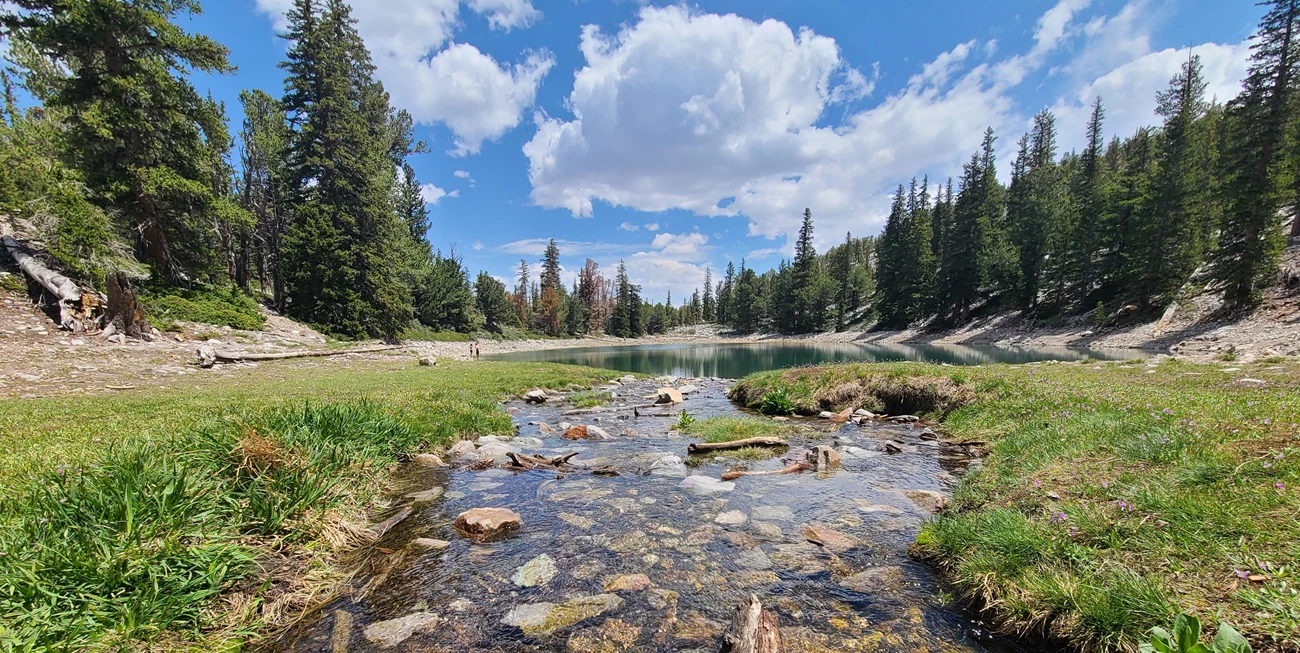
The 9th Circuit Court of Appeals recently ruled that Nevada ranchers can sue the federal government over water rights on two creeks flowing through Great Basin National Park, reversing a lower court decision that dismissed the case.
In a 2-1 decision filed Sept. 30, the appeals court found that the McCarran Amendment, a 1952 federal law governing water rights disputes, waives the federal government’s sovereign immunity in the case. The ruling allows Baker Ranches Inc. and neighboring water rights holders to continue their lawsuit against the National Park Service (NPS).
Background
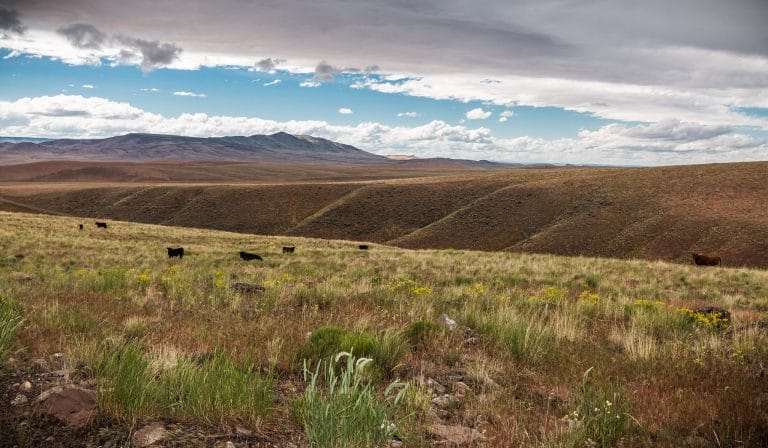
The dispute involves water rights along Baker and Lehman creeks in Nevada’s Snake Valley, where ranching families have depended on the water for generations. Mountain States Legal Foundation (MSLF), which represents the ranchers, said federal land-management activities have interfered with water flows to downstream ranching operations.
The ranchers’ rights were established under the 1934 Baker-Lehman Decree, which followed a state adjudication process beginning in 1925. The decree determined water rights and priorities along the creeks, including rights dating back to 1872.
The federal government was notified of the proceedings but chose not to participate. At the time, federal sovereign immunity meant state courts generally could not rule on federal water rights unless Congress had authorized them to do so.
When Congress established Great Basin National Park in 1986, portions of the creeks became part of the park. The federal government holds water rights it purchased from private owners and also claims rights tied to earlier federal land designations.
Baker Ranches and neighboring landowners allege that NPS activities, including diverting water for campgrounds and dust suppression, placing or leaving obstructions in stream channels and planting vegetation, have reduced downstream flows.
The ranchers filed suit in Nevada state court in 2021, seeking enforcement of the decree. The federal government moved the case to federal court, arguing sovereign immunity barred the lawsuit.
A federal district court agreed and dismissed the case, prompting the appeal.
Court opinion
Writing for the majority, Judge John Owens concluded that the McCarran Amendment applies to the administration of water rights established before its enactment. The amendment allows the federal government to be included in comprehensive water rights adjudications and proceedings administering those rights.
Owens determined that the 1934 decree qualified as a comprehensive adjudication even though the federal government did not participate. He also rejected the government’s argument that applying the amendment would unfairly affect federal claims that were never adjudicated.
“The United States would instead have us reopen a settled determination that has stood for decades,” Owens wrote.
The majority noted that 67 Nevada water decrees predate the McCarran Amendment and that accepting the government’s position could undermine their finality. Owens also found that the ranchers’ requests to prevent unauthorized diversions and maintain stream channels concerned the administration of the existing decree.
However, the court emphasized that its ruling addresses sovereign immunity, not whether the ranchers’ allegations are valid or what remedies might ultimately be available.
Judge Johnnie Rawlinson disagreed, arguing in her dissent that the McCarran Amendment does not apply because the original proceedings never adjudicated the federal government’s water rights.
“The plain language of the statute, Ninth Circuit precedent, and Supreme Court precedent support the district court’s decision,” Rawlinson wrote.
She maintained that the amendment’s waiver of immunity applies to proceedings involving comprehensive adjudication or administration of water rights, and the 1934 decree could not bind the federal government when its rights were excluded.
Rawlinson also raised concerns about the ranchers’ activities on federal property, including moving rocks, clearing channels and using heavy equipment. She noted that the ranchers sought restrictions on park management activities, including fire suppression, although she did not decide whether those requests exceeded water rights administration.
The federal appeal is not the only litigation involving the dispute.
A 2025 Nevada Supreme Court decision, Sullivan v. Baker Ranches Inc., addressed a related disagreement over the Nevada state engineer’s investigation of alleged violations of a 2015 NPS instream-flow permit.
According to a case summary by Andre Anaya published through the University of Nevada, Las Vegas William S. Boyd School of Law, the state engineer suspended the investigation pending federal litigation.
The Nevada Supreme Court determined that the engineer had discretion to delay the investigation and that the decision was not a final agency action subject to judicial review. The ruling did not resolve the underlying water rights allegations.
MSLF called the September federal appeals ruling a significant victory for ranchers and other Western property owners who depend on established water rights.
The case now returns to the federal district court for further proceedings. While the ranchers have cleared a major legal hurdle, the dispute over federal land management and downstream water deliveries remains unresolved. — Charles Wallace, WLJ contributing editor