
Internet service providers have been increasing access to broadband in rural areas by expanding DSL and cable technologies, wireless platforms, satellite systems, and (to a lesser extent) fiber-optic systems. Despite a slower growth rate in broadband subscriptions since 2010 compared with the previous decade, county-level data indicate that rural household connectivity continues to improve and expand geographically. Between 2010 and 2016, the number of rural counties in which wired broadband subscriptions exceeded the rural average (60 percent or more of households) increased from 281 to nearly 1,200. Rural counties newly above the 60-percent threshold for broadband are concentrated in the Northeast, upper Midwest, and the Intermountain West. Extensive parts of rural Appalachia also saw improvement in broadband access to above 60 percent. Broadband service remains more limited in two types of rural regions: (1) isolated, sparsely settled counties in the Great Plains, Nevada, New Mexico, Alaska, and elsewhere; and (2) high-poverty, high-minority regions, such as on tribal lands in the West and stretching from southern Virginia to east Texas in the South. — USDA Economic Research Service
Advertisement
60 Percent of households in 800 rural counties have wired broadband
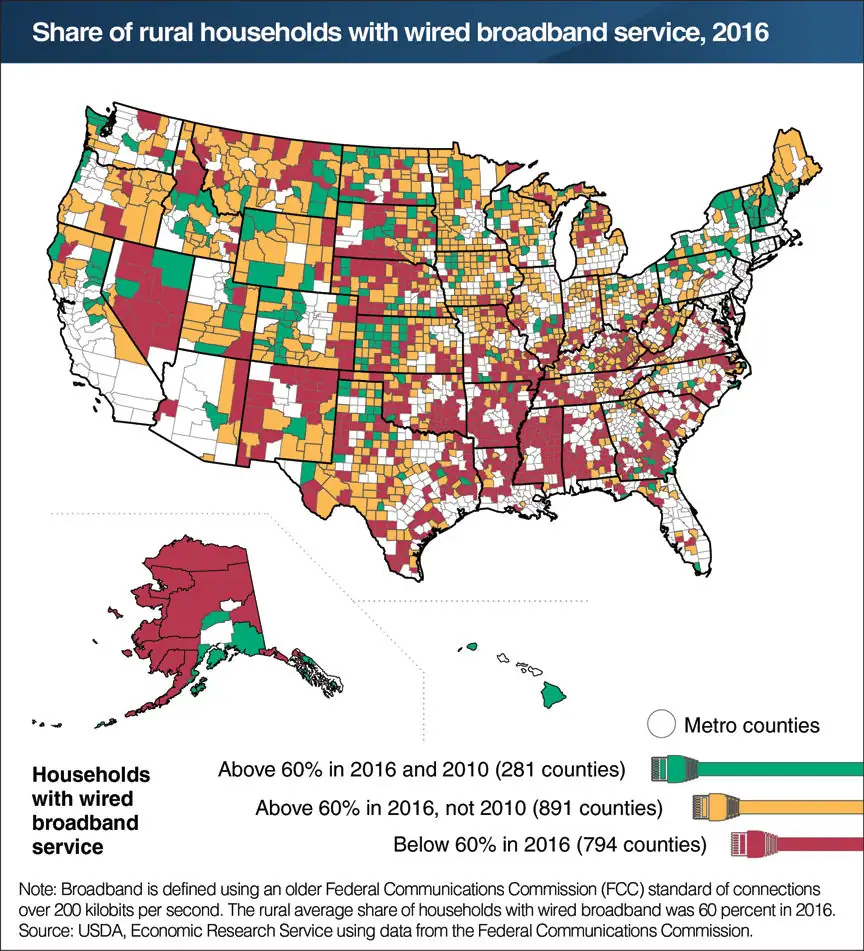
60 Percent of households in 800 rural counties have wired broadband
Share this article
Keep reading
Related stories

Environment
SCOTUS approves settlement to end Rio Grande water dispute
· By Danielle Prokop, Source New Mexico

Environment
Land ownership battle along Red River puts border law to the test
· By Todd Neeley, DTN environmental editor



Read the latest digital edition of WLJ.
August 10, 2026