
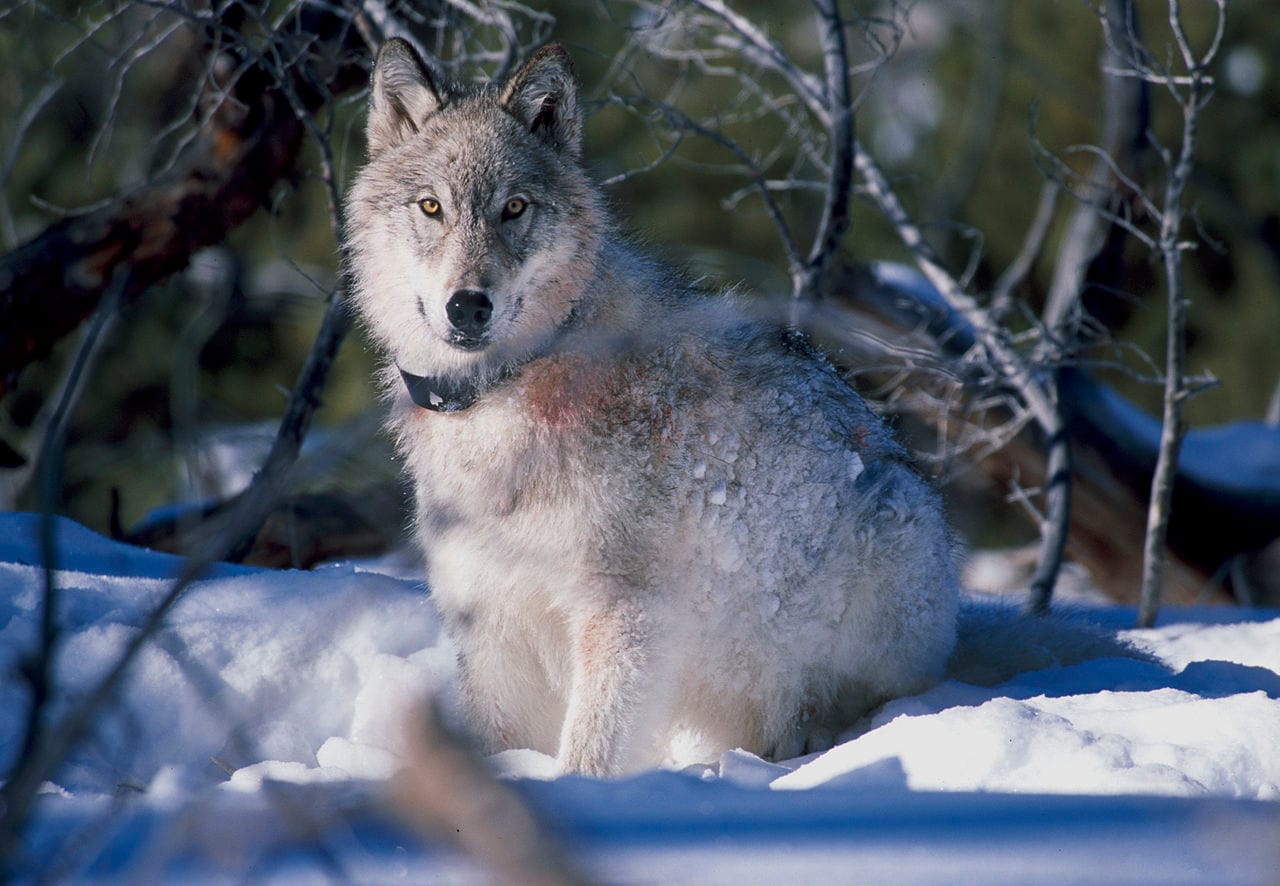
The U.S. Fish and Wildlife Service (USFWS) is seeking public input on how gray wolf reintroduction is being managed in Colorado, with a particular focus on conflicts with livestock producers and the effectiveness of current tools under federal law.
In a Federal Register notice, the agency announced a request for information on the implementation of the Endangered Species Act Section 10(j) rule, which governs the designation of nonessential experimental populations of listed species. The rule, finalized in 2023, applies to gray wolves reintroduced in Colorado and is intended to balance species recovery with flexibility for landowners and livestock operators.
Section 10(j) allows federal agencies to reintroduce species while still allowing more hands-on management than traditional endangered species protections. In Colorado, that means using both nonlethal tools and, in some cases, lethal control when wolves attack livestock. The state requested this designation to help carry out its voter-approved wolf reintroduction while limiting conflicts in rural areas.
However, those conflicts have become a central issue. According to USFWS, verified wolf depredations on livestock have increased in recent years, with claims exceeding the funds available under Colorado’s compensation program. This has raised concerns among producers about the adequacy, timeliness and accessibility of reimbursement for losses.
The agency is now asking stakeholders to weigh in on how the rule is working in practice. Specifically, the agency is seeking input on how wolf-livestock interactions are unfolding, whether nonlethal deterrence tools are working, and how well agencies are coordinating when conflicts arise. It is also seeking feedback on communication and outreach on what could be done to improve outcomes for both producers and wolf conservation.
In addition to conflict management, USFWS is requesting information on broader ecological impacts. That includes any observed effects of the wolf population on wild ungulate herds, as well as how management actions are being carried out on both private and public lands.
While the 10(j) rule does not directly govern the compensation program, the agency is also inviting comments on how well the state’s system is functioning. Input is sought on whether current funding levels meet producer needs and what barriers may exist to accessing compensation or implementing mitigation strategies.
Comments on the proposal are due by June 5. Stakeholders can submit input electronically through the Federal eRulemaking Portal by searching for docket number FWS–R6–ES–2026–0958 at regulations.gov, or by mailing comments to USFWS’ Policy and Regulations Branch, MS: PRB (JAO/3W), 5275 Leesburg Pike, Falls Church, VA 22041–3803. — Charles Wallace, WLJ contributing editor



2 Comments