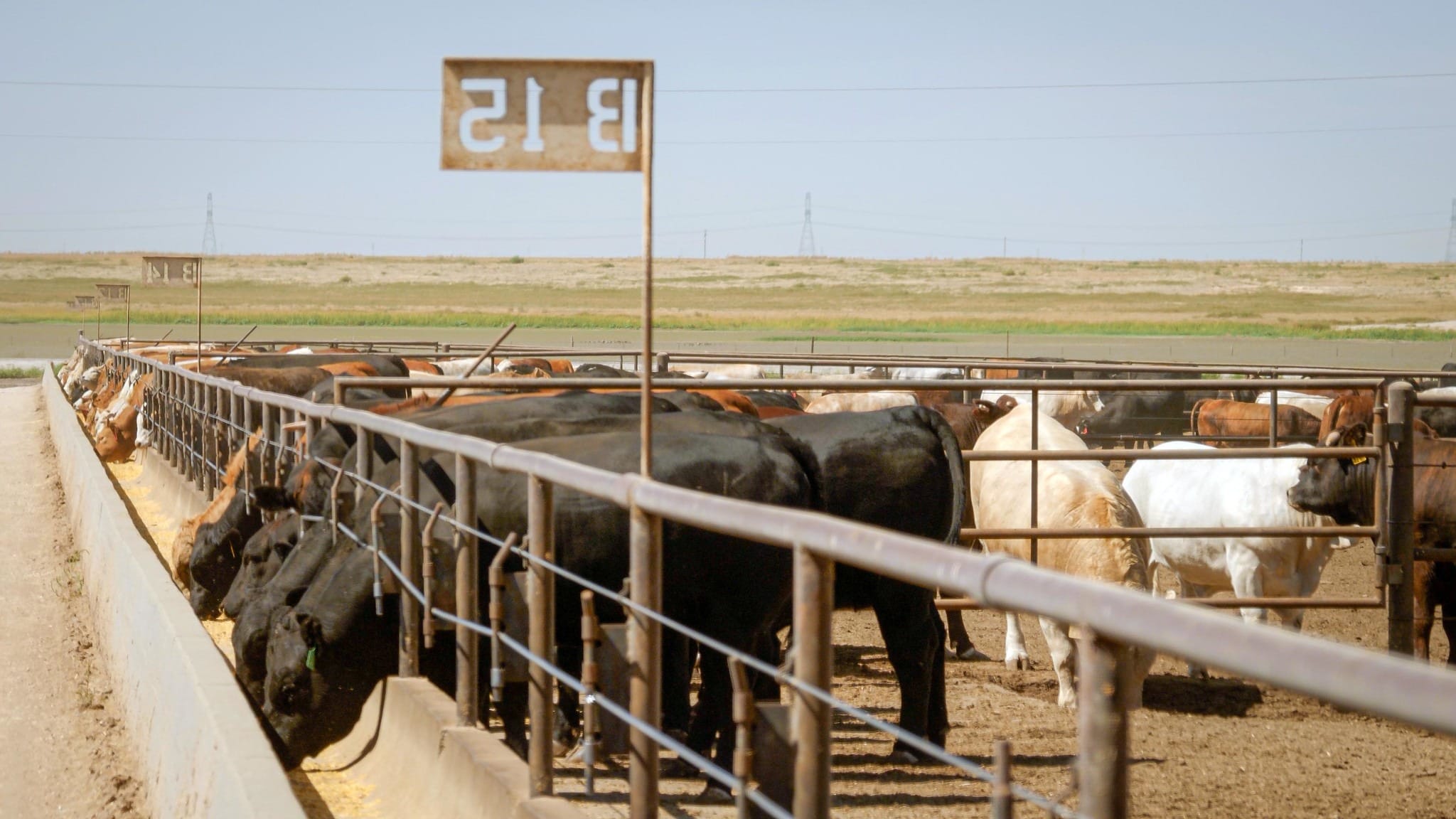
Respiratory disease reached more than three-fourths of U.S. feedlots in 2020, with nearly every large operation reporting at least one case, according to USDA. Overall, 77.5% of feedlots reported the disease, including 98.8% of large operations and 74.7% of small ones.
The finding comes from USDA’s Animal and Plant Health Inspection Service (APHIS) report,“Health and Management Practices on U.S. Feedlots, 2021,” which examines vaccinations, antibiotic use and disease preparedness.
USDA collected data across 22 states during 2021-22, primarily covering 2020 practices. The study defined small feedlots as having capacity for 50-999 head and large feedlots as 1,000 or more. According to the National Agricultural Statistics Service’s 2017 Census of Agriculture, large feedlots held 77.2% of cattle on feed but represented only 5.2% of U.S. feedlots.
Processing and disease management
USDA found 75.9% of feedlots processed cattle as a group within four weeks of arrival, moving them through a chute for vaccinations, parasite treatments or other procedures. Among those operations, 36.7% processed all cattle on arrival day, while 12.1% waited four to 13 days and 11.7% waited 14 to 28 days.
Vaccination and parasite control were common. The report found 80.8% of these feedlots vaccinated all cattle against bovine viral diarrhea (BVD), 70.1% against clostridial diseases and 87.6% against respiratory diseases, while 83.7% treated all cattle for parasites. Fewer tested for BVD (7.3%), used immunostimulants (4.8%) or checked lungs with a stethoscope (5.5%).
USDA reported that large feedlots more often vaccinated against BVD than small operations (98% versus 83.3%) and administered injectable antibiotics (72.7% versus 37.2%). Parasite treatments were more common in the West than in the East (98.7% versus 85.8%). Among feedlots processing heifers, large operations also more often checked for pregnancy (51.5% versus 7.8%) or gave drugs to end pregnancy (57.9% versus 17.3%).
The report identifies respiratory disease as the leading cause of feedlot sickness and death. It affected 12.2% of cattle and occurred on 77.5% of feedlots. Lighter arrivals were more likely to become sick: 25.9% of cattle arriving under 400 pounds developed respiratory disease, compared with 9.6% arriving at 700 lbs. or more.
USDA found 63.6% of feedlots performed no postmortem examinations on cattle that died, although these can help identify disease and assess treatment results. Separate hospital pens for treating sick cattle were available on 67% of operations.
Antibiotic use
USDA found that 90.2% of feedlots used antibiotics for at least one animal in 2020, including 83.7% using injectable or bolus-dosed products, 69.9% using antibiotics in feed and 5.9% using them in water.
Giving injectable or bolus-dosed antibiotics to groups of cattle for respiratory disease was more common on large feedlots, at 36.5%, than small operations, at 4.1%. These figures reflect operations using the practice, rather than cattle treated.
Among feedlots using injectable or bolus-dosed antibiotics, 82.4% rated veterinary advice as very or extremely important when choosing products, alongside personal experience (83.7%) and duration of action (62.4%). Tulathromycin and florfenicol were common first treatments for individual respiratory cases.
Ionophores were fed by 56.6% of feedlots, reaching 77.6% of cattle. Among users, 91.6% cited growth promotion or improved feed efficiency, while 55.6% used them against coccidiosis.
Medically important antibiotics were used in feed by 52.2% of operations, most commonly for respiratory disease. These uses require a veterinary feed directive and are limited to disease treatment, control or prevention. Tylosin, used to reduce liver abscesses, reached 49.2% of cattle and was more common on large feedlots; chlortetracycline, often used for respiratory disease, reached 11.3% and was more common on small operations.
Nutrition, biosecurity
The report found that nutritionists helped formulate rations on 61.2% of feedlots, including 94.6% of large operations and 56.8% of small ones.
In 2020, 22% of large feedlots used beta-agonists, compared with 1.9% of small feedlots, reaching 53.2% and 4.2% of cattle on those operations, respectively. Overall, 45.1% of cattle received beta-agonists, with use more common in the West (51.7%) than the East (5.7%).
Written or electronic biosecurity plans were reported by 30.3% of large feedlots and 5.6% of small ones. USDA says plans should map access points, vehicle routes, cleaning areas and carcass pickup locations.
The report found 66.9% of feedlots were unfamiliar with the Secure Beef Supply Plan, which helps producers prepare for disease-related movement restrictions. USDA noted that preparedness funding awarded after the survey may have increased awareness. — Charles Wallace, WLJ contributing editor