USDA is reviewing the standards used to grade beef quality as the department moves to rescind three Biden-era rules addressing competition and poultry contracts.
USDA’s Agricultural Marketing Service (AMS) is seeking public input on potential revisions to the U.S. Standards for Grades of Carcass Beef as production methods, genetics and consumer preferences have changed. At the same time, the Trump administration intends to rescind three regulations developed under the Biden administration’s effort to strengthen the Packers and Stockyards Act.
Grading standards under review
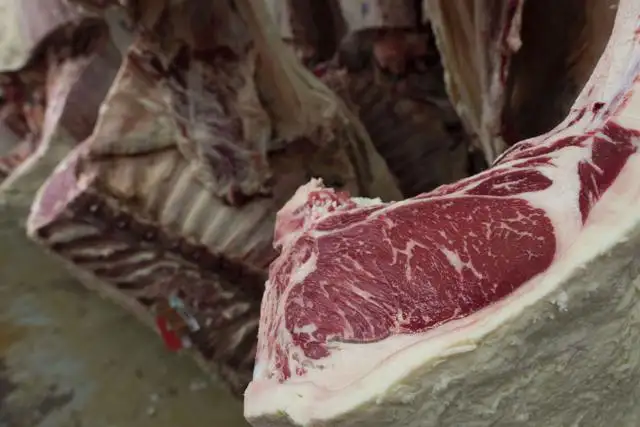
The review follows a petition from the American Wagyu Association asking AMS to consider adding marbling degrees within USDA Prime to reflect better modern beef genetics and the growing range of high-quality carcasses entering the market.
USDA’s voluntary beef grading system provides an independent assessment of carcass quality and yield, helping producers, packers, wholesalers, food service companies and retailers differentiate products based on established standards. The current Prime grade includes four degrees of marbling: Slightly Abundant, Moderately Abundant, Abundant and Very Abundant. However, the percentage of carcasses grading Prime increased from 6.2% in 2017 to 12.2% in 2025, and the USDA said Prime carcasses exhibit a wider range of marbling than the current categories recognize.
USDA said advances in genetics, feeding, husbandry and other production practices have increased carcass weights, marbling scores and the availability of higher-quality beef.
AMS is also asking whether to eliminate supplemental physiological maturity requirements for carcasses determined through dentition or age verification to be under 30 months old. Research cited in the Federal Register notice indicates grain-fed steers and heifers under 30 months are similar in palatability to maturity group A carcasses. USDA said giving dentition and age verification priority over physiological maturity could allow additional carcasses to qualify for Prime, Choice and Select without significantly reducing the grades’ ability to predict palatability.
The agency is also accepting comments on yield grade calculations and broader changes needed to reflect technology, beef marketing, institutional purchasing and international competition.
Comments are due Sept. 8 and may be submitted through regulations.gov or mailed to Chad Nelson, USDA Service Center, AMS Livestock and Poultry Program, 451 East Deere Street, West Point, NE 68788. Comments should reference docket AMS-LP-25-0485.
USDA moves to rescind regulations
The grading review comes as USDA also moves to rescind three Biden-era regulations involving meat and poultry markets.
According to MeatingPlace, the administration intends to rescind the March 2024 “Inclusive Competition and Market Integrity Under the Packers and Stockyards Act” final rule, which addressed discrimination, retaliation and deceptive practices in livestock and poultry markets.
USDA also plans to withdraw a proposed poultry contracting and tournament rule that would have expanded disclosure requirements for broiler integrators, as well as a January 2025 regulation addressing poultry grower payment systems and capital improvement programs. The latter rule had previously been delayed from a July 1, 2026, implementation date until Dec. 31, 2027.
Meat Institute President and CEO Julie Anna Potts welcomed the rescissions, saying the Biden-era regulations increased costs and created legal risks for farmers and ranchers.

“The Biden Administration attempted to use lawfare to limit marketing options that reward livestock and poultry producers for investing in their operations and providing consumers with the abundant and high-quality meat and poultry they demand,” Potts said.
The changes do not represent a complete reversal of the previous administration’s meat policy. USDA has continued to support smaller processors, most recently announcing $500 million in direct payments to maintain beef processing capacity at small and medium-sized facilities. — Charles Wallace, WLJ contributing editor