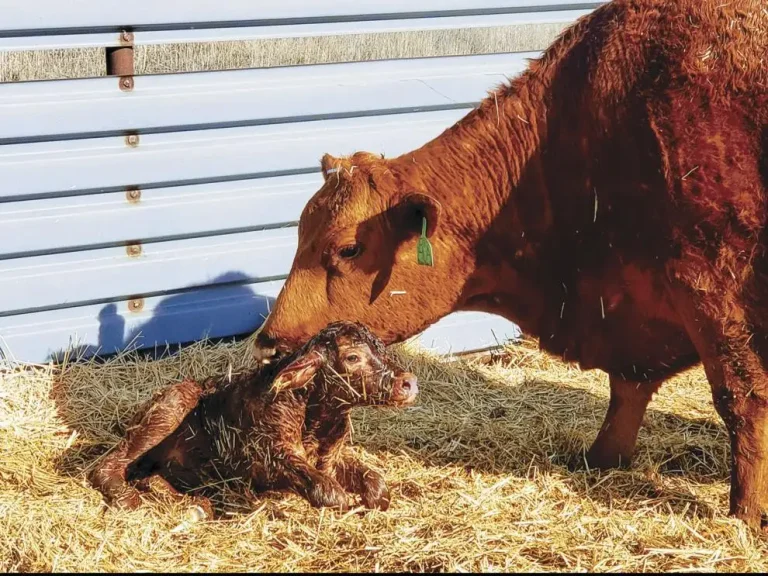
Calving is a natural part of cattle production, but some deliveries require extra help. Producers and veterinarians can work together in anticipation of potential complications and in responding when labor does not progress as expected.
Dr. Brian Shoemake, a clinical assistant professor at Texas A&M University College of Veterinary Medicine and Biomedical Sciences, shares the benefits of working with a veterinarian to prepare for calving season and to both recognize and address the complications that may arise.
In a normal delivery, the calf usually emerges with its front feet first, followed by its nose and the rest of its body; dystocia occurs when a cow is unable to deliver her calf within an appropriate amount of time.
Recognizing warning signs and contacting a veterinarian early can help producers respond before the situation becomes an emergency.
Because timing is such an important part of monitoring labor, Shoemake recommends watching first-calf heifers closely, as their labor may progress differently from cows that have given birth before.
“For heifers, I typically give them up to four hours from when their water breaks (the initiation of the delivery portion of calving) to finish and have the calf out and on the ground,” Shoemake said.
Adult cows that have previously given birth generally deliver more quickly and should typically complete the delivery portion of calving within an hour and a half of the water breaking to calf on ground, according to Shoemake.
If heifers or cows are not meeting these progression time points or if they haven’t already been examined, it is worth examining them to find out what is occurring.
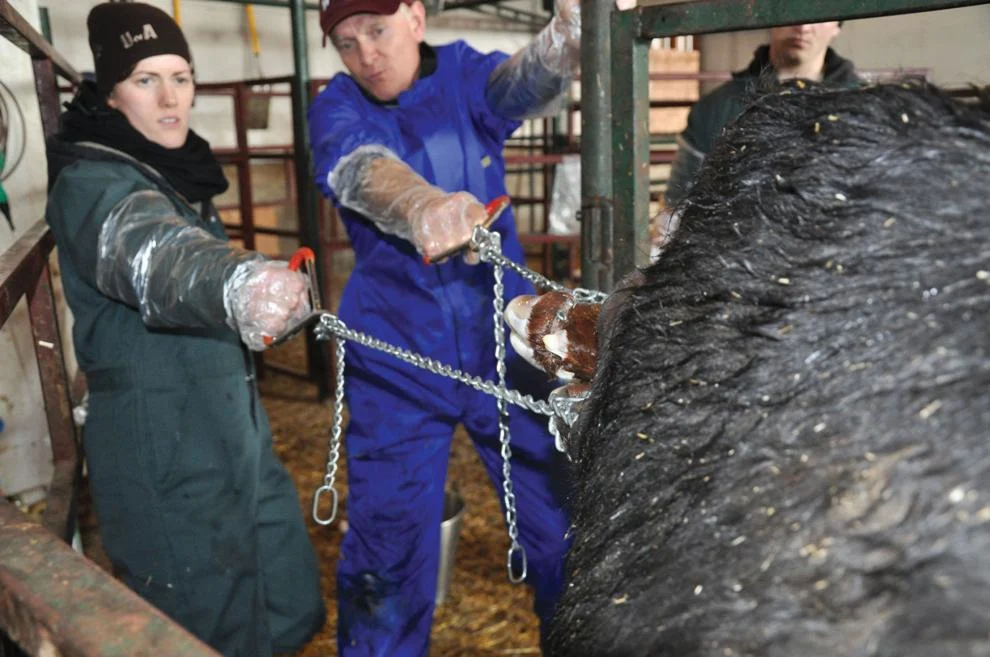
When assistance is needed, Shoemake follows a “30-minute rule:” if there has been no progress after 30 minutes of an attempted intervention, it is time to consider another option rather than continuing to pull out the calf.
Why dystocia happens
One cause of dystocia is fetal-maternal mismatch, which occurs when a calf is too large to pass safely through the mother’s pelvic opening.
Because calf size can be influenced by genetics, nutrition, environmental conditions and other factors, making informed breeding decisions can help reduce the risk of having a calf that is too large for the cow to deliver safely.
“Most of the time for a fetal-maternal mismatch, we need to do a C-section,” Shoemake said.
Other difficult deliveries involve a calf that is positioned incorrectly. In those cases, repositioning may allow the calf to pass through the birth canal.
To reduce the risk of dystocia, Shoemake recommends that producers work with a veterinarian to consider several factors as they begin preparing for calving. These factors include:
• Evaluating heifer pelvic size.
• Choosing bulls carefully to balance performance with calving expectations.
• Paying special attention to heifers.
• Considering hot seasonal conditions.
“Veterinarians can do a breeding soundness exam on heifers where we get a pelvic area measurement,” he said. “As long as the heifer has an adequate pelvic area or diameter, then their risk of dystocia is minimal.”
Because environmental conditions can also affect cattle during calving, producers and veterinarians should consider seasonal temperatures and other conditions that could place additional stress on the herd; March through May offers the lowest risk for heat-related problems associated with dystocia without the added challenges of winter calving and raising those calves in cold weather.
This assistance can identify risk factors for dystocia before calving and determine when interventions may be necessary.
“When trying to resolve a dystocia, we should never attempt to pull a calf using machinery, including tractors or trucks,” Shoemake said.
C-section care in cattle
Instead, when a different approach is needed during a difficult delivery, a veterinarian may recommend a C-section.
After surgery, producers should monitor the cow’s appetite, drinking, post-calving discharge, and behavior for 30-45 days.
“Veterinarians can provide pain management plans and treatment to reduce complications after the surgery as well helping to ensure the calf gets off to the best start it can,” Shoemake said.
Proper care after a C-section can ensure minimal complications with your cow’s ability to calve successfully without future interventions or dystocia management.
“Most cows return to the productive herd quite well,” Shoemake said, adding that it’s important to always contact your veterinarian if there are abnormalities after surgery.
Difficult calving can happen even with careful planning but recognizing potential problems early and knowing when to call a veterinarian can make a difference. With preparation and veterinary guidance, producers can be better equipped to navigate calving complications and support the health of their herds. — College of Veterinary Medicine & Biomedical Sciences, Texas A&M University