
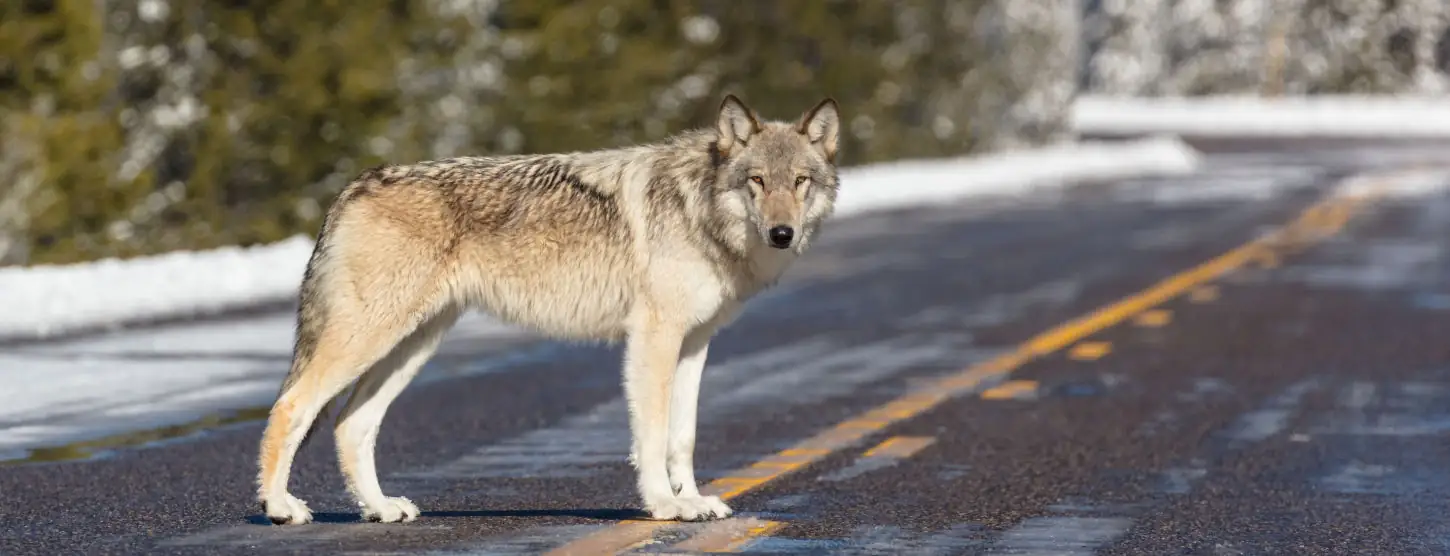
The state of Colorado is planning to introduce wolves, following a ballot initiative that passed in 2020. I provided background information on wolves in previous WLJ issues (Dec. 17, 2019; April 8, 2020; and July 24, 2020). It will take coordination by biologists, stockmen, outfitters, sportsmen, tribes, and environmentalists to manage wolves and satisfy different objectives. Predicting wolf numbers and impacts on wildlife and livestock is particularly important.
Gray wolves occurred in Colorado until they were eradicated around 1940 and appear to be reestablishing populations there without introductions. Wolves migrated into Colorado from 2004 to 2020 from the north, where there are wolves in Wyoming, Idaho, and Montana. A pack of at least six wolves was documented in Moffat County in the northwest corner of Colorado in 2020. It is also possible that wolves will migrate into Colorado from New Mexico and Arizona.
Gray wolves were delisted from the federal Endangered Species Act (ESA) effective in January 2021, although lawsuits are contesting the delisting. Colorado also manages wolves as a state endangered species. Wolves prey on elk, moose, deer, bighorn sheep, and smaller animals, including beavers, rabbits, and rodents. These prey species exist in Colorado and could probably sustain wolf populations. Wolves also prey on livestock, including cattle, horses, and sheep. Elk numbers declined substantially in the Yellowstone National Park area in Wyoming, Idaho, and Montana following the introduction of wolves in 1995 and 1996. This suggests elk populations will decline in parts of Colorado if wolves are introduced.
The nature and extent of wolf predation on elk in Colorado will depend on several factors, including other predators such as black bears and cougars; other prey like moose and deer; human harvest of elk and wolves; elk winter and summer range; and winter severity and snow depths. Also, wolves should be controlled in areas where they prey on livestock, which could reduce predation on elk and other wildlife in those areas. These factors should be considered in future assessments of potential wolf populations in Colorado.
I used information on wolf populations in Montana to analyze potential wolf numbers and predation on elk in Colorado (see references). These analyses are presented as hypotheses with assumptions that need to be reviewed and tested with data and are summarized here.
First, I made gross estimates of the potential number of wolves in Colorado considering the entire area west of Interstate Highway 25 as potential wolf habitat and the wolf/elk ratio in Montana (0.0071 wolves/elk). There are 284,150 elk in this potential wolf habitat, which results in an estimate of 2,017 wolves in Colorado. An estimated rate of wolf predation on elk (17 elk per wolf per year) suggests the potential for wolves to kill 34,289 elk a year.
Second, I estimated the number of wolves in Colorado west of I-25 with wolf density and a prey biomass index (BMI). Note that in these analyses, elk densities are for one square kilometer (km2)and wolf densities are for 1,000 km2 (1,000 km2 is about 386 square miles or 247,105 acres). Potential wolf habitat in Colorado west of I-25 is 159,012 km2, the number of elk is 284,150, and the density of elk is 1.8 elk/km2. Prey BMI in Colorado is 5.36, and the estimated wolf density is 21wolves/1,000km2.
This value is within the range (3-54) of the wolf density of 27 wolf populations in other areas. Applying the wolf density and prey BMI results in an estimate of 3,326 wolves in Colorado, and the estimated predation rate (17 elk per wolf per year) suggests the potential for wolves to kill 56,542 elk per year.
Third, I repeated these analyses considering a smaller area of potential wolf habitat in Colorado (one-third of the area west of I-25), which resulted in estimates of 672 to 1,108 wolves, and 11,424 to 18,836 elk per year killed by wolves.
In summary, considering all of Colorado west of I-25 as wolf habitat, estimates are 2,017 to 3,326 wolves and predation of 34,289 to 56,542 elk per year; and considering one-third of the area of Colorado west of I-25 as wolf habitat, estimates are 672 to 1,108 wolves and predation of 11,424 to 18,836 elk per year. These estimates are preliminary and should be improved with a detailed assessment of elk and wolf habitat in Colorado. However, this analysis indicates the potential for wolves to have considerable impacts on elk populations and livestock.
Perhaps these analyses can help the state of Colorado develop sound wolf management plans that maintain big game populations and minimize predation on livestock. Montana, Idaho, and Wyoming have managed wolves following their delisting from the ESA and now control wolves when they kill livestock. This has resulted in stable wolf populations and reduced predation on livestock. Wolf management that maintains abundant game populations and minimizes predation on livestock is necessary to protect stockmen and outfitters’ rights and should be a goal for Colorado. — Dr. Matthew Cronin
(Matthew Cronin was a research professor at the University of Alaska, a U.S. Coast Guard officer, and is now at Northwest Biology Company LLC [www.northwestbiology.com] in Bozeman, MT. He can be reached atcroninm@aol.com.)
References
These reports are available at www.northwestbiology.com/publicationsreports
Cronin, M.A. 2020a. Wolves in Colorado: Insights from Wyoming, Idaho, and Montana.
Unpublished report. Northwest Biology Company LLC, Bozeman, Montana, June 2020.
Cronin, M.A. 2020b. Hypotheses: Wolves in Colorado. Unpublished report.
Northwest Biology Company LLC, Bozeman, Montana, July 2020.
Cronin, M.A. 2020c. Hypotheses: Wolf Predation on Elk in Colorado. Unpublished report. Northwest Biology Company LLC, Bozeman, Montana, August 2020.


