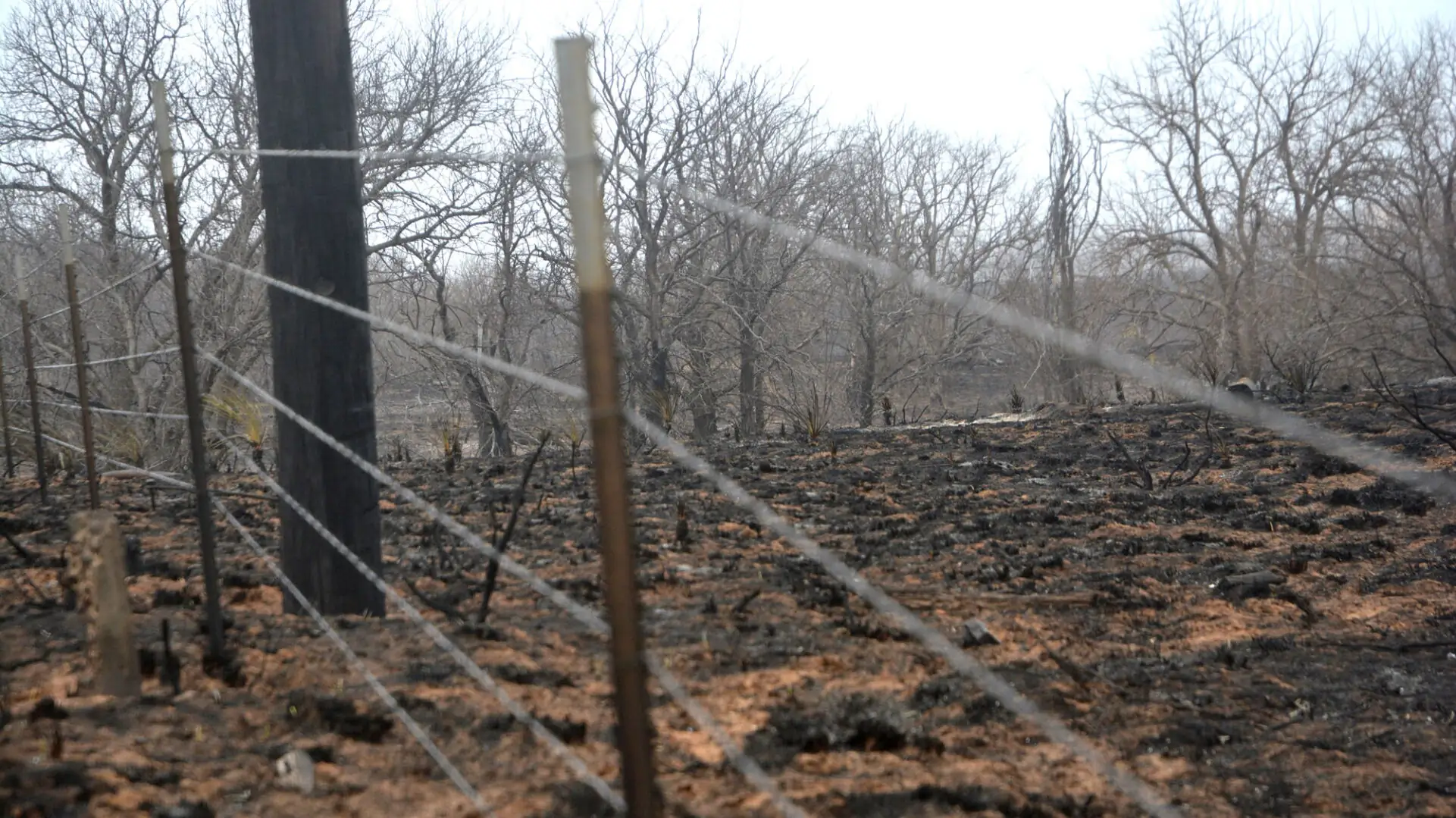
Texas wildfires that ravaged the Eastland Complex, parts of the Panhandle and regions of Coryell County, encompassing 433,000 acres, have resulted in $23.1 million in preliminary agricultural loss estimates, according to Texas A&M AgriLife Extension Service economists.
The losses include more than 400 livestock deaths, lost grazing values and fence repair costs. Dry, windy conditions throughout the winter and into early spring heightened the fire danger threat.
“AgriLife Extension continues its commitment to providing the resources needed for landowners and livestock producers to help recover from this tragic event,” said Rick Avery, Ph.D., director of AgriLife Extension. “We appreciate the ongoing efforts of our dedicated agent network and industry partners. Texas agriculture producers are resilient, although the damages to thousands of acres of grazing land, livestock and infrastructure will be long lasting.”
The preliminary estimates were calculated beginning with the early March fires through the end of April. AgriLife Extension economists say the preliminary loss estimates could climb higher due to ongoing fire threats.
“Drought conditions are only intensifying the potential for further economic losses moving forward considering the prospects of hay availability and associated feed costs,” said David Anderson, Ph.D., AgriLife Extension livestock economist.
AgriLife Extension deployed its Disaster Assessment and Recovery agents along with its county agents to implement animal supply points in the Eastland Complex in Rising Star, Cross Plains and Gorman. Agents assisted with collecting donations and distributing hay, feed and other resources. They also provided field and damage assessment support.
“Our Disaster Assessment Recovery agents worked tirelessly to establish and operate animal supply points at key areas,” said Monty Dozier, Ph.D., AgriLife Extension Disaster Assessment and Recovery program director. “Agents were working around the clock coordinating the distribution of hundreds of round bales of hay, livestock and pet food, assisting with field assessments and identification of cattle during this catastrophic event. Again, we thank those throughout Texas and our friends out of state who donated during this critical time of need.”
AgriLife Extension, the Texas A&M Forest Service and the Texas Division of Emergency Management, all part of the Texas A&M University System, have provided numerous support and response efforts throughout the wildfire events that began in March.
During a seven-day span in late March, state, federal and local fire resources responded to 192 wildfires that burned 173,559 acres. More than 300 Texas A&M Forest Service firefighters and more than 200 Texas Intrastate Fire Mutual Aid System firefighters, along with firefighting personnel from 28 states, were positioned across the state to respond.
Disaster assistance
The USDA’s Farm Service Agency has approved low-interest physical loss loans to help producers repair or replace damaged or destroyed qualifying physical property. To confirm eligibility and access application information, contact your local USDA Service Center.
The U.S. Small Business Administration (SBA) approved Gov. Greg Abbott’s (R) request for a disaster declaration in communities affected by the Eastland Complex fire, unlocking access to multiple loan programs. Applicants may apply for loans, receive additional disaster assistance information and download applications online at sba.gov. Applicants may also call SBA’s customer service center at 800-659-2955 or email disastercustomerservice@sba.gov for more information on SBA disaster assistance.
Texans affected by wildfires are encouraged to submit property damage at damage.tdem.texas.gov to help officials identify resource needs and determine the state’s eligibility for additional disaster assistance. — Texas A&M AgriLife Extension