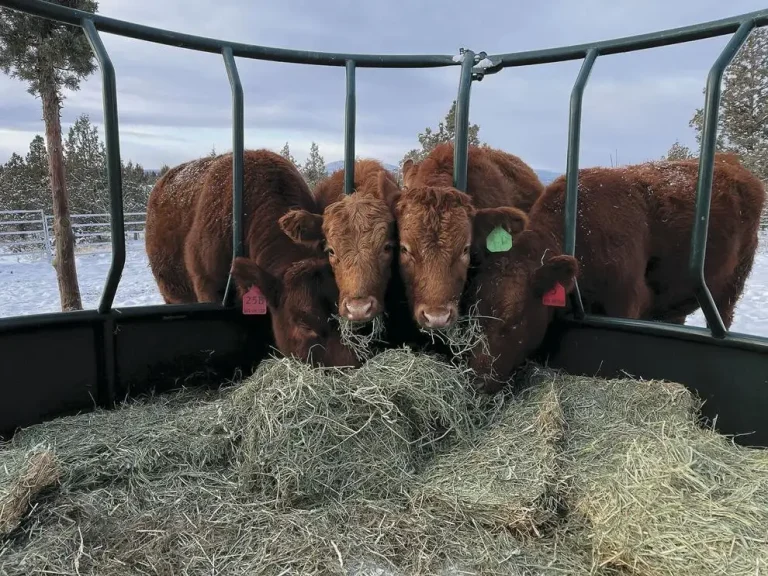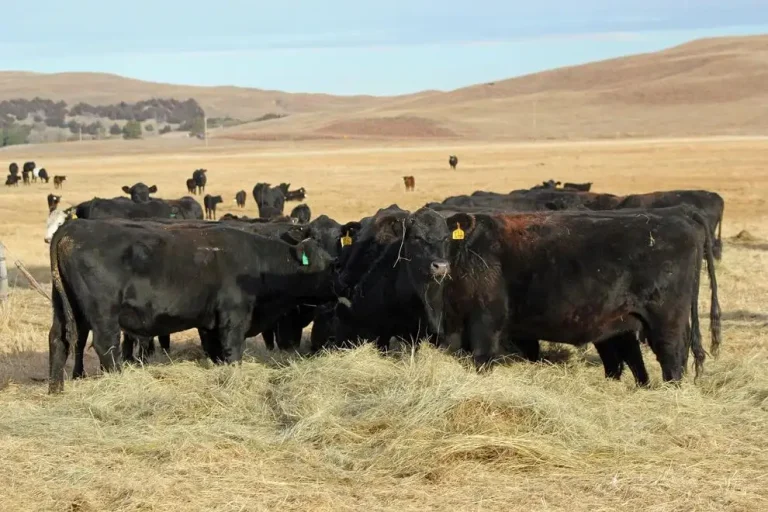
With winter near, now is the time to set up hay yards for easy access if you haven’t already done so. While sorting by lots and quality is important, keep in mind how we store can also impact spoilage. Are you storing hay so losses are at a minimum?
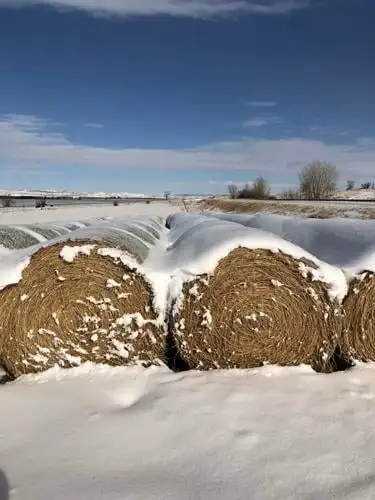
Hay stored outside will be damaged by rain, snow, wind and ice this fall and winter. The average round bale may lose up to one-quarter of its original nutrients during storage, but these losses can be reduced to less than 10% or so.
If we can’t get bales inside or under a tarp, giving space for air to flow around the bale to dry them out is better than placing them side to side where rain, snow and ice will gather and get trapped. Stacking uncovered will create a similar problem. Worst of all is placing round bales on their ends so moisture is able directly enter the bale.
Does snow drift around your bales? Bales placed in east-west rows often have drifts on the south side. Hay next to fencelines or trees can get extra snow. As snow melts it soaks into bales or makes the ground muddy. Plus, the north side never gets any sun so it’s slow to dry. This year, line your bales up north-and-south for fewer drifts and faster drying as sunlight and prevailing winds hit both sides of the row.
Most important is the bottom of your bales. Always put bales on higher, well-drained ground so water drains away from them. If necessary, use crushed rock, railroad ties or even pallets to elevate bales to keep the bottoms dry. This also will reduce problems getting to your hay due to snow drifts or mud.
Plan now to store bales outside right. Use a single row of bales end to end, along with consideration for row orientation, and ground surface drainage for the best outcome. — Ben Beckman, Nebraska Extension