The National Park Service (NPS) announced a new bison management plan for Yellowstone National Park culminating a process that began in 2022. On July 24, the NPS confirmed it would implement Alternative 2, the preferred strategy, from the Final Environmental Impact Statement for Bison Management.
“The NPS is implementing this decision because of new scientific information about bison and brucellosis transmission and changed circumstances that include fewer cattle near the park, brucellosis regulations, and Tribal hunting,” a statement by the agency said.
According to NPS, the agency was under court oversight to complete this decision due to litigation in 2018 and 2019 that challenged the adequacy of the original Interagency Bison Management Plan decision from 2000.
“This new plan solidifies much of the progress made over the past two decades and provides a foundation for future decision making,” Yellowstone National Park Superintendent Cam Sholly said in a statement. “We appreciate the significant engagement on this plan by our affiliated Tribes, partners, and the general public.”
Plan details
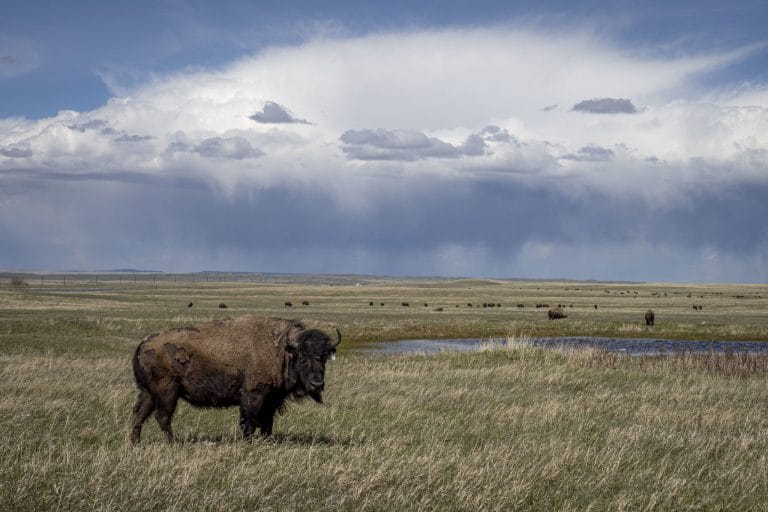
According to the record of decision, bison numbers in the park are expected to range between 3,500 and 6,000 head after calving, with an average of about 5,000 head, consistent with the 10-year average. Late-winter numbers will range between 3,000 and 5,000 head, averaging around 4,150 pre-calving.
NPS will establish a population assurance threshold of 5,200 bison, which was not part of the original interagency plan. When the population reaches this threshold, NPS will manage a declining bison population, primarily relying on Tribal and state harvests. If harvests do not reduce numbers sufficiently, NPS will remove additional bison through the Tribal Food Transfer Program. When the population is below 5,200 head, the NPS will place bison in the Bison Conservation Transfer Program (BCTP) and use the food transfer program to remove brucellosis-positive bison identified during BCTP selection.
NPS will continue coordinating with interagency partners and Tribes to manage bison within the expected population range, acknowledging that Tribes have authority over tribal harvests outside Yellowstone National Park. Additionally, the state has authority over public hunts and other lethal removals outside the park, while USDA’s Animal and Plant Health Inspection Service and surrounding states have authority over brucellosis quarantine.
Mixed reactions
According to the Daily Montanan, a spokesperson for Gov. Greg Gianforte (R) said they are reviewing the decision but shared a letter Gianforte sent to the leaders of the Interior Department and NPS on July 1. In the letter, sent after the release of the final environmental impact statement, Gianforte criticized the decision and accused the agency of failing to “uphold its cooperative responsibilities.”
Sholly told the Daily Montanan that Gianforte and his administration had submitted comments and letters, prompting NPS to conduct further analysis included in the final record of decision. Sholly believes a close examination of the plan will reveal that it addresses Montana’s concerns. Sholly emphasized the park’s commitment to collaborating with the state and other partners to manage a wild, free-ranging bison population while maintaining zero bison-to-cattle brucellosis transmission.
Environmental organizations were mixed regarding the decision to keep populations between 3,500 and 6,000 animals and to continue the transfer to maintain populations.
“The final plan memorializes the progress made by the park, Tribal, state and conservation partners over the years for Yellowstone bison,” said National Parks Conservation Association Senior Yellowstone Program Manager Michelle Uberuaga. “And, although this is an important step in the right direction, there is still a lot of work to do in order to ensure that America’s national mammal is managed like other valued wildlife, which includes protecting seasonal migration in and out of the park.”
Josh Osher, public policy director for Western Watersheds Project, expressed deep disappointment with NPS’ decision on bison management at Yellowstone National Park. He criticized the plan for relying on the “outdated and inhumane practice of capturing and slaughtering bison” that migrate to suitable habitats on public lands outside the park. Osher said that NPS missed a crucial opportunity to create a comprehensive and collaborative plan involving all relevant federal agencies, instead of opting to proceed alone.
NPS said they will begin to implement the plan immediately. — Charles Wallace, WLJ contributing editor