
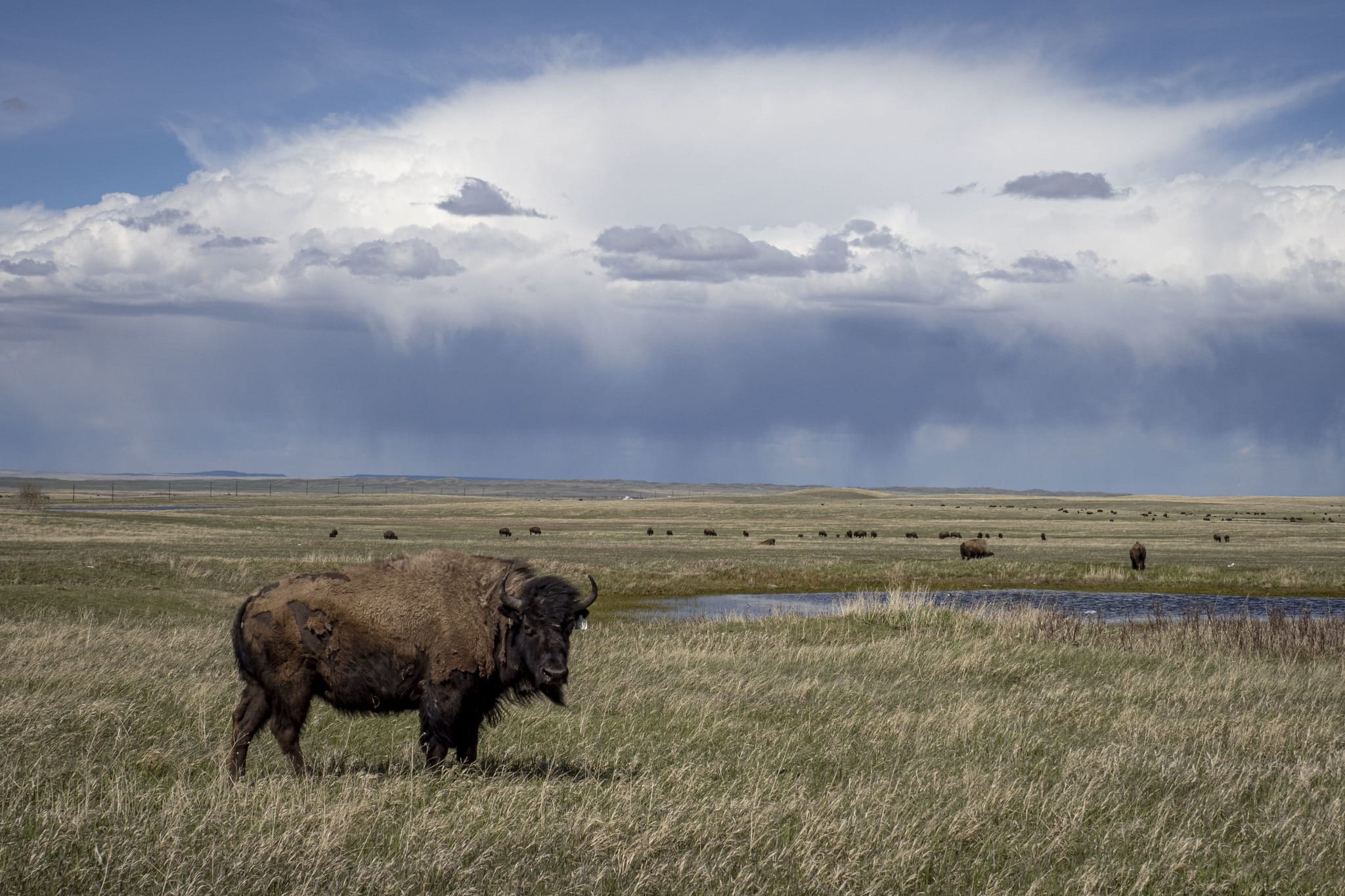
In a win for public lands cattle ranching, the Trump administration is rescinding an authorization allowing American Prairie to graze bison on several public lands allotments spanning more than 60,000 acres in north-central Montana.
On Jan. 16, the Department of the Interior and Bureau of Land Management (BLM) released a Notice of Proposed Decision to cancel a 2022 final decision authorizing American Prairie (formerly known as American Prairie Reserve) to graze bison on six allotments in Phillips County.
“Animals that are presently treated as wild or are intended to be released into the wild or integrated into a wild herd in the future are not properly considered ‘domestic livestock,’” the notice said.
As such, the BLM lacks the authority to issue grazing permits under the Taylor Grazing Act where the animals are treated as wildlife and will not be managed for production, the notice read.
“There are multiple times wherein by the applicant’s own admissions it is clear that these bison are not managed for production-oriented purposes and so do not fall within the meaning of the terms ‘livestock’ and ‘domestic’ as those terms are used in the applicable statutory authorities,” the notice read.
The notice rescinds the BLM’s earlier decision to authorize grazing on the allotments, cancels all grazing permits for bison, and reissues cattle-only permits on allotments where bison were previously authorized to graze.
A 15-day protest period follows the issuance of the proposed notice. Affected parties also may appeal the decision to an administrative law judge.
Background
In July 2022, BLM authorized a final decision that allowed American Prairie to modify its grazing permits to change the kind of livestock from cattle only to cattle and/or bison involving seven BLM allotments in Phillips County. BLM authorized cattle and/or bison grazing permits on four allotments, bison grazing permits on two allotments and a cattle-only grazing permit on one allotment.
The decision was appealed by various parties, including the Montana Stockgrowers Association (MSGA). The Departmental Case Hearings Division and Interior Board of Land Appeals denied the appellants’ stay requests.
In March 2023, BLM issued the permits to American Prairie in accordance with the 2022 final decision.
In early 2025, while administrative appeals were still pending, BLM filed a motion for voluntary remand without vacatur of the final decision. At the end of 2025, on Dec. 9, the secretary of the Interior assumed jurisdiction of the administrative appeals. A week later, the secretary granted BLM its motion for remand without vacatur, and directed the agency to review its 2022 final decision.
BLM worked with the Office of the Solicitor to determine whether the BLM’s final decision was consistent with the statutory authority given under the Taylor Grazing Act.
“Based on that coordination, the BLM issues this Proposed Decision consistent with its understanding that its authority to grant grazing permits under the TGA is limited to cases where the animals to be grazed are domestic and will be used for production-oriented purposes,” the notice read.
American Prairie has indicated that it intends to develop the largest conservation bison herd in North America, and restore genetic, ecological and behavioral features of “wild bison,” not as animals intended for production, the notice explained.
The group’s goal is to create a 5,000 square-mile reserve, roughly the size of Connecticut.
In a Dec. 26, 2025, update, American Prairie said its reserve encompassed more than 600,000 acres and the bison herd has grown to more than 900 animals.
Reactions
MSGA applauded the BLM’s decision. The group, along with the North Phillips County and South Phillips County grazing districts, has long called for an appeal of the grazing leases, citing a lack of due process and a violation of the Taylor Grazing Act.
“MSGA is thrilled to see this decision by the BLM to restore grazing allotments back to their intended usage for production livestock grazing, affirming what ranchers have been saying since the beginning of this process,” said Lesley Robinson, MSGA president, said in a statement.
She continued, “This decision is an incredible win for public lands grazers, ranching families, and rural communities across the west.”
American Prairie called the move “unfair, disappointing, and out of step with long-standing public-lands grazing practices in Montana.” In an e-newsletter, American Prairie Alison Fox said the group’s legal team is working to determine its next course of action.
“While this decision presents its challenges, we want to be clear: we remain focused on our mission to create one of the largest nature reserves in the United States,” Fox said.
“In times like this, it can be easy to lose sight of the bigger picture. American Prairie and our herd are only one part of a much larger story—one ultimately defined by strength, determination, and resilience,” she continued.
The group emphasized that the recent decision affects only its ability to graze bison on public lands, not on privately-owned, deeded acres. — Anna Miller Fortozo, WLJ managing editor



1 Comment