Pasture cropping as a land management practice can pay off for producers on lands where environmental conditions are favorable, mainly dormant-season moisture, according to a Texas A&M AgriLife-led team of researchers.
For the past five years, a team led by Srini Ale, Ph.D., Texas A&M AgriLife Research agrohydrologist and professor in the Department of Biological and Agricultural Engineering at the Texas A&M AgriLife Research and Extension Center in Vernon, has implemented the practice through the USDA National Institute of Food and Agriculture grant-funded project “Enhancing Soil Ecosystem Health and Resilience Through Pasture Cropping.”
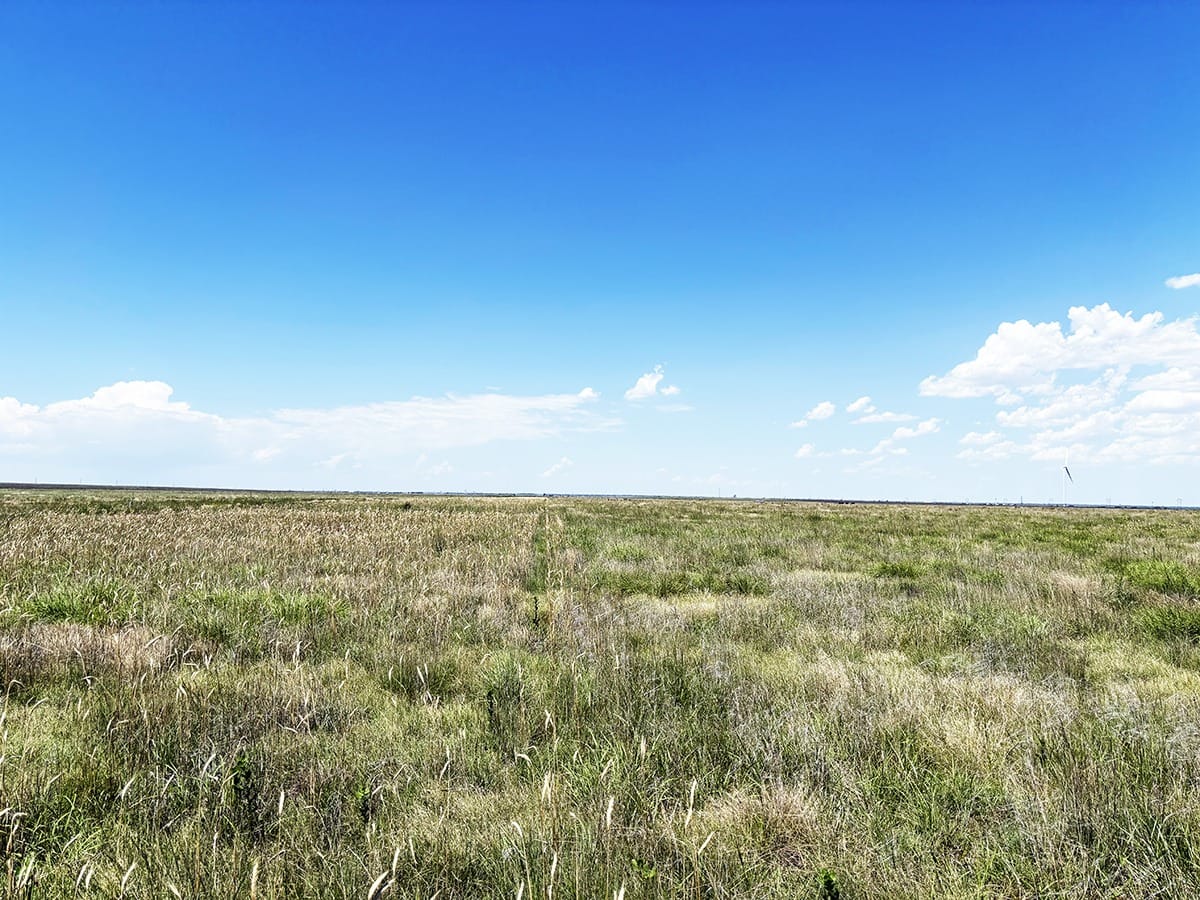
The relatively new practice includes planting a small-grain crop into existing perennial warm-season grassland. Usually, only about 20-25% of the grassland is planted each year. The planted wheat or oat crop is then used for winter protein supplementation. In some years, it can be cut for grain.
Secondary benefits include competition with weeds to reduce their numbers. The team also hopes to see some improvement in soil health indicators in the pasture-cropped plots after analysis this summer.
Other researchers completing the study with Ale were: Tim Steffens, Ph.D., formerly a Texas A&M AgriLife Extension Service range specialist and now professor at West Texas A&M University at Canyon; Paul DeLaune, Ph.D., former AgriLife Research environmental soil scientist at Vernon and now department head at the University of Arkansas Department of Crop, Soil and Environmental Science; Nuria Gomez-Casanovas, Ph.D., AgriLife Research regenerative system ecologist at Vernon and assistant professor in the Department of Rangeland, Wildlife and Fisheries Management; and Tong Wang, Ph.D., advanced production specialist at South Dakota State University.
Mixed results depend on moisture
Ale said their study was designed to get information on the best time to plant and terminate or harvest the grain crop and how soil health benefits vary between wet, normal and dry years.
Pasture cropping experiments were conducted at two study ranches in Texas: the Pittman Ranch of the Dixon Water Foundation in Cook County and the Nance Ranch of the West Texas A&M University in Randall County.
At the Pittman Ranch, wheat germinated well in all years, but its establishment was poor in the first season due to unusually dry winter conditions that resulted in low soil moisture/temperature. Wheat establishment was better in the remaining three seasons, but it did not grow adequately for harvest or grazing. Additionally, competition from well-managed, vigorous native grasses has limited the productivity of wheat in these seasons.
Results on the Nance Ranch varied more due to lack of moisture. The crop in 2022 died due to drought, in 2023 and 2024 a good crop was established, and in 2025 no stand was established.
They determined where precipitation is adequate and rotational grazing management is already in place, pasture cropping will likely offer a viable pathway to reduced input costs and improved operational profitability.
Early results from the study suggest pasture-cropping is rebuilding the soil’s organic matter improving its structure, infiltration and water holding capacity. Final testing will be completed this summer.
Putting the practice into practice
When conditions and management result in a good stand, Steffens said, successful adoption of the practice can result in economic and agronomic benefits, including an extended grazing season, reduced hay and supplemental feed costs, improved cattle body condition and calf growth rates, better weed suppression and enhanced soil health.
But for many, success will be heavily dependent on timing. Annual crops must be sown while warm-season grasses are still dormant. If planting occurs when warm-season grasses are still competitive, the competition for soil moisture and nutrients with warm-season grasses often results in poor crop performance.
The most critical factor for success in pasture cropping is dormant-period precipitation. The rainfall received between October and April plays a critical role in determining the success rate of pasture cropping.
In a survey of the limited U.S. adopters of the practice that was part of the study, areas receiving more than 6.7 inches of dormant-season precipitation achieved an average success rate of 82%, compared to only 25% for those in drier regions.
“We believe producers considering pasture cropping should carefully evaluate their dormant-season precipitation,” Ale said. “In areas with marginal precipitation, opportunistic planting tied to forecasted wet seasons or El Niño conditions may be a more prudent approach than committing to routine annual planting.” — Texas A&M AgriLife Extension