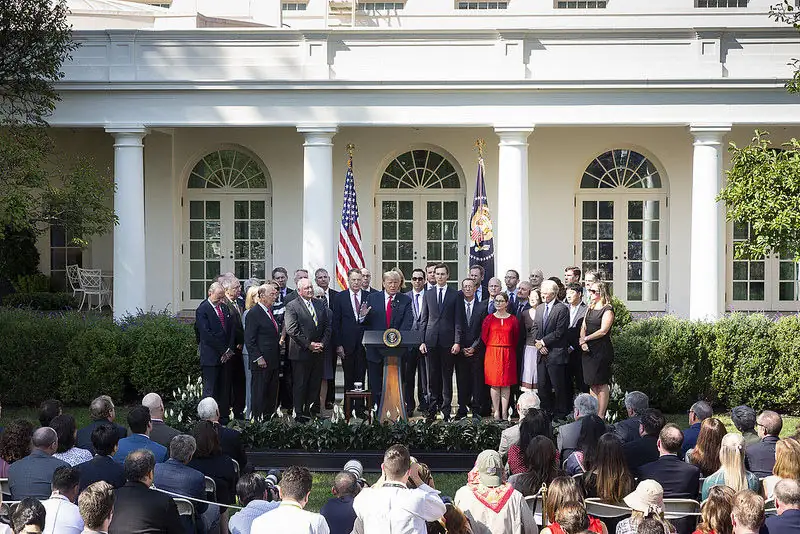
The North American Free Trade Agreement (NAFTA) that had been in place since 1994 was successfully renegotiated and replaced by the U.S. Mexico-Canada Agreement (USMCA) when all parties agreed to the terms on Oct. 1, 2018.
The new trade agreement falls in line with President Donald Trump’s campaign promise to negotiate trade deals that benefit the United States. He was strongly opposed to NAFTA often calling it a disaster. But upon finalizing this agreement, he tweeted that it was a “wonderful trilateral agreement.”
As the negotiations progressed, Mexico was the first to agree to trade terms with the United States in August, Canada was slower to come on board but eventually the three countries found common ground. The leaders of each country are expected to formally sign the agreement before the end of November. In the United States, USMCA will still need to be approved by Congress.
Good for beef
While a number of provisions impact other industries, the implications for beef trade are still largely positive. Beef will continue to be traded without tariffs between the countries as explained by Kent Bacus Director of International Trade and Market Access for the National Cattlemen’s Beef Association (NCBA). “The USMCA preserves the trade framework that has worked extremely well for U.S. producers. We will continue to enjoy duty-free, unrestricted market access and science-based trade.”
As for congressional approval, Bacus was asked if the upcoming midterm elections will impact the outcome. He told WLJ, “A number of procedural steps lie ahead before the USMCA can be implemented, and the outcomes of the midterm elections will have consequences. Producers need to make their voices heard in these elections—and that includes getting out to vote in support of representatives who understand the benefits trade brings to the U.S. cattle industry.”
Early on when renegotiation talks began, USDA Secretary Sonny Perdue and numerous ag groups including NCBA called on the president to “do no harm to agriculture.” WLJ asked Bacus to comment on the efforts to heed that advice to which he said, “President Trump, Ambassador [Robert] Lighthizer, and the entire U.S. negotiating team deserve a round of applause for preserving market access for beef while also securing additional benefits for the agriculture community.”
While a positive step for the U.S. red meat industry, U.S. Meat Export Federation President and CEO Dan Halstrom said, “It is important to note that the retaliatory duties imposed by Mexico on U.S. pork and by Canada on U.S. prepared/cooked beef products remain in place. These duties were imposed in response to U.S. Section 232 tariffs on imports of steel and aluminum from Mexico and Canada, and these tariffs also remain in place. USMEF hopes to see this issue resolved soon, so that all U.S. red meat exports will once again have duty-free access to Mexico and Canada.”
COOL not included
While the new trade agreement was met with praise by many agricultural groups, others, including the Ranchers Cattlemen Action Legal Fund (R-CALF), saw it as a missed opportunity to reinstate the groups’ long sought mandatory country-of-origin labeling (COOL) requirements.
“We are deeply disappointed that the Trump administration, like previous administrations, has folded under the pressure of the multinational meatpackers and their allies who successfully sought to make no changes to NAFTA that would help the largest segment of American agriculture—the U.S. cattle industry—overcome the abusive market power of foreign and domestic multinational meatpackers who will continue to leverage-down the price and value of U.S. cattle under the new agreement,” said R-CALF CEO Bill Bullard in a written statement.
Perdue reaction
Commenting on the agreement, Perdue said, “The great news of a new USMCA deal is important for our economy as a whole, including the agricultural sector, which counts Canada and Mexico in our top three trading partners.”
He went on, “We have secured greater access to these vital markets and will maintain and improve the highly productive integrated agricultural relationship we have as nations. Notably, as one of the president’s top goals, this deal eliminates Canada’s unfair ‘Class 7’ milk pricing scheme, cracks open additional access to U.S. dairy into Canada, and imposes new disciplines on Canada’s supply management system.”
Perdue also noted that the agreement also preserves and expands critical access for U.S. poultry and egg producers and addresses Canada’s discriminatory wheat grading process to help U.S. wheat growers along the border become more competitive.
This agreement comes on the heels of the renegotiated U.S.-Korea Free Trade Agreement known as KORUS that was signed on Sept. 24(WLJ, Oct. 10, 2018). Perdue commented, “A renewed USMCA, a new KORUS agreement, and the continued progress with Japan can lead to further deals with other trading partners like the European Union and China. The dominoes are falling, and it is good news for U.S. farmers. I thank President Trump and our U.S. Trade Representative, Ambassador Lighthizer, for their perseverance, leadership, and hard work.” — Rae Price, WLJ editor