Dan Halstrom’s path from a family farm in northwest Iowa to leading one of the most globally influential agricultural trade organizations wasn’t planned—not by him, at least.
“I like to say I had a grand plan, but I really didn’t,” Dan joked to WLJ as he reflected on his early years growing up on the family farm near Cherokee, IA. The family grew row crops and had a backgrounding and feedlot operation.
Dan attended the University of Iowa, studying finance and marketing, expecting to pursue a business career. But when Swift Independent Packing Company held on-campus interviews in his senior year, agriculture pulled him back in a way he hadn’t anticipated.
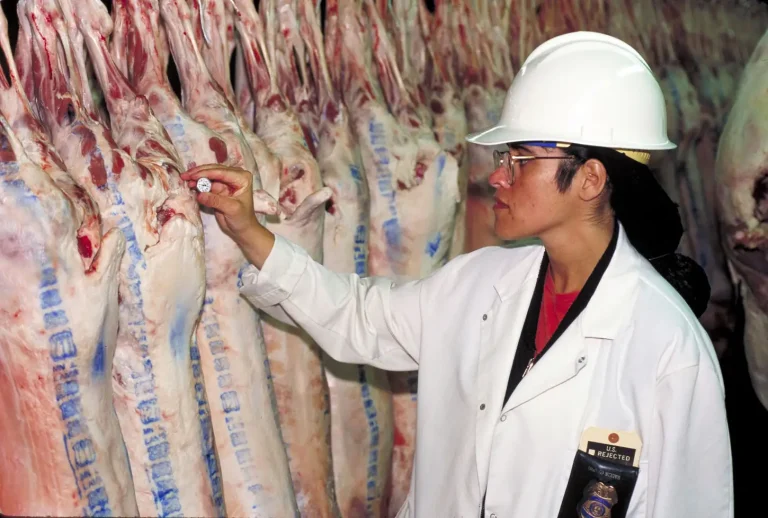
Swift offered him a spot in its management trainee program, which would move him from Chicago, IL, to St. Louis, MO, and Worthington, MN, where Halstrom spent four years learning the inner workings of pork plants. The on-the-ground experience—walking kill floors, learning fabrication, understanding logistics—gave him the technical foundation he still draws on today.
“What I brought forward from my packer background,” Dan said, “was this idea of maximizing the value of the carcass. You put the right cut in the right market.”
The mergers of the 1980s and ’90s eventually brought Dan to Colorado in 1989. Monfort of Colorado bought Swift, then ConAgra bought Monfort and eventually became JBS. With each acquisition, headquarters shifted, and Halstrom shifted with them.
The consolidation reshaped the packing industry, but it also reshaped Dan’s identity as an international marketer. He worked increasingly in export sales just as the world’s appetite for U.S. beef and pork was accelerating. Asia, Central America and parts of South America were beginning to develop consumer markets that valued U.S. quality and consistency.
“What you learn traveling the world,” Dan said, “is that once a customer sees the value in your product and you deliver it reliably over time, they become very loyal.” Some of his international customer relationships, he added, now stretch back nearly four decades.
Transition to USMEF
Dan’s transition to the U.S. Meat Export Federation (USMEF) in 2010 wasn’t a sudden leap. As a volunteer leader from 2002 to 2008, including serving as chairman, Dan gained a deep understanding of the organization’s mission, staff structure and global footprint.
USMEF, founded in 1976, had long worked to expand market access, navigate regulatory challenges and promote U.S. red meat globally. But by 2010, the international marketplace was evolving quickly, and CEO Phil Seng wanted leadership with packer experience.
“There weren’t many people at USMEF who had a packer background,” Dan explained. “Phil talked me into joining and it turned out to be a really good move for me.”
Halstrom spent seven years under Seng’s mentorship before becoming president and CEO in 2017. Seng’s influence, Dan said, was profound. “He was a pioneer. Definitely a very positive influence.”
Market development
Perhaps no philosophy defines Dan’s approach more clearly than his insistence on aligning each cut with the market that values it most. The concept sounds simple. The execution is not.
“We don’t export a lot of ribeyes or tenderloins because domestic demand is so strong,” he explained. “But beef tongue? We get $10 or $11 a pound in Japan.” In Japan, tongue is a center-of-the-plate item. In the U.S., it is not.
The same holds across pork and lamb. Whether it’s beef livers to Peru or chuck rolls to Korea, USMEF’s strategy revolves around understanding where cultural preferences, culinary traditions and income levels converge.
USMEF’s staff of more than 100 people in 14-15 international offices plays a critical role. “They’re feeding intel back to us constantly,” Dan said. “Some of them say, ‘Hey, we found a new use for this cut—do you think it would work?’ We test it. Some things work. Some don’t. But when they do, they become long-term business.”
Dan said USMEF’s work occurs in two parallel lanes: growing established markets like Japan, South Korea, Mexico and Canada, which remain the bedrock of U.S. beef and pork exports, and developing new markets such as Southeast Asia and Africa. This dual approach ensures sustained growth and diversification of U.S. meat exports worldwide.
Japan, South Korea, Mexico and Canada remain the core of U.S. beef and pork exports. Not only are they large, mature markets, but they’re still growing.
Korea is a prime example. When the Korea Free Trade Agreement took effect, U.S. beef entered the country with a 40% duty. By 2026, the tariff will drop to zero.
“It took 13 or 14 years, but we’re finally there,” Dan noted. “It’s been hugely beneficial.”
Dan said that Central America has quietly become one of the fastest-growing regions for U.S. red meat. Guatemala, El Salvador, Panama and Nicaragua continue to increase consumption of beef and pork, with room to grow. South America is another standout, particularly Colombia and Peru. Southeast Asia, predominantly Indonesia and Malaysia, represents significant opportunities, particularly as growing middle classes seek higher-quality protein.
Outside of South Africa and Egypt, the African market remains largely untapped.
“Places like Ghana, Nigeria and Senegal offer so much opportunity,” Dan said.
Demand and trade agreements
Recent years have tested global supply chains, cattle numbers and producer patience. Yet Dan said international demand for U.S. beef has remained astonishingly resilient—stubbornly so, even as cutout values hit all-time highs.
“I kept asking our international offices, ‘Are you seeing a drop-off in demand?’ And the answer was generally ‘no,’” Dan said. “Customers understand the cycles. What they ask is, ‘When are you going to retain more heifers?’”
It’s a sophisticated global customer base and a testament to decades of market education, he said.
Dan views trade agreements not as political footballs but as economic infrastructure. The U.S.-Mexico-Canada trade agreement remains foundational. Nearly 40% of U.S. beef and pork exports go to Mexico and Canada.
“So, when the scheduled review in 2026 happens, we’re saying: tweaks are fine, but don’t blow it up,” Dan said.
Dan said USMEF is also attentive to new tools such as the America First Trade and Prosperity Partnership, a Trump-administration initiative allocating $285 million for foreign market development.
“We’re applying for it,” he said. “It’s another sign of commitment to agriculture.”
For all the travel, diplomacy and market analysis, Dan insists that USMEF’s success ultimately belongs to the farmers and ranchers who produce the product.
“We have some of the best producers in the world,” he said. “Their efficiency, their quality, their commitment makes our job in marketing that much easier.”
From Cherokee County to the CEO’s office, Dan has built his career around connecting those producers to the world. And the world, it seems, is eager for more. — Charles Wallace, WLJ contributing editor