“It’s quite a history.”
You could hear the roar of the truck tires on the highway as Jed Roark, the general manager for the storied O RO, began to tell me about the ranch and how it came to build a battery of Red Angus nearly 150 bulls strong. Catching any of the crew for a conversation this time of year is hit or miss.
“By truck, it’s about three hours from headquarters to the furthest camp and about three-quarters of the way is in four-low,” he said. This day, he and his wife, Holly, were headed into the nearest town, Prescott, AZ; both cell service and the O RO’s affinity for good cattle was clear throughout the conversation.
The legacy of the O RO
In 1821, nearly 500,000 acres in what is now New Mexico were owned by the Luis Maria Baca family. That same year, during the Mexican-American War, Americans seized the land. Quick to alert the U.S. government with a lawsuit that challenged the trespass, the Baca family contended that they were Spanish, not Mexican. Finally, in 1861, Congress agreed that the ranch should be made whole.
Rather than returning the original land, however, Congress decided the family would receive five 100,000-acre tracts of land in the unsurveyed portion of the West. The attorney who represented the Baca family personally surveyed five 100,000-acre parcels. Today, the east side of the O RO includes one of those original tracts, known as the Baca Float No. 5.
In 1936, Green Cattle Co. purchased Baca Float No. 5 and surrounding land to the west, establishing the O RO Ranch. In 1973, the ranch was purchased by the JJJ Corporation, led by John N. Irwin II. Today, his daughter, Jane Droppa, her husband, Larry, and their children own and operate the O RO as one of the most respected and expansive cattle ranches and horse remudas in the country.
“Every step is a rock. Like most of Arizona, it’s rugged and remote, but it’s a good ranch,” Roark described.
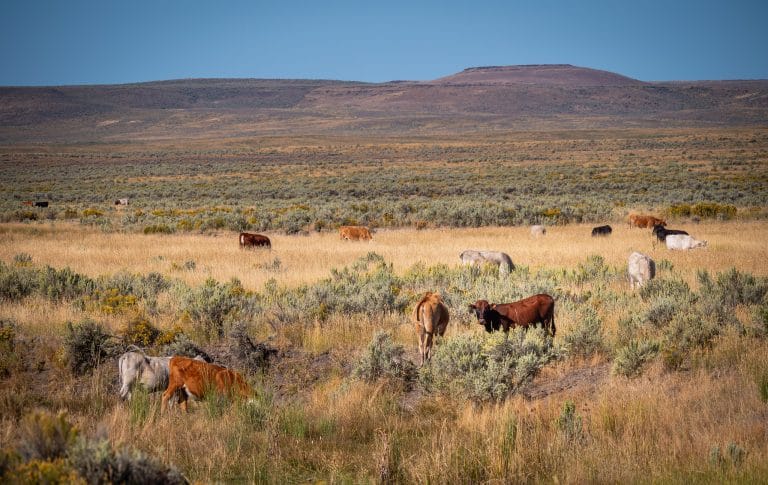
Everything that lives and works on the O RO has to be tough: the cowboys, the dogs, the horses, and, most importantly, the cattle. Today, the O RO consists of 257,000 acres of the roughest country the U.S. has to offer with altitudes ranging from 4,000 to 7,500 feet.
“We don’t buy many cows. They pretty much have to be raised here to do well,” he explained. “Cattle born here know what’s poisonous and how to get around this country. They know how to survive a snowstorm; they know how to eat brush when they have to. You can’t teach a cow that.”
Cows on the O RO get little in terms of extras. They’re expected to breed up and raise a calf on the salt and mineral packed in with mules or delivered from one of the ranch’s few roads.
“We have to have cows with some fire in them,” Roark said. “Everything’s working against a cow in this country, and if they’re going to bring in a live calf every year, they have to work for it. Docility doesn’t really factor in. I like horns on a cow because I want her to be able to defend herself against predators and browse the brush.”
After Roark and the crew select the next year’s replacement heifers, they’re kept close to headquarters. Their first year is spent learning how to trail and respect the dogs that are crucial to gathering and moving the long distances.
“I want a cow that’s a good mother and keeps track of her calf,” he continued. “It’s about making sure we’re keeping cows that work in this environment.”
He figures around 80 acres per cow annually. He prefers a moderate-framed cow, between 1,100 and 1,200 pounds, but not all of them fall into that frame score. Like all operations, longevity is valued.
“The terrain dictates when a cow’s time is up. Probably by the time they are 10 to 12, depending on what they’re looking like and what part of the ranch they’re on,” Roark said. “It’s hard to explain this ranch. You can’t trailer around, so those cull decisions have to be made a year or so ahead,” he explained.
During the spring and fall, a crew camps around the ranch, gathering, branding and weaning as they move. The crew trails the remuda and what they call the “cut”—weaned calves, cull cows and anything else that needs to go—between their camp sites until they reach one of the two semi-truck loadouts.
Red bulls get the job done
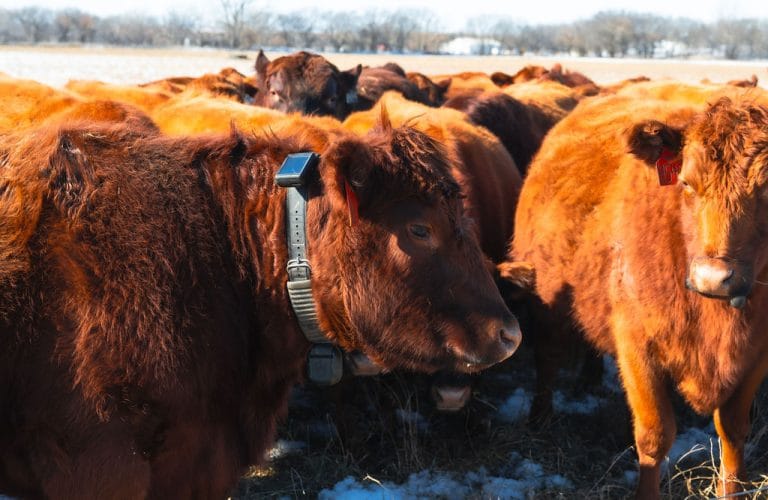
“I like Red Angus. Red cattle work well in this country,” Roark said. “It’s taken a few years, but we’re running nearly all Red Angus bulls across the majority of the ranch.”
The preference is a testament to Red Angus. Most of the O RO cows are born and raised on the ranch—the herd bulls are not.
“Feet and weight are the biggest challenges when buying bulls for this ranch. A fat bull turned out on a hot cow that isn’t acclimated might last two days,” Roark said.
When Roark heard about a Red Angus seedstock producer on the outskirts of the South Dakota Badlands, he decided to give the bulls a try. He purchased 25 long yearlings the first year and acclimated them through the winter.
“We don’t help bulls with hay because we can’t,” he explained. “They get salt, mineral and a few protein blocks. We turned those bulls out in April, started trailing them to cows and were instantly impressed.”
The first trial led to a pot load the next year—and for three years after.
“That second year, I flew to South Dakota so I could look at the cow herd the bulls were coming from and do some of my own picking,” Roark shared. “I’ve been all over the country and that’s as good a set of red cows as I’ve ever seen, and that carries into the bulls. They’re picky on breed back, don’t overfeed and keep birthweight below 80 lbs. which is important because we can’t help cows calve.”
Roark runs a 1:10 cow-to-bull ratio, a number he said seemed extravagant when he came to the ranch seven years ago; he’s served as the ranch’s manager for the past four years.
“I used to run 1:25 or 1:30. I understand now; it’s not that a bull can’t breed 30 cows, it’s that a bull doesn’t see 30 cows,” Roark laughed. “Sometimes you can ride all day and hardly see a cow. Those bulls have the same problem—they have to be able to travel.”
A good bull on the O RO will last between six and seven years, but high cattle prices have Roark leaning toward a younger bull battery.
Calves that make the cut
“I love a red or black baldy. If we had a pile of those and all our cows looked like that, I’d be okay with it,” Roark said.
The cross delivers unbeatable heat tolerance, solid feet and survivability.
“Herefords were dominant in Arizona for a long time because they handled it and survived. Red Angus bulls on those crossbred cows, produce calves that do well.”
During the last drought, the ranch’s hunting guides, who knew nothing about cattle, noticed a pattern.
“They’d say, ‘Jed, it’s weird. All the solid, black cows are standing in the bottom and look terrible, but those white face cows and calves are on the side of the mountain and look pretty good.’”
Weather and drought permitting, Roark retains calves until they’re yearlings, running on designated pastures and markets them through Superior Livestock video auctions and ships in the fall.
For Roark and the O RO, it’s about what works.
“I’m not going to chase the latest fad. I can’t. I have to do what works in our country, and these Red Angus bulls are working. I couldn’t be happier with them.” — Laura Handke for the Red Angus Magazine