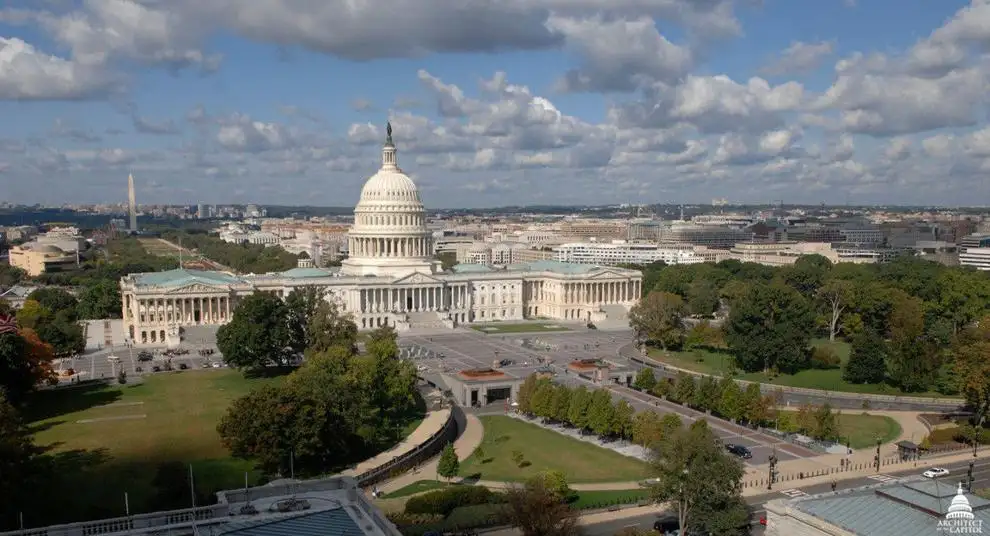
Congress approved a package of three fiscal year 2026 appropriations bills funding a wide swath of federal agencies and sent the legislation to President Donald Trump’s desk ahead of a looming government funding deadline.
Passed before the Jan. 30 funding deadline, the legislation finances a broad range of government functions, from national parks and wildfire suppression to space exploration, law enforcement, and energy development. The package combines three of Congress’s 12 annual appropriations measures and secures funding for the Departments of Energy, Commerce, Interior and Justice.
According to a bill summary, the Interior and Environment departments’ portion provides $42.56 billion in total funding.
Supporters said the legislation avoids deep cuts proposed in the Trump administration’s budget request while maintaining operations across public lands, Tribal programs and wildfire response.
Interior funding provisions
Lawmakers rejected several proposed reductions to land management agencies, ensuring staffing and operations remain at prior-year levels across several agencies.
The bill provides $3.27 billion for the National Park Service, including $2.87 billion for park operations—$1.15 billion more than Trump requested, according to the bill summary. Funding is designed to sustain 2024 staffing levels and fully support seasonal workers in fiscal 2026. An additional $205 million is directed to the Historic Preservation Fund, including specified funding for Tribal and State Historic Preservation Offices.
The summary states the U.S. Forest Service funding totals $6.13 billion, excluding wildfire reserve funds. Of that, $3.7 billion supports non-fire programs, rejecting a proposed $1.4 billion cut. The measure includes $177 million for hazardous fuels reduction, $31 million for the Collaborative Forest Landscape Restoration Program and $900 million for the Land and Water Conservation Fund (LWCF) under the Great American Outdoors Act.
The LWCF funding supports land acquisition, state grants, urban parks, and conservation easements that benefit farmers and ranchers facing development pressures.
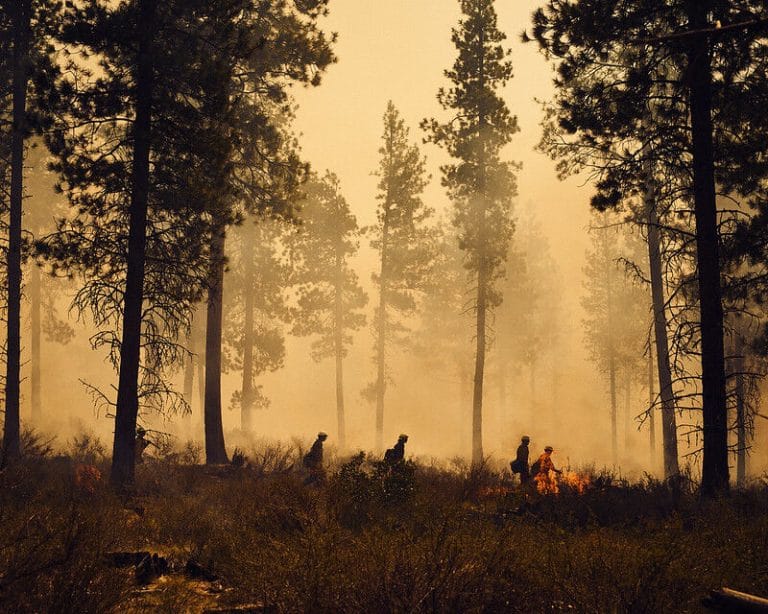
The bill also fully funds wildfire preparedness and suppression, providing $4.25 billion for suppression activities, including $2.85 billion for the Wildfire Suppression Operations Reserve Fund.
According to the summary, lawmakers preserved the permanent pay fix and job series for federal wildland firefighters and rejected the administration’s proposal to consolidate firefighting into a single agency.
Tribal programs will receive $12.1 billion across Interior and Indian Health Service accounts, reversing nearly $1 billion in proposed cuts. The Wild Horse and Burro program will receive $144 million.
NCBA welcomes funding
The National Cattlemen’s Beef Association (NCBA) reported that the bill also includes provisions prohibiting mandatory greenhouse gas reporting from manure management systems and blocks the U.S. Fish and Wildlife Service from listing the greater sage-grouse under the Endangered Species Act.
NCBA said in a Beef Bulletin that the package reduces uncertainty for producers.
“With passage of this bill and the one-year extension of USDA and the Farm Bill last year, producers will face minimal impacts if there is a partial government funding lapse on Jan. 30, 2026,” NCBA said. “NCBA engaged with Congress to avoid another lengthy shutdown where cattle producers would face significant disruptions and now urges President Trump to swiftly sign this bill into law.”
Mixed reactions from conservationists
The National Parks Conservation Association (NPCA) called the legislation a partial victory after months of warnings about staffing shortages. NPCA said the National Park Service has lost more than 24% of its permanent workforce since January 2025, with visitor centers closing and maintenance falling behind.
“The bill includes some key wins for national parks as well as a temporary defeat on which NPCA and the larger parks community will remain vigilant,” NPCA said. The group praised flat funding for park operations, provisions to retain and rehire staff, and new congressional oversight of future mass firings.
However, NPCA criticized the removal of language affirming national parks must remain federal lands—a provision supporters viewed as a safeguard against future selloffs.
The Center for Biological Diversity said the bill cuts the U.S. Fish and Wildlife Service’s listing budget by 36%, reducing it to 2004 levels and worsening a backlog of more than 400 species awaiting protection.
“The Service lost 18% of its staff under the Trump administration, including more than 500 biologists,” the group said, warning the cuts will hamper habitat restoration and species recovery.
With congressional approval secured, attention now turns to Trump’s signature. Lawmakers and industry groups alike said swift action is needed to prevent disruptions as the January funding deadline approaches. — Charles Wallace, WLJ contributing editor